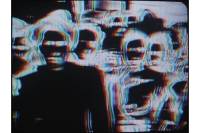
BUCHAREST: For the first time in the history of the Bucharest International Experimental Film Festival (BIEFF), two films shared the award for best feature film at the 16th edition of the festival, held 25 – 30 September 2026.
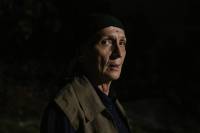
PODGORICA: Shooting of the Montenegrin short fiction film Sote, directed and written by Gana Čomagić and produced by Evil Ideas, has been successfully completed. The film is a thriller-drama with elements of horror, inspired by true events.

The BIEFF.16 Winners: Films About Memory, Colonisation, and Apocalyptic Anxieties Win the Major Awards of the Festival
Festivals 29-09-2026After five days filled with screenings, encounters with renowned filmmakers, and events dedicated to the industry and film lovers, Bucharest International Experimental Film Festival announced last night, September 28, the winners of its 16th edition, “Vanishing Futures”, dedicated to the ways in which we can continue to imagine the future in a world marked by ecological, political, and technological crises. BIEFF.16 continues until September 30 with a program that includes three screenings of the winning films, an encore double screening of the entire National Competition, a traveling cinematic route organised by the international collective A Wall is a Screen, during which façades and walls across the city will temporarily become projection screens for experimental short films, as well as a special screening of Lisandro Alonso’s latest film, “Double Freedom”.

Lucas Neagu’s "Nothing More and Nothing Different": The Happiest Film on Earth
Press releases 28-09-2026Romanian director Lucas Neagu returns with Nimic mai mult și nimic diferit (Nothing More and Nothing Different), a deeply intimate feature film about love, memory, devotion and the strange ways in which time reshapes the people who choose to remain together. Presented as “the happiest film on Earth,” the film approaches some of life’s most difficult questions through a story rooted in tenderness, human connection and the quiet rituals of everyday existence.
At the centre of the film are Elena and Gabi, an elderly couple whose lives have been inseparable for decades. Their relationship is placed under extraordinary pressure when Gabi receives a terminal diagnosis, forcing both of them to confront illness, fear, dependence and the possibility of separation. Against this fragile present, memories of their youth, their first love and the life they built together begin to surface, creating a film that moves constantly between what has been lived and what remains.
The official trailer can be watched here: https://youtu.be/G5UECdRtV04?
Lucas Neagu’s direction creates a meticulously precise interplay between the present reality of caregiving, with all its austerity and fear, and fragments of a love story that began decades earlier. Everyday gestures become part of an intimate choreography, each one carrying the weight of an act of resistance. Somewhere between endurance and exhaustion, a single question begins to emerge, one around which the entire film revolves: does unconditional love have a limit beyond which it can no longer go?
Speaking about the production, Lucas Neagu says:
“The film is a profound exploration of life, codependency and memory, of the small moments that define it. It is also a personal film in many ways, inspired by the loss of my grandfather last year.”
The film brings together an established generation of Romanian theatre and screen actors, including Marian Râlea, Ana Ciontea, Johanna Adam and Áron Dimény, alongside a younger generation of performers: Daria Pentelie, Vlad Lință and Miruna Conțiu.
The meeting between these generations becomes an important part of the film’s emotional architecture. The experience and interpretive force of the established actors encounter the openness and energy of younger performers, creating another layer to a story already concerned with the relationship between memory, experience and becoming.
Speaking about his collaboration with the cast and the direction of the film, Lucas Neagu says:
“Together with the actors in the film, including Marian Râlea and Ana Ciontea, as well as the younger Daria Pentelie and Vlad Lință, we managed to build an intimate, intense universe around these two people who, until their very last moment, are still learning how to love each other better, how to be there for one another and how to become even more devoted. I believe it is a film that invites us to celebrate life, and I cannot wait to share it with Romanian audiences starting this November. It is a project I am very proud of and one that I consider deeply relevant from a human and humanistic perspective.”
There is a particular tenderness in the way Nothing More and Nothing Different approaches its characters. The film is built around the smallest details: a gesture, a memory, a moment of silence, the routines of caring for someone whose presence has become inseparable from your own. Its emotional world is shaped through these fragments, allowing intimacy to become the language through which the characters confront what words cannot resolve.
Audiences will encounter a story shaped like a score of tenderness, in which every frame seems to have been filmed with bated breath, as though any sudden movement might disturb the fragility unfolding before the camera. It is a story about the dignity of staying, about a love that asks for nothing beyond what it is capable of giving, and about the possibility of remaining devoted even when life begins to take familiar things away.
The film will premiere in cinemas across Romania this November, with special screenings bringing Lucas Neagu, the cast and members of the creative team closer to audiences in several cities. Further locations will be announced as the film’s national release continues.
From November, Nothing More and Nothing Different enters into a conversation with Romanian audiences carrying its full emotional weight, alongside that rare ability of cinema to transform pain into a form of art — and to find, within the most difficult moments, a reason to celebrate being alive.
Nimic mai mult și nimic diferit (Nothing More and Nothing Different) is a Blue Youth Films production.
Co-producers: Numa Film and Albastru În Film
With the support of: UPFAR-ARGOA
The 18th Batumi International Art-house Film Festival was held in Batumi during 17-24 September. Batumi International Film Festival was established in 2006. Organizer of the film festival - Batumi House of Artists "Argani".
On 24 September, in Batumi Drama Theatre was held closing ceremony of BIAFF Film festival. At closing ceremony International Jury announced the following prize:
BIAFF International Feature Films Competition section - consisting of five members – Giorgi Ovashvili (Georgia) – head of jury, Andrzej Slowicki (Germany), Mehmet Ali Arslan (Turkey), Diana Martirosyan (Armenia), Nika Abramishvili (Georgia), awarded the following prizes:
- Best Film – “Critical Zone”, Ali Ahmadzadej, Iran/German, 2023
- Best Film Director – Tinatin Kajrishvili for film “Citizen Saint”, Georgia/France/Bulgaria
- Best Actress - Eka Chavleishivli in film “Blackbird Blackbird Blackberry” by Elene Naveriani, Switzerland/Georgia, 2023
- Best Actor – Michal Zurawski in film “Shreds”, Beata Dzianowicz, Poland, 2022
- Jury Special Mention - Blaga's Lesson, Stephan Komandarev, Bulgaria/Germany, 2023 and “Blackbird Blackbird Blackberry”, Elene Naveriani, Switzerland/Georgia, 2023
BIAFF 2023 Short Film competition section’s Jury consisting of – Tamar Bartaia (Georgia) – head of jury, Artur Veeber (Estonia), Rusudan Glurjidze (Georgia), awarded the following prizes:The Best Short film – “Dead Marriage”, Michał Toczek, Poland, 2022
- Jury Special Mention – “Duck Hunting”, Giorgi Kobalia, Georgia, 2023, 20 min.
Prize of Jury (non-official) of Batumi Cinemalover’s Club (Roi Abuselidze, Anna Oromtsadze, Dachi Mejidov) – awarded to Films:
- “Citizen Saint”, Tinatin Kajrishvili, Georgia/France/Bulgaria, 2023
- “Shreds”, Beata Dzianowicz, Poland, 2022
BIAFF 2023 Life time Achievement awards for contribution to cinema was granted to:
- Zurab Kipshidze (Georgia)
- Revaz Makhatadze (Georgia)
- Giuli Chokheli (Georgia)
Festival Supporters – Georgian National Film Centre, French Institute, Embassy of Italy, Embassy of Sweden, Embassy of Lietuva, Batumi Puppet Theatre
Festival Sponsors – Cinema APOLLO, Arrebato Films, hotel “DOWNTOWN“, Mareteli Friends Winery, Restaurant MASPINDZELO
Festival Media Partners – Georgian Public Broadcaster, Radio Fortuna/Fortuna+, Adjara TV, Batumi TV, Podcast Batumi, Film New Europe (www.filmneweurope.com), AT.GE, Newspaper BATUMELEBI, netgazeti.ge, on.ge
Contact information:
Tel: 599-482181, This email address is being protected from spambots. You need JavaScript enabled to view it., For accreditation – This email address is being protected from spambots. You need JavaScript enabled to view it.
Web: www.biaff.org, www.facebook.com/biaffbatumi
European Arthouse Cinema Day returns on 22 November 2026: cinemas worldwide invited to join
Press releases 29-09-2026Registration is now open for the 11th European Arthouse Cinema Day, taking place on 22 November 2026. Organised by CICAE, the initiative brings together hundreds of cinemas across the world, for a shared celebration of European filmmaking and independent cinemas as crucial spaces for open cultural exchange.
For one day each year, arthouse cinemas across countries, cities and communities become part of the same international event, while remaining entirely free to shape it in their own way.
A preview ahead of its theatrical release, a filmmaker Q&A, a rediscovered classic, a programme for younger audiences, a workshop or simply a film that deserves another moment on the big screen: European Arthouse Cinema Day can take many forms.
The principle is deliberately open. Participating venues are asked to screen at least one European co-production, but everything else, from the number of films to the format and scale of the event, is decided by the cinema itself. Across its first ten editions, European Arthouse Cinema Day has reached 600,000 spectators in 45 countries, with around 660 cinemas participating annually. The 2025 edition alone brought audiences together for 4,277 screenings and 400 national events, alongside international events and workshops involving cinema professionals from around the world.
Earache year cinemas talented filmmakers and political figures support the Day, and participate in special screening events. This year, Pedro Almodovar, Rodrigo Sorogoyen, Léa Mysius, Faraz Shariat, Isabelle Stever & Anna Melikova, Valentina and Nicole Bertani, Boots Riley and Anca Damian are by our sides with their latest films!
A shared day, shaped locally
European Arthouse Cinema Day is also an opportunity for cinemas to experiment with formats that may not be part of their usual programme.
Last year, a Q&A following Alice Winocour's premiere Coutures was broadcast live from Paris to around 70 cinemas across France. In Berlin, a collaboration with Deutsche Hörfilm combined a screening with a workshop exploring cinema accessibility for blind and partially sighted audiences. In South Korea, the initiative expanded into a five-day festival. Elsewhere, participation can be as simple as one carefully chosen screening.
This flexibility is central to the initiative. Rather than asking cinemas to reproduce the same programme, European Arthouse Cinema Day provides a common framework in which each venue can respond to its own audience, local context and resources.
At the same time, bringing these individual events together gives independent cinemas a collective visibility that can be difficult to achieve alone. The initiative aims to strengthen international collaboration, support the circulation of European films and make visible the cultural, social and political role played by arthouse cinemas.
What participating cinemas receive
Participation in European Arthouse Cinema Day is completely free.
Registered cinemas receive ready-to-use communication materials, including the official poster, logos and social media assets, alongside promotional videos featuring this year's filmmaker ambassadors.
In the run-up to 22 November, CICAE is also developing a curated selection of film recommendations together with distributors, sales agents and international partners. These will include special programming opportunities, reduced-price offers and selected previews where available.
Participating cinemas can also join the Arthouse Cinema Meets free webinars, offering practical sessions, case studies and exchange with colleagues from the international arthouse community. Sessions are dedicated to repertory cinemas, alternative distribution, programming, or marketing, for instance.
The wider Arthouse Cinema Hub website offers further resources on programming, marketing and audience development, as well as opportunities for cinemas to exchange programmes and ideas throughout the year.
Cinemas as spaces for exchange
Alongside celebrating the diversity of European filmmaking, European Arthouse Cinema Day draws attention to the role independent cinemas play beyond exhibition alone.
From its beginnings, the initiative has been connected to values of artistic freedom, democracy, tolerance and cultural exchange across borders. Bringing hundreds of independent venues together on the same day makes that role visible not only to audiences, but also to
cultural institutions and policymakers.
For CICAE, the European Arthouse Cinema Day is therefore both a celebration and an opportunity to strengthen connections between cinemas, filmmakers, distributors, cultural organisations and audiences internationally.
Registration is open on artcinemaday.org
Register for European Arthouse Cinema Day 2026. Cinemas do not need to have their final programme ready in order to register. They can sign up now and add their programme later as plans develop. Registration and participation are free:
The 11th European Arthouse Cinema Day takes place on 22 November 2026.
One shared day, hundreds of individual programmes, and an international network of cinemas bringing European films to audiences on the big screen.

Lucas Neagu’s "Nothing More and Nothing Different": The Happiest Film on Earth
Press releases 29-09-2026Romanian director Lucas Neagu returns with Nimic mai mult și nimic diferit (Nothing More and Nothing Different), a deeply intimate feature film about love, memory, devotion and the strange ways in which time reshapes the people who choose to remain together. Presented as “the happiest film on Earth,” the film approaches some of life’s most difficult questions through a story rooted in tenderness, human connection and the quiet rituals of everyday existence.
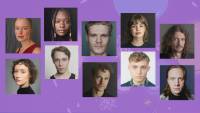
The 2026 selection brings together actors working across the Baltic Sea region and the Nordic countries. For the first time, the programme invited applications from Iceland and Norway.
Dear colleagues and partners,
FilmFestival Cottbus is getting ready for its 36th edition: from 3–8 November 2026, Cottbus will once again become a meeting place for filmmakers, industry professionals and audiences passionate about cinema from Central and Eastern Europe.
While the full programme will be revealed in mid-October, we are happy to share a first glimpse of what awaits you at FFC 2026 – from Andrzej Wajda’s cinematic legacy and contemporary Latvian cinema to perspectives on Montenegro and the transformations following the fall of the Berlin Wall.
And if you are planning to join us in Cottbus: Industry accreditation is now open.
Get Accredited for FFC 2026
Planning to join us in Cottbus? Industry accreditation for the 36th FilmFestival Cottbus is open.
The regular accreditation fee is €55, with applications accepted until 1 November 2026. Late accreditations after 1 November are possible at a fee of €75.
Your accreditation gives you the opportunity to discover the latest cinema from Central and Eastern Europe, meet filmmakers and fellow industry professionals, and take part in the festival’s screenings, talks and networking opportunities.
Get Accredited
100 Years of Andrzej Wajda: A Legacy Revisited
Andrzej Wajda would have turned 100 this year. In Don’t Call Me Vintage!, FFC brings four of his films back to the big screen: ASHES AND DIAMONDS (1958), INNOCENT SORCERERS (1960), LANDSCAPE AFTER THE BATTLE (1970) and THE PROMISED LAND (1975).
But this is more than a retrospective. Films by students and graduates of the Wajda School in Warsaw and Filmuniversität Babelsberg KONRAD WOLF enter into dialogue with Wajda’s work, asking what his artistic and political legacy means to a new generation of directors today.
Close-Up: Latvia
After focusing on Estonia in 2025, FFC continues its exploration of the Baltic film landscape with Close-Up: Latvia.
The section turns the spotlight on contemporary Latvian cinema, presenting different generations, genres and perspectives from a film culture that continues to make its mark internationally. The complete selection will be announced with the full FFC programme in October.
View from the Black Mountain: Montenegro Special
Another journey takes us further south: View from the Black Mountain: Montenegro Special puts the spotlight on cinema from one of Europe’s smallest film countries.
The programme invites audiences and industry guests to discover different perspectives on Montenegro, its society and its cinematic landscape and filmmakers whose work is still rarely seen on German screens.
Transformation without End?
More than three decades after the fall of the Berlin Wall, the consequences of political and economic transformation continue to shape biographies, communities and societies.
Our special series Transformation without End? – Cinematic Perspectives on the Fall of the Berlin Wall and Its Aftermath brings together films exploring these experiences from different perspectives and asks how the upheavals of 1989 and the years that followed continue to resonate today.
Watch & Vote: MIOB in Shorts 2026
The MIOB in Shorts Award is back – and the audience decides the winner. The members of the European Moving Images – Open Borders (MIOB) network have nominated twelve European short films for the 2026 edition.
The complete selection is available on This is Short until 15 October, giving audiences across Europe the chance to watch the films online and vote for their favourite. All twelve films will also be screened at FilmFestival Cottbus in November, where the winner will be announced at the closing ceremony.
Watch the MIOB in Shorts selection & vote
Meet FFC on the Road
FFC Programme Director Bernd Buder will be on the festival circuit over the coming weeks. Meet him at the Festival of Slovenian Film in Portorož (13–18 October) and DOK Leipzig (26–28 October).
Save the Date
36th FilmFestival Cottbus
3–8 November 2026
The full programme will be published in mid-October. Until then, stay tuned for more films, competitions, guests and industry news.
We look forward to welcoming you to Cottbus!
FilmFestival Cottbus Team
What Remains of the Transformation: FilmFestival Cottbus Explores the 1990s and Their Lasting Impact
Festivals 29-09-2026The upheavals of 1989/90 continue to resonate today. Biographical ruptures, new freedoms and social upheaval in the 1990s continue to shape political culture across Central and Eastern Europe. More than three decades later, a young generation of filmmakers is exploring a decade they themselves barely experienced first-hand. With Transformation without End? – Cinematic Perspectives on the Fall of the Berlin Wall and Its Aftermath, the 36th FilmFestival Cottbus (3–8 November 2026) brings films from the period into dialogue with contemporary perspectives on the post-socialist era.
Film pairings from different countries explore the hopes, ruptures and contradictions of those years. From the Baltic states, documentary classic IS IT EASY TO BE YOUNG? (Juris Podnieks, 1986), about Latvian youth subculture during the final years of the Soviet Union, meets the Lithuanian box-office hit THE SOUTHERN CHRONICLES (Ignas Miškinis, 2024). The coming-of-age love story takes audiences into Lithuania in the 1990s, exploring a period marked by new beginnings, disillusionment and emerging class divisions.
Two Slovak gangster comedies approach the gold-rush atmosphere of the era with dark humour: ON A BEAUTIFUL BLUE DANUBE (Štefan Semjan, 1994) follows three petty criminals through Bratislava in the early post-socialist years, while INVALID (Jonáš Karásek, 2023), made three decades later, sends a cantankerous outsider down a similarly wayward path. From Hungary, István Szabó’s classic DEAR EMMA, SWEET BÖBE (1991), about two Russian teachers forced to completely rebuild their lives, is paired with the animated railroad movie PELIKAN BLUE (László Csáki, 2023) – a recollection of what it felt like to have little money but, finally, the freedom to travel and explore the world.
In eastern Germany, HERZSPRUNG (Helke Misselwitz, 1992) meets MORGEN VOR LANGER ZEIT (Luise Donschen, 2026). Misselwitz tells the story of Johanna, who seeks a new beginning in a small Brandenburg town after losing her job. Luise Donschen’s film begins in 1990: its protagonist Patty, played by Gerti Drassl, disappears in the Kyffhäuser Mountains amid the turmoil of German reunification, only to reappear 30 years later. Helke Misselwitz will personally present HERZSPRUNG in Cottbus.
The extent to which the developments of that period continue to resonate in the present is explored in DIE KLASSE VON 1990 (Sonja Hilberger, RP Kahl, 2026). The documentary brings together former acting students who fought to save their drama school in Rostock-Lichtenhagen in 1990 while witnessing the rise of right-wing extremism on their doorstep. The series is complemented by oral history films made in Cottbus, Lübeck and Neuruppin, in which school students ask contemporary witnesses about their memories of the opening of the border and life in the GDR.
During the festival week, young people from Poland, the Czech Republic and Germany will also come together in Cottbus to jointly explore the post-socialist era. The film series and the multi-day youth workshop are funded by The Federal Foundation for the Study of the Communist Dictatorship in Germany.
80 Years of DEFA: A Focus on Sorbian Filmmaking
In the Homeland | Domownja | Domizna section, the FFC marks the 80th anniversary of the founding of DEFA by highlighting a lesser-known chapter of its history: Sorbian filmmaking. Between 1980 and 1990, almost 40 films were produced by the Produktionsgruppe Sorbischer Film / Serbska filmowa skupina (Sorbian Film Production Group) in Bautzen.
Three productions will be screened in Cottbus: WNUČKI ŁUŽIČANOW – DIE ENKEL DER LUSITZER (Armin Georgi, 1967), GAŽ WĚTŠYK DUJO … / UND AUF STEHT DIE WAHRHEIT (Toni Bruk, 1984) and WOPYT / UNRUHE (Toni Bruk, 1984). Toni Bruk’s two films will be shown in their Lower and Upper Sorbian-language versions respectively, with simultaneous German interpretation.
The 36th FilmFestival Cottbus
From 3 to 8 November 2026, FilmFestival Cottbus will present 147 films from 40 (co-)production countries across three competitions and numerous other sections. The complete festival programme will be published in mid-October.