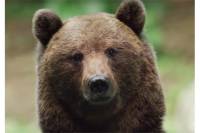
BUCHAREST: A Romanian documentary, Untamed Romania / România Neîmblânzita, had a surprisingly strong opening in domestic release, debuting in the fourth place.

PRAGUE: The Ex Oriente documentary development workshop is accepting applications for its 2018 programme through 24 April 2018.

A higher than normal number of Czech films have received cinema distribution recently.
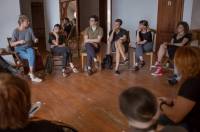
Applications now open worldwide for the 4th edition of Pustnik Screenwriters Residency
Press releases 19-04-2018TETA Association has launched the 4th edition of Pustnik Screenwriters Residency, which will take place between 09-17 September 2018, at Port Cetate, Romania. Pustnik is the only Romanian initiative of this sort, dedicated to young and emerging filmmakers from all over the world.
During this nine-day retreat, eight screenwriters (three from Romania and five internationals) will develop their first or second feature-length screenplays. Producers from across Europe are also invited to participate in roundtable discussions and informal pitching sessions.
Applicants are required to have written at least one short or feature-length film which has screened at a notable international film festival. The working language of the residency is English, so fluency in English is mandatory.
The deadline for applications is 23rd of May 2018 and filmmakers can apply online at www.pustnik.com. Any information regarding the application process can be found in the How to apply section. There are no application or participation fees and the organisers cover costs of accommodation and meals, as well as transport within Romania.
Besides dedicated writing time, Pustnik offers the participants the opportunity of meeting established producers from all over Europe who will give them feedback on their projects. At the end of the programme, the eight participants will pitch their projects in a cosy, informal setting.
Screenwriter Laurence Coriat will be one of the special guests at the 2018 residency. Laurence is best known for her collaborations with Michael Winterbottom, including Wonderland (1999), A Mighty Heart (2006) and Genova (2008). She will share professional and creative insights with this year’s residents, and will also be available for one-on-one consultations.
Pustnik introduces this year a theme that revolves around the personal act of writing. “Don’t Panic” invites writers to leave behind fears and anxieties inevitable to all artists and brings to the table an uneasy but universal subject. The future residents and the guest speakers will be sharing their experiences and insights in overcoming the almighty writer’s panic.
The eight filmmakers will be selected by Andreea Borțun (writer/director, Romania), Bryn Chainey (writer/director, UK/Australia), co-founders of Pustnik, and Lavinia Cioacă (film critic, Romania).
The residency is hosted at Cultural Port Cetate, a late 19th century site with an incredible history of its own, located on the Romanian shore of the Danube.
About Pustnik:
Pustnik is the first international screenwriters residency to take place in Romania. The project aims to offer an organic context for young screenwriters to develop their work-in-progress stories, in an environment dedicated to peace of mind and clarity of thought, away from the industry’s pressures. At the same time Pustnik is creating a network of young film professionals, a community whose aim is to ease and encourage collaboration across the international cinema industry.
For more information:
Paul Petrache – This email address is being protected from spambots. You need JavaScript enabled to view it.
Program organized by TETA
TETA is an NGO founded in June 2006 and its main purpose is developing cultural activities and events to promote an alternative education for all participants enrolled in its projects and at the same time to offer a cultural revival to the communities in which the events take place. TETA is also producing films and theatre performances.
Cultural Project co-financed by the National Cultural Fund Administration

In April, for a whole week the German city of Wiesbaden becomes a meeting point and a promotion platform for Central and Eastern European film and filmmakers. The 18th goEast festival, which kicked off yesterday, is shining a spotlight on the Baltic States with a symposium, “Hybrid Identities – Baltic Cinema”, dedicated to the national cinemas of Lithuania, Latvia and Estonia, their histories, pursuits of national and cultural identities. The festival’s programme also includes some of the key recent titles of Baltic cinema. The project is part of a wide-ranging tripartite programme with which the Baltic States present their cinemas to Europe on the occasion of their centenary of statehood.
The carefully selected films from Central and Eastern Europe in goEast film programme and the symposium are to reflect the region’s cinematic diversity: from contemporary filmmakers to their historical predecessors, from experimental to arthouse and popular film, with new spaces for discussions on film aesthetics, sociopolitical and theoretical underpinnings of filmmaking. The festival seeks to be a forum for an East-West dialogue, open up a space for creative interactions, discussions, workshops, lectures, cooperations with other cultural and societal institutions, networking, exchanges of experience, professional development opportunities for young filmmakers who will benefit from numerous programmes and projects organised by the festival.
“The visibility of Baltic filmmakers has improved significantly over the recent years. Newest films are being screened in the most important European festivals. But it is important to represent the industry with not just the most recent titles, we must pay attention to our cinematic heritage, to maintain a dialogue, to discuss tradition, to study filmic identities with film experts, to survey what we have achieved, what makes us distinctive, what we are today. It’s an important moment for us, crowning our efforts to put together a strong programme, bring experts, masters, important titles. It’s a wonderful result of cooperation among the three countries,” says project manager Dovilė Butnoriūtė, head of the Department of Film Promotion, Information and Heritage at the Lithuanian Film Centre.
The symposium “Hybrid Identities – Baltic Cinema” will include lectures and discussions focusing on Baltic pursuits of identity between 1918 and 1990. The film historian dr. Lina Kaminskaitė–Jančorienė will talk about Lithuanian film production during the transitional 1980s; the Lithuanian documentary filmmaker Audrius Stonys, the Latvian filmmaker Laila Pakalniņa, and the Latvian film critic Elīna Reitere will share their insights about the individuality of Baltic cinema; the director of Riga Film Museum Zane Balčus and journalist Ābrams Kleckins will give a lecture on documentary poetry and cultural identity of “Riga School”; the Latvian National Film Centre director dr. Dita Rietuma will reveal cinematic gems in contemporary Latvian cinema; the Estonian film historian Lauri Kärk will present Estonian Sixties during the Soviet Thaw, whereas prof. dr. Eva Näripea will talk about national and transnational in different periods of Estonian cinema, well-known Estionian animation artists will discuss about great animation in small country, etc.
 Complementing the daytime discussions will be screenings of master works from each Baltic State, among them: Lithuanian classic films Nobody Wanted to Die by Vytautas Žalakevičius (1965), Feelings by Almantas Grikevičius and Algirdas Dausa (1968), Devil’s Bride by Arūnas Žebriūnas (1974), The Children Of The Hotel “America“ by Raimundas Banionis (1990); Latvian classics – 235 000 000 by Uldis Brauns (1967), The Swamp Treader by Leonīds Leimanis (1966), Is It Easy To Be Young? by Juris Podnieks (1986); Estonian classics – Madness by Kaljo Kiisk (1968), The Last Relic by Grigori Kromanov (1969), The Ideal Landscape by Peeter Simm (1980). Also, short films programme of retrospective Lithuanian documentary, including films directed by Robertas Verba, Valdas Navasaitis, Henrikas Šablevičius, Saulius Beržinis, Audrius Stonys, and two programmes of Estonian animation, presenting works of Priit Pärn, Mait Laas, Riho Unt and other filmmakers, will be screened during the symposium “Hybrid Identities – Baltic Cinema”.
The main goEast film programme will introduce the general cinema-going public to contemporary films from Central and Eastern Europe. The sixteen titles in competition will include two Lithuanian films – Mindaugas Survila’s new documentary The Ancient Woods and Eglė Vertelytė’s tragicomedy Miracle, – and Estonian director Rainer Sarnet’s feature film November. Vertelytė, alongside her producer Lukas Trimonis, are also invited to present Miracle as a case study at East-West Talent Lab, an education and experience exchange programme for young filmmakers. 
The presentation of Baltic cinema at goEast and the symposium is organised in partnership with Lithuanian Film Centre, Latvian National Film Centre and Estonian Film Institute.
goEast film festival, organised since 2001, seeks to present the diversity and richness of Central and Eastern European cinema in the very “heart of the West” and raise awareness of the region’s filmmaking and its relevance to international cinema. Each year, the festival’s programme of more than 100 feature, documentary and short films attracts up to 400 industry professionals and 11,000 cinema-goers.

PRAGUE: The Czech dramatic comedy/mother-and-daughter road movie Dad’s Volha / Tatova volha by Jiri Vejdelek has topped the 2 M USD mark after six weeks in distribution in the Czech Republic and Slovakia.

ZAGREB: Estonia will have the lone entry from Central Europe in Animafest Zagreb’s main competition, Captain Morten and the Spider Queen, an Estonian/Irish/Belgian/British coproduction directed by Kaspar Jancis, Henry Nicholson and Riho Unt.

Ex Oriente Film call for applications is closing on April 24, 2018. If you have documentary project in development or early production stage, you can submit it using our online application form (applying is free of charge and is only available in English). Also, if you know about interesting projects in development, do not hesitate to share our call.
Tutors
Among more than 25 tutors of this year’s edition of Ex Oriente Film, we are proud to have the General Delegate of the Venice International Film Critics’ Week Giona
A. Nazzaro (Switzerland/Italy), producer and consultant Iikka Vehkalahti (Finland), Head of Studies of the European Documentary Network Mikael Opstrup(Denmark), director and script editor Ivana Pauerová Miloševičová (Czech Republic) and director and producer Filip Remunda (Czech Republic).
Participants
The workshop is open for 12 selected documentary projects, represented bydirector-producer teams who will attend all the workshop sessions. It is designed for directors and producers coming from Europe with a special attention for Central and Eastern Europe projects (incl. EU acceding and candidate countries, Post-Soviet states and Russia) and/or for creative documentary projects dealing with stories from Central and Eastern Europe.
Workshops
The first Ex Oriente Film session will take place in Trieste (Italy) in June 17 – 23, 2018. For the first time, Ex Oriente Film will be held alongside the new training and development initiative RE-ACT. The date of RE-ACT workshop is June 19 – 21. Creative teams (director and producer) from partner countries/regions: Slovenia, Croatia and Friuli Venezia Giulia who have documentary projects in early stages of development are welcome to apply to RE-ACT until April 20, 2018. You can find more information on the website of RE-ACT workshop.
Next sessions will take place in Jihlava (October 25 – 30, 2018, within IDFF Ji.hlava) and in Prague in March 2019 (within East Doc Platform during One World IHRDFF) where the whole process culminates at the East Doc Forum co-production meeting, featuring the final pitching in front of Europe's and North America's leading commissioning editors and independent producers, distributors, buyers and film fund representatives.