Winning Films from Festivals in Venice, Cannes, Toronto and San Sebastian Among Most Anticipated Slovak Premieres in Bratislava IFF’s Programme
Festivals 08-11-2017
The Cinema Now section of the 19th Bratislava International Film Festival will present some of the most notable films of this year's festival season. The retro fantasy The Shape of Water (2017) and the black comedy Three Billboards Outside Ebbing, Missouri (2017) won the prestigious festival in Venice and rightly so, are among this year's most anticipated films and hottest Oscar nominations. For a change, the family drama April's Daughter (Las hijas de Abril, 2017) by the acclaimed Mexican filmmaker Michel Franco shone at the Cannes Film Festival, where it won the Jury Prize in the Un Certain Regard section and met with an enthusiastic response from the critics. This trio of hot film accessions finalised the programme of the 19. Bratislava International Festival, brimming with attractive Slovak premieres.
The Mexican filmmaker Guillermo del Toro is regarded as one of the most original directors in the contemporary Hollywood. His most acclaimed works include the magic realism fantasy film Pan's Labyrinth (El laberinto del fauno, 2006) and two lavish treatments of the comic book phenomenon Hellboy. His latest film The Shape of Water (2017) was crowned with the Golden Lion for Best Film, the top prize of the Venice Film Festival, and is one of the hottest candidates for the Academy Awards. Once again, Del Toro is balancing on genre borders bringing a sci-fi set in the past, specifically in the paranoid historical period of the Cold War. At the same time, he pays tribute to the 50s and 60s American monster film, particularly referring to the famous Creature from the Black Lagoon. The Shape of Water is a mixture of political thriller, horror and melodrama. Thanks to del Toro’s unique imagination, the universal story of David's battle with Goliath and the forbidden love between the Beauty and the Beast, this genre mix comes across as consistent. The result is a unique emotional experience that will intrigue light as well as demanding viewers.
The story of the film is set in 1963, in the midst of the Cold War. The main character, a maid called Elisa, works in a secret government laboratory, where authorities are holding captive their secret classified experiment - a fish-man of unknown origin. Using sign language, Elise manages to make contact with him. Gradually the two fall in love, which drives Elise to pursue her dangerous plan of setting him free. The main roles will sparkle with such big names as Sally Hawkins, Michael Shannon and Octavia Spencer.
Another Venetian premiere with no less of a successful festival career is the black comedy Three Billboards Outside Ebbing, Missouri (2017), written by the Oscar-winning screenwriter, director and distinguished playwright Martin McDonagh. The film was awarded Best Screenplay prize in Venice and received audience awards at festivals in Toronto and San Sebastian. Martin McDonagh is particularly famous for his black humour, grotesque depictions of violence, brilliant antihero characters and pop- culture references. His first feature film In Bruges (2008) won The Academy Award for Best Original Screenplay. In the movie Three Billboards Outside Ebbing, Missouri the director joined forces with such flm stars as Frances McDormand, Woody Harrelson and Sam Rockwell.
The main heroine, Mildred Hayes, is a mother whose daughter was murdered a few months ago. As waiting for the murderer’s capture proves fruitless, she decides to decorate the city entrance with three billboards, bearing uncompromising messages for the local venerable sheriff William Willoughby. When an immature and violent police officer Dixon gets involved in the conflict, the war can begin.
Another festival laurel-crowned film is Michel Franco’s April's Daughter (Las hijas de Abril, 2017). The film received the Jury Prize in the Un Certain Regard section in Cannes and its world premiere met with fantastic response from the critics. Michel Franco has long been a favourite of this most important world film festival. In the year 2015, he received the Best Screenplay Award for the drama Chronic and in 2012 he won the Un Certain Regard competition with the film After Lucia (Después de Lucía, 2012). The family drama April's Daughter tells the story of a young pregnant Valerie, living with her half-sister Clara. She’s expecting the child with her somewhat older boyfriend, but financial problems compel her to ask her mother April for help. Their family situation is far from ideal and April becomes convinced that Valeria is just not fit to be a mother. Therefore, she opts for a drastic solution. Once again, Michel Franco has shot a powerful psychological drama about tense relationships and characters that all of a sudden find themselves hard up and helpless. The main role of April is played by the fantastic Spanish actress Emma Suárez, whose talent could also be witnessed in Pedro Almodóvar’s latest film Julieta (2016).
The 19th edition of the Bratislava International Film Festival will take place in the pleasant atmosphere of several city cinemas - Kino Lumière, Kino Mladosť, Kino Nostalgia and Gorila.sk Urban Space café, which will host selected film screenings as well as various accompanying events of the festival. The popular Bratislava club Fuga – Space for the missing culture will hosts several great concerts and music parties. For the first time, the festival programme will step out of the capital and selected films will appear in the cinemas Kino MIER in Modra, Kino Mier in Senec and Kino Záhoran in Malacky.
For the latest updates on the programme of the 19th Bratislava International Film Festival, please visit our official website at www.bratislavaiff.sk or our official Facebook account at www.facebook.com/bratislavaiff.
19th BRATISLAVA INTERNATIONAL FILM FESTIVAL
November 9 – 16, 2017
Kino Lumière, Kino Mladosť, Kino Nostalgia, Gorila.sk Urban Space Kino Mier Senec, Kino Záhoran Malacky, Kino MIER Modra
Main Organiser: Partners Production
The International Film Festival is held under the auspices of Marek Maďarič, Minister of Culture of the Slovak Republic
The Festival is held with the generous financial support of Slovak Audiovisual Fund.
Main Partners: Slovenská elektrizačná prenosová sústava, KiK textil a Non-Food, Transpetrol, innogy Slovensko

The FilmFestival Cottbus (FFC) came to a glittering conclusion on the evening of 11th November at the Stadthalle Cottbus with the awards ceremony of the 27th edition that posted record attendance of over 21,000. Polish filmmakers and actors, in particular, had every reason to rejoice. The director Anna Jadowska emerged as the triumphant winner of the Feature Film Competition with her poignant drama WILD ROSES | DZIKIE RÓŻE. Her lead actress Marta Nieradkiewicz impressed the jury and received the LUBINA Award for an Outstanding Actress.
I'M A KILLER | JESTEM MORDERCĄ by Maciej Pieprzyca won the Special Prize for Best Director, and his lead actor Mirosław Haniszewski was presented with the LUBINA Award for an Outstanding Actor. In addition to the four prestigious LUBINAS, the FilmFestival Cottbus awarded prizes totalling almost € 80,000 in value.
„The festival programme has once again demonstrated the artistic and thematic diversity of East European cinema. Polish cinema has traditionally been one of the strongest film industries, this year's prize-winners confirm this. The jury has thus also rewarded the courage of Polish filmmakers in tackling a wide range of subjects. I hope that Polish cinema will continue to have many voices and thus make a significant contribution to the European idea“, comments Bernd Buder, programme director of the FilmFestival Cottbus.
The Main Prize for the Best Film of the 27th FilmFestival Cottbus, with a purse of € 25,000 and donated by the Gesellschaft zur Wahrnehmung von Film- und Fernsehrechten (GWFF), was won by WILD ROSES | DZIKIE RÓŻE by Anna Jadowska. A gripping psychological portrait of a young overstrained mother who sees her life slipping away in the Polish provinces.
The International Festival Jury, consisting of Danilo Bećković, Yevgeny Gindilis, Prof. Dr. phil. Ursula von Keitz, Marcin Pieńkowski and Elīna Vaska, were in agreement: „We chose this film because it gives the main female figure a voice. A voice which reaches the depth of our hearts. We admire the combination of visual style, amazing sound and editing, which makes watching this film an almost physical experience.“
Moreover, the jury recognised the performance of Marta Nieradkiewicz, the lead actress of WILD ROSES | DZIKIE RÓŻE with the Award for an Outstanding Actress, sponsored by the City of Cottbus and with a purse of € 5,000. The work by the triumphant winner can be admired by the festival audience on Sunday, the last day of the festival, at 20.00 in the Stadthalle.
The Special Prize for Best Director, with a purse of € 7,500 and donated by Rundfunk Berlin-Brandenburg (rbb), went to I'M A KILLER | JESTEM MORDERCĄ by Maciej Pieprzyca. „The director uses a lush and diverse range of artistic techniques and leads us carefully through a suspenseful and elaborated plot. However, his film language always remains in the service of creating a thorough and disturbing psychological portrait of the main protagonist. The Special Prize for Best Direction is awarded for creating a visually stunning film that seamlessly develops from a crime story into a deep and thoughtful analysis of the corruption of a human soul“, the jury said in its motivation.
The jury also recognised here the performance of the lead actor Mirosław Haniszewski and presented him with the Award for an Outstanding Actor – with a purse of € 5,000 and donated by the Sparkasse Spree-Neiße.
The Short Feature Competition saw the film ATLANTIS, 2003 | ATLANTÍDA, 2003 by the director Michal Blaško beating off the competition to take the top prize. He won the € 1,500 Main Prize, donated by Druckzone, Cottbus. The jury – consisting of Emilio Sakraya, Svenja Böttger, and Samaya Asgarova – gave the following motivation: „The winner of the Best Short Film Award shows social-political issues through the relationship between the two protagonists. The camera not only guides us through the story, but also takes us along. The director gives the actors time to act and the audience time to understand.“
Director Ruslan Bratov garnered the Special Prize, with a purse of € 1,000 and donated by Druckzone Cottbus, for MERRY-GO-ROUND | LALAY-BALALAY.
Pupils from Poland, the Czech Republic and Germany made up the six-person jury for the U 18 Youth Film Competition. They chose the biopic BREAKING THE LIMITS | NAJLEPSZY by Łukasz Palkowski as the winner. The director Łukasz Palkowski received the € 3,000 Prize for the Best Youth Film, donated by Lausitz Energie Bergbau AG (LEAG). The jury commented about its decision: „Every day is a fight. We fight for love, our family and our dreams. We make decisions, we make mistakes, but the most important thing is: we never give up. We have chosen BREAKING THE LIMITS by ŁUKASZ PALKOWSKI for its authentic and touching story, for having the opportunity to follow someone's failures and triumphs, and seeing a boy become a man and finally a champion. He struggled, he fought, and he won.“
Other prizes were awarded during the 27th FilmFestival Cottbus: the DIALOGUE Prize for Intercultural Communication, donated by the Federal Foreign Office with a purse of € 3,000, went to the director Đức Ngô Ngọc for his documentary FAREWELL HALONG, which had its world premiere at the 27th FFC and could be seen in the Vietnam in Europe Focus.
The jury gave a Special Mention to SAMI BLOOD | SAMEBLOD by Amanda Kernell.
The Prize for the Best Debut Film, donated with a purse of € 3,000 by the Brandenburgische Technische Universität Cottbus-Senftenberg and the Film University BabelsbergKONRAD WOLF, was presented by the jury to GOOD MORNING | BARI LUYS by Anna Arevshatyan, her brother Eduard Arevshatyan accepted the award.
The decisions by the FIPRESCI jury and the Ecumenical Jury for WILD ROSES | DZIKIE RÓŻE added to the long tally of prizes for director Anna Jadowska.
BAREFOOT was particularly well-received by the festival-goers. The director Jan Svěrák was able to take home the Audience Award, donated with a purse of € 3,000 by Lausitzer Rundschau. The hit will screen at the 27th FFC on the final day at 12.00 in the Stadthalle.
New record attendance
The 27th FilmFestival Cottbus presented almost 200 films from 42 countries – including eight world premieres, 25 international premieres and 85 German premieres – over the course of seven days. The FFC reached a new record with over 21,000 admissions!
„We are very satisfied with what has been a wonderful festival week. The people of Cottbus have proven to be superb hosts. Moreover, our record shows that we have a place in the hearts of the people“, says FFC managing director Andreas Stein.
The FilmFestival Cottbus impressively demonstrated the attractiveness of East European cinema. Almost 600 accredited professional guests used the film festival as a leading platform of East European cinema to forge contacts and inform themselves about current developments in the industry.
Programme news
(about the previously announced special screenings)
17.30 – Stadthalle Cottbus – THE LINE | ČIARA
20.00 – Stadthalle Cottbus – WILD ROSES | DZIKIE RÓŻE
The 27th FilmFestival Cottbus receives substantial support from the State of Brandenburg, Medienboard Berlin-Brandenburg, the City of Cottbus, the Federal Foreign Office, and the Creative Europe Programme of the European Union.
The 28th FilmFestival Cottbus will take place from 6 to 11 November, 2018.
Please feel free to contact our PR and marketing managers Anne-Kathrin Rensch, Denis Demmerle and Carolin Bloch for further information as well as broadcast and print-quality images.
E-mail: This email address is being protected from spambots. You need JavaScript enabled to view it.
Additional press material can also be found on our website www.filmfestivalcottbus.de

For films shot in Lithuania – prestigious International Emmy nomination and success at International Film Festivals
Press releases 13-11-2017
Lithuania is an attractive destination for those foreign filmmakers who come here seeking not only flexible prices for film production and services but also a professional crew and suitable locations. Last year, Lithuania attracted the highest number of foreign productions since the introduction of its 20 percent tax incentive in 2014. Worldwide known directors, actors and producers work with the projects partly shot in Lithuania. Films produced in this country have also been noticed on the international film market. The Founder and producer of a Lithuanian production company, ARTBOX, Kestutis Drazdauskas shares his International co-production experience.
"Film production is a long and complex process which requires time and effort in all its stages. Therefore, every premiere is a big event not only for the directors, actors or producers but also for the whole crew involved in the creation of the film. The premiere is the point beyond which the film becomes "independent", and the viewer decides on its destiny. This autumn we premiered several films that vary from romantic dramas to historical documentaries. Many of them were selected for prestigious international film festivals, and this is really delightful,” says producer Kestutis Drazdauskas.
One of the examples is a four-part historical drama, “Tokyo Trial”, (dir. Rob W. King and Pieter Verhoeff), a co-production between FATT (The Netherlands), DCTV (Canada) & NHK (Japan). “Tokyo Trial” is a dramatic historical recreation of the trial that started in 1946, immediately following WWII, whereby 11 judges from all over the world were called to Tokyo. There they spent two and a half years engaged in a landmark trial that determined the outcome for Pacific military and political leaders who were charged with war crimes.
The main part of “Tokyo Trial“ was shot in Lithuania. The cast of judges includes international stars Marcel Hensema (Hollands Hoop, Simon), Jonathan Hyde (Titanic, Jumanji, The Strain), Paul Freeman (Raiders of the Lost Ark), Irrfan Khan (Jurassic World, Life of Pi, Slumdog Millionaire), with Michael Ironside (Total Recall, Top Gun) as General Douglas MacArthur. Lithuanian actors Kestutis Jakstas and Gabija Jaraminaite were entrusted with two of the main roles. Gabija Jaraminaite performed the role of the interpreter and was the only one female in the court proceedings.
Now “Tokyo Trial“ is available as a four part mini-series and as a 105-minute feature film. The four-part mini-series had its global release at NHK and Netflix on December 12th, 2016. The feature began its festival tour with a red-carpet premiere at the Netherlands Film Festival on September 25th, 2017.
However, the main good news is that the nominations for the 2017 International Emmy Awards have been announced by the International Academy of Television Arts & Sciences. There are 44 Nominees across 11 categories, and 18 countries and “Tokyo Trial” is among them. The film has been nominated as the Best Mini-Series.
“I still feel as if I have been struck by lightning - “Tokyo Trial” is nominated for the International Emmy awards. It is an indescribable feeling. I am so proud the film was shot in Lithuania,” says K. Drazdauskas.
Another film – “Tulipani: Love, Honour and a Bicycle“ (dir. Oscar-winning Mike van Diem), co-production of The Netherlands, Canada, Italy, also co-produced by K. Drazdauskas. After losing his farm during the floods of 1953, a romantic Dutch farmer is tired of getting his socks wet. He cycles to Italy and decides to grow tulips in the sweltering heat of Puglia.
The main roles in this film are played by a well-known actress, Ksenia Solo, and an Italian actor, Giancarlo Giannini.
“Tulipani” had its worldwide premiere at the Toronto International film festival where it was part of The Contemporary World Cinema programme. It was suggested by the Academy of Canadian Cinema and Television as one of 10 must-see films: https://www.academy.ca/2017/csa-winners-at-tiff17.
This autumn the film was screened at the Netherlands Film Festival, where "Tulipani" was selected to be an opening film and had also been selected for The Chicago International Film Festival. “Tulipani” also won the Best International movie award at the Terra Di Siena Film Festival.
One more film partly shot in Lithuania by Artbox, which has been premiered this autumn, is the coproduction between Poland, Lithuania, France, and Germany “Habit and Armour” (dir. Pawel Pitera). This film narrates the history of the Teutonic Order and the Kingdom of Poland and Lithuania as a huge strategic game in which different cultural values compete, and human emotions collide.
“Habit and Armour” was shot in historical places – among others in Gdańsk, Toruń, Warmia and Masuria and in Lithuania (Vilnius, Trakai, Kernave, and other places). The narrator is a Hollywood actor, the Golden Globe-winner Stacy Keach (American History X, The Bourne Legacy). The production is available in several languages: Polish, English, Lithuanian, German and French. Other film versions such as a TV series production is also planned. This film will start its festival circuit soon.
A special movie worthy of mention is the coproduction between Armenia and Lithuania, “The Last Inhabitant” (dir. Jivan Avetisyan). Evicted as a result of the Armenian-Azerbaijani conflict, Abgar is left behind alone in a gradually shrinking enemy ring. An Azerbaijani named Ibrahim offers Abgar work on the construction of a mosque in exchange for finding and bringing back Abgar’s missing daughter. The film is a story of love, virtue and self-sacrifice.
Although this film had its premiere at the Armenian Film Festival, “Golden Apricot”, in 2016, this year was no less successful. The film was screened in USA, Lebanon, Iran, Netherlands, Finland, Sweden and elsewhere). It participated in Shanghai and Venice International Film festivals, and won the Best Feature and the Best Actor awards at the Scandinavian International Film Festival.
The main roles in this film were played by a Lithuanian actress, Sandra Dauksaite-Petruliene, and by two outstanding actors Aleksandr Khachatryan and Homayoun Ershadi. Music for this film was created by the leader of the famous rock band, “System of a Down”, Serj Tankian.
TOKYO TRIAL trailer: https://www.youtube.com/watch?v=GdwKZwp4fHI
TULIPANI: LOVE, HONOUR AND A BICYCLE trailer: https://www.youtube.com/watch?v=6N6Pve4wb9k&t=18s
THE LAST INHABITANT trailer: https://www.youtube.com/watch?v=5Nras4Uj_Z4&t=25s
HABIT AND ARMOUR trailer: https://www.youtube.com/watch?v=aYR8lOueJn8
About the ARTBOX
Established in 2003 ARTBOX is now one of the leading film production companies in the Baltic region. ARTBOX works with new talents as well as experienced artists. Productions and co-productions of wide international appeal is the main goal of the company. Films produced by ARTBOX have been screened and won awards at numerous international film festivals.
For more information please contact:
Juste Michailinaite
Communications coordinator
+370 675 78746
This email address is being protected from spambots. You need JavaScript enabled to view it.

25th anniversary edition of the International Film Festival of the Art of Cinematography CAMERIMAGE was officially opened today in Opera Nova, Bydgoszcz, Poland. During the ceremony Kenneth Branagh received the Krzysztof Kieślowski Award, and - together with Haris Zambarloukos - the Cinematographer - Director Duo Award. Frederick Wiseman took the stage to get the Award for Outstanding Achievements In Documentary Filmmaking, Paul Hirsch received the Award to Editor with Unique Visual Sensitivity, and Volker Schlöndorff received the Award to a Friend of the Festival. Additionally, as a part of the Opening Gala the Festival screened Murder on the Orient Express (dir. Kenneth Branagh, cin. Haris Zambarloukos) and Downsizing (dir. Alexander Payne, cin. Phedon Papamichael).
25th Camerimage will last until Saturday, 18th November. You can read more on this year's edition everyday on the Festival website, Facebook, Twitter and Instagram.

FERA reacts to absence of EU creators in upcoming Estonian Presidency Audiovisual Conference programme
Press releases 14-11-2017
FERA Honorary President Sir Alan Parker addressed a letter to Estonian Minister of Culture Indrek Saar on Monday November 13 to express dismay at the absence of European creators or author representatives in the programme of the audiovisual conference "Pictured futures: connecting content, tech & policy in audiovisual Europe" to be hosted in Tallinn by the Estonian Presidency of the Council of the EU.
From the evolution of technology on set and in post-production, to new trends in “storytelling visions and formats”, as described in one of the conference panel title, audiovisual authors like film and TV directors have been experiencing the digital shift in their craft on a daily basis for years. This has taught us that without creative vision, new formats cannot be expected to thrive.
As the creative minds at the very origin of the audiovisual and copyright value chain, we have a vision of “where the European audiovisual market is going long-term”, particularly as the EU institutions are reforming the European copyright legal framework and building a Digital Single Market : we believe that fostering the diversity of creative voices in Europe by producing a variety of audiovisual works is the only way to sustain cultural diversity, one of the European Union’s essential strengths.
We therefore consider that an essential part of these discussions is missing from the conference programme : how to make the Digital Single Market a sustainable environment for audiovisual creators by ensuring their fair remuneration through the EU copyright legal framework.
We hope this conference programme does not reflect the full scope of the priorities of the Estonian Presidency, which we trust will have at heart to promote a sustainable vision for the future of Europe’s audiovisual creation and its authors’ community in the on-going discussions on the Copyright in the Digital Single Market Directive proposal, the Regulation proposal on Broadcasters’ Online Transmissions and Retransmissions, and the AVMS Directive proposal.
Contact : Pauline Durand-Vialle – This email address is being protected from spambots. You need JavaScript enabled to view it. – +32 25 44 03 33

Submissions are now open for the 17th edition of Translvania International Film Festival, which will take place between May 25th – June 3rd, in the city of Cluj, Romania. The registration system works through the platform Eventival.eu. The guidelines and the entry online form can be found here: https://vp.eventival.eu/tiff/2018
Please note that when submitting a film, you have the following options:
- If you have the film on Vimeo or other video platforms, please insert in the form the link with a username & password
- Send it via DVD to our offices: 52 Popa Soare Street, 1st floor, ap. 4, 2nd district, Bucharest, Romania | Tel/fax: +40 21 326 02 68 / +40 21 326 64 80 • E-mail: This email address is being protected from spambots. You need JavaScript enabled to view it..
We are accepting entries for the following sections:
Official competition
Competitive section focused on films that are illustrative of the new wave in international cinema. The competition is open to first and second feature films only and must be national premieres.
Shadows
Showcase of genre (horror and fantasy) feature films and competitive section focused on horror and fantasy short filmshttps://maps.google.com/?q%3D52%2BPopa%2BSoare%2BStreet,%2B1st%25C2%25A0floor%26entry%3Dgmail%26source%3Dg%3E&entry=gmail&source=g"> with a maximum duration of 25 minutes.
What's Up, Doc?
Non-competitive section presenting documentaries produced in the past year, with a minimum duration of 60 minutes.
Romanian Days
Competitive section focused on Romanian short and feature films produced between 2017 and 2018 and on Romanian cinema retrospectives. Romanian premieres for short and feature-length films are preferred. All co-productions (short or feature) that have been produced with a Romanian minority contribution shall be screened outside the official competition.
Deadline:
February 1st, 2018 – for films submitted for the Official Competition, the Shadows section (both short and feature films) and What’s Up, Doc?
March 1st, 2018 – for films submitted in the Romanian Days short and feature films competitions
The official selection will be announced before April 25th, 2018.
For any inquiries, please contact us: This email address is being protected from spambots. You need JavaScript enabled to view it. | +40 21 326 02 68.
Tallinn Black Nights Film Festival will be collecting donations for development of the festival
Festivals 15-11-2017
The Tallinn Black Nights Film Festival (PÖFF), one the fifteen FIAPF-accredited competitive film festivals in the world which will be held for the 21st time this year, will be collecting donations for development of the festival in addition to the support from businesses, the state, and the local government. One of the first goals is to translate as many films as possible into Estonian and Russian. So far, a third of the films screened at PÖFF have been translated into Estonian and Russian.
“PÖFF has been operating for years with a minimum budget, but maximum programme,” said Tiina Lokk, Director and Head of Programme of PÖFF. “To ensure a high standard of the festival and to bring the films to the audience with a high quality, we would like to involve the fans of PÖFF – to give them an opportunity to donate, to participate in organising the festival. PÖFF is an international film festival and the official language of the festival is English, due to the lack of funds, however, we have not been able to translate many of the films screened into Estonian and Russian. We would like to be closer to our home audience for the stories told by the films to reach the audience as convincingly and comprehensibly as possible.”
According to Tiina Lokk, the budget has allowed to translate a third of the films screened within the framework of the festival programme to Estonian or Russian. “We have received a lot of feedback about this and, due to requests from the audience, we will start collecting money for translating films for the next year’s festival. Translation of every single film is accompanied by remarkable expenses, which cannot be recovered simply by charging higher ticket prices,” explained Tiina Lokk. “If our idea is supported by the audience, we also intend to develop other activities”.
For the festival to be able to hold on to its position among some of the top film festivals in the world, which has been achieved through many years of work, and to continue its development, constant help is needed from supporters. As of this year, everyone interested who cares about cinematography and about expanding the world can help to develop, improve, and grow the festival. To do so, a desired amount of money can be transferred directly to the account of the festival by adding the comment “Toetan PÖFFi” (“Supporting PÖFF”) via the main menu on the website of PÖFF. Anyone interested can support the festival – private individuals as well as companies.
The Tallinn Black Nights Film Festival (PÖFF) is an international film festival, which has been organized since 1997. As of 2014, PÖFF is the only festival in Northern Europe that has been given by FIAPF (International Federation of Film Producers Associations) the competitive status. The festival consists of various different events, including two sub-festivals (Just Film, PÖFF Shorts) and international film industry event Industry@Tallinn, which bring films and filmmakers from more than 70 countries from America to Asia to Tallinn every year.
CONTACT
Hannes Aava, coordinator of international communication, +372 5552 9211
/ This email address is being protected from spambots. You need JavaScript enabled to view it.
The European Film Academy announces the first winners who will be honoured at this year’s European Film Awards. A special seven-member jury convened in Berlin and, based on the EFA Selection list and the additional film entries, decided on the winners in the categories cinematography, editing, production design, costume design, hair & make-up, composer and sound design.
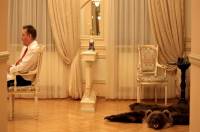
Interview: Petr Horký, director of The Russian Job – a film in the Competition for Mid-Length Documentary at IDFA 2017
Press releases 14-11-2017
A film set in Russia about Lada automobile production may not sound like the most riveting topic for a documentary. But Petr’s Horký’s directorial debut is a fascinating and wryly amusing tale. Set in Tolyatti, the city where the Lada factory is based, The Russian Job follows the attempts of hard-hitting Swedish businessman, Bo Andersson, to revolutionise the once-thriving company and drag it by the collar into the 21st century. Through intimate – and beautifully shot – glimpses into the lives of both Andersson and those factory workers he is antagonizing, we learn just how monumental his task is. He doggedly competes with corruption, xenophobia and more than anything, the grim Soviet shadow that still looms over Europe’s biggest country.
The Russian Job will be a part of the delegation led by the Institute of Documentary Film and we caught up with him to tell us all about it.
You've made a Czech film about the Russian Lada company. How did that happen?
In the fall of 2014 I was working as a journalist for one Czech economic newspaper and I was invited to visit the Lada factory in Tolyatti to write an article about it. There I met this pragmatic, hard-working Swedish manager who was bringing about very dramatic changes to this rather sleepy place. A man of the capitalist world trying to westernize a post-Soviet relic. I wrote the article, but the theme and the images stuck in my head. With my friend, who is a photographer, we asked the manager if we could make a documentary about this reform process. And he said yes.
What were the most surprising discoveries for you personally during your filming?
It surprised me how everything in the city is revolving around the factory. Almost everyone you meet has in his life worked in the plant or at least knows someone there. At every step you can feel that the city was built around the factory. There is a huge sports stadium, summer and winter resorts for the workers, the factory even has its own TV channel. And most people in Tolyatti remember the communist past as the best time of their life.
The film shows the hard-hitting business side of Bo Andersson. Do you think you managed to portray his more sensitive side also?
Mr Andersson is very straight forward in his attitude towards his employees and his task, but at the same time he is a very careful person. We got much closer than any other journalist, we had very open discussions with Mr Andersson, which is unusual for people of such high corporate position. But at the same time Mr Andersson was always very aware of the camera, we never really caught him off-guard.
In what way does the film explore Russian stereotypes?
I think you are being polite! You could even say that we exploit the Russian stereotypes! In our film the locals are sentimental of their past, sometimes they are lazy, sometimes proud, they like to do things for display, white wash. But they also can enjoy their time, they have their way of life, they dip in the frozen water and they have a good time rowing a boat on the Volga river no matter what regime comes.
How would you describe the atmosphere of the film?
I am now too close to the film and can’t see it clearly anymore, but at times I see a comedy with tragical subtones and at other times a tragedy with a comical streak. So it’s probably something in between.
The film features the Walruses – an eccentric group of Russians who swim in ice cold water. Why did you decide to include them?
The bathing club used to be part of the Avtovaz factory. We thought the micro story of the snowblower could illustrate the complicated relations between the foreign managers and the locals.
Do you find any similarities with the life and mentality of people in the Czech Republic?
I think in the Czech Republic you can also find many people who live in the past and in a state of collective denial, but it is not as concentrated as in Tolyatti.
The film is beautifully shot. What are your filmmaking influences?
I think this is a question that should be answered by our cinematographer Milan Bureš. He is a photographer and that creates a lot of the style. 99 percent of the shots were taken from a tripod and carefully composed. This style has its limitations, but also big advantages. We didn’t have any particular influence in our mind, but many people compare the style to the films of Ulrich Seidel. We also like the style of Vitalij Manskij.
What have you got planned next?
I don’t have any specific plans, but I would like to get back to the original question: where is the border between the East and the West?
Petr Horký
Studied journalism in Prague. Moved to London to graduate in photojournalism, but never pursued career as a photographer. Moved to Berlin to learn German, then to Prague. Worked for a daily economic newspaper. Spent year as a blogger travelling around Asia. After returning home, found a job at an economic weekly magazine which enabled him to go deeper in his stories. One story lead him to Russia where he encountered a subject he thought worthy to be made into a documentary film. Crucial role in this decision one meeting with his friend, photographer Milan Bureš who agreed to become the cameraman of the film.
The Russian Job is produced by Martin Jůza - Krutart, co-produced by Kateřina Ondřejková - Czech Television
Sales: Rise and Shine World Sales
Black Nights Film Festival introduces the lineup of the new programme Rebels With A Cause
Festivals 14-11-2017
The new section, dedicated to films that are experimental or unconventional in form or style, is a competition programme with an audience award. The first edition will see 10 films, with one having its world and another its international premiere.
The selection includes the world premiere of Riga (Take One) by the French director Siegfried, a free-style composition about passion and fine arts, studied through the perspective of four women in Riga, Latvia. The rhythm of the films is based on the rules of a jazz partition.
Mònica Rovira Herrero presents her film To See a Woman, an intense chronicle of a relationship in which she also plays the protagonist, that will have its international premiere at the Black Nights Film Festival.
The programme also includes the restored version of Jean-Luc Godard’s The Rise & Fall Of a Small Film Company, the Venice-premiering The Wild Boysdirected by Bertrand Mandico, the landscape-observation essay The New Wild: Life in the Abandoned Lands by director Christopher Thompson, the Russian satire Ice Hole directed by Andrey Silvestrov. The montage of magical moments in other films, depicting cinema-going in Have You Seen My Movie? by director Paul Anton Smith and the The Little Match Girl by director Alejo Moguillansky, who intertwines musical rhythms and elements into the visual storytelling of the film.
According to the programme’s coordinator Javier Garcia Puerto the programme consists of works of filmmakers who bring up new perspectives by challenging cinematic borders. „Rebels With a Cause“ will present edgy films made by bold filmmakers, who nurture the field of cinematic language by pushing the limits and reaching new boundaries in the art of storytelling with sound and image. While sticking to the narrative they bend the rules and twist perceptions, and by doing so they make us as an audience face a challenge. Audiences will also be able to express their emotions by selecting their favourite film as part of a collective jury.”
Have You Seen My Movie?, UK, 2016, dir Paul Anton Smith
Ice Hole (Prorub) Russia, 2017, dir Andrei Silvestrov
Riga (Take One), France, 2017, dir Siegfried
The Little Match Girl (La vendedora de fósforos), Argentina, 2017, dir Alejo Moguillansky
The New Wild: Life in the Abandoned, Austria-Italy-UK, 2017, dir Christopher Thomson
The Rise & Fall of a Small Film Company (Grandeur et décadence d’un petit commerce de cinéma), France, 1986, dir Jean-Luc Godard
The Wild Boys (Les garçons sauvages), France, 2017, dir Bertrand Mandico
To See A Woman (Alguna Cosa), Spain-Italy, 2017, dir Mònica Rovira