PRAGUE: Seven film films have been selected for the main competition of the 27th edition of the Prague International Film Festival, which will take place 19 - 27 March 2020.
BUCHAREST: Romanian film market is diversifying and getting stronger with one domestic comedy shot in the USA ranking 2nd in the overall box office and a documentary on the importance of investigative journalism with more than 15,000 admissions in its first weekend, a very impressive result for a domestic documentary.
Tallinn Black Nights Film Festival Opens Film Submissions as PÖFF Shorts Celebrates Becoming an Academy Qualifying Event
Festivals 03-03-2020Tallinn Black Nights Film Festival opens film submissions with a green initiative. Sub-festival PÖFF Shorts becomes Academy Qualifying festival.
Tallinn Black Nights Film Festival aka PÖFF, the only A-category film festival in Northern Europe has opened submissions for its 24th edition, which is set to run from the 13th until the 29th of November.
As a new endeavour, Black Nights has joined a group of film festivals pledging to do more in engaging in sustainable activities in 2020 and support and spread the word of people who are trying to make a change. A Green Pledge of film festivals is currently also in the works with several major film festivals. As a first step, however, Black Nights has decided to donate one euro from every submission fee received to the restoration of the forests that burned in Australia.
Hannes Aava, the head of communication and one of the advocates of the green initiatives at Black Nights commented: as the impending climate crisis is becoming a reality that can already be felt in most parts of the world, collective global action is needed more than ever. Like most other organisations on the planet, film festivals also need to critically assess their practices and make changes where they can. Showing films that are tackling these issues is just not enough anymore. I sincerely hope that these first, small steps we are taking right now, are only an introduction to bigger and more fundamental ones to follow and also serve as an inspiration for those who have not started to think on these matters.’
PÖFF has opened submissions in Filmfreeway for the main festival and its two sub-festivals: youth and children’s film festival Just Film and short film and animation festival PÖFF Shorts. The regular deadline with a lower fee - is set on July the 1st, while the final deadline is the 24th of August.
PÖFF Shorts is now an Academy Award Qualifying Festival
The team of Black Nights celebrates the news that the international short film and animation festival PÖFF Shorts - that was combined of former animation festival Animated Dreams and short film festival Sleepwalkers in 2017 – has become an Academy Qualifying film event. The status means that, should they be eligible, films winning a qualifying award at PÖFF Shorts will be eligible to submit their films for consideration for both the Live Action and Animation Short Awards at the Academy Awards. Competition winners in both the International and National competitive sections of PÖFF Shorts will be eligible for possible qualification.
Grete Nellis, head of PÖFF Shorts commented: “We are honoured and truly excited about this recognition the Academy Award qualification status brings to PÖFF Shorts. While those who have screened at and attended the festival in the past already know the quality of everything we do, the qualification adds a further confirmation both for our own team and to the filmmakers making their choices around the yearly festival calendar – that PÖFF Shorts is a valuable place for any filmmaker with a short to consider.”
“It’s also really a testament to the hard work of all the previous heads of the festival, programme directors and all the other people, who gave so much of themselves to make PÖFF Shorts possible, on the level it is today. s. Not to mention our ‘parent’ festival Black Nights who have let us develop our own identity whilst under their auspices and constantly given invaluable help,” she went on to add.
In addition to being an Academy Award qualifying festival, PÖFF Shorts is also a European Film Award Qualifying Festival – whereby one film in competition will be chosen by a jury for consideration for possible nomination in the short category at the European Film Awards – and a BAFTA Qualifying festival where live-action British films screened in competition are eligible to submit their films for consideration for the BAFTA Awards.
This year’s edition of PÖFF Shorts will take place from 17th–25th November 2020.
Dates & Submission links
Tallinn Black Nights Film Festival - 13-29 of November
https://filmfreeway.com/blacknightsfilmfestival
Youth and Children’s Film Festival Just Film - 13-29 of November
https://filmfreeway.com/just
International Short Film and Animation Festival PÖFF Shorts - 17-15 of November
https://filmfreeway.com/POFFShorts
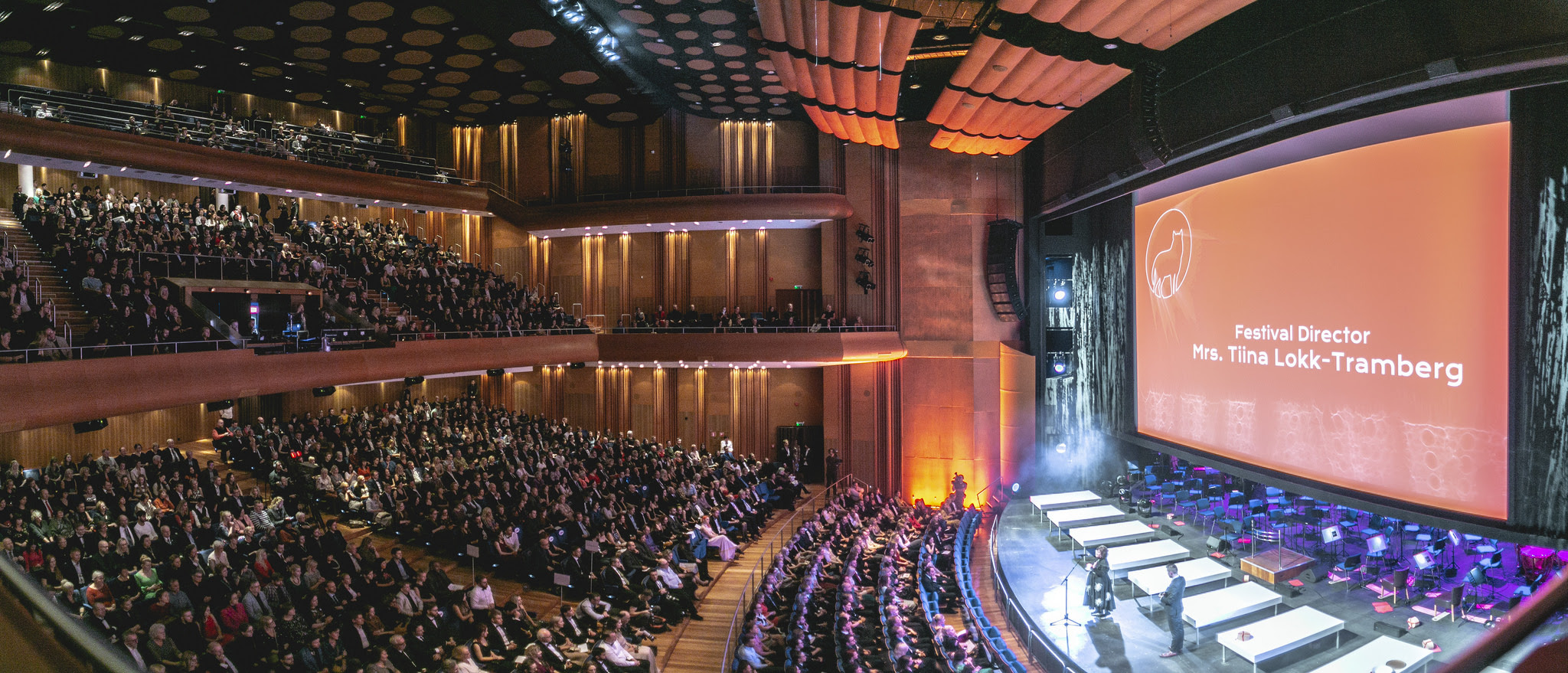 Black Nights FF Opening Ceremony (photo by Ahto Sooaru)
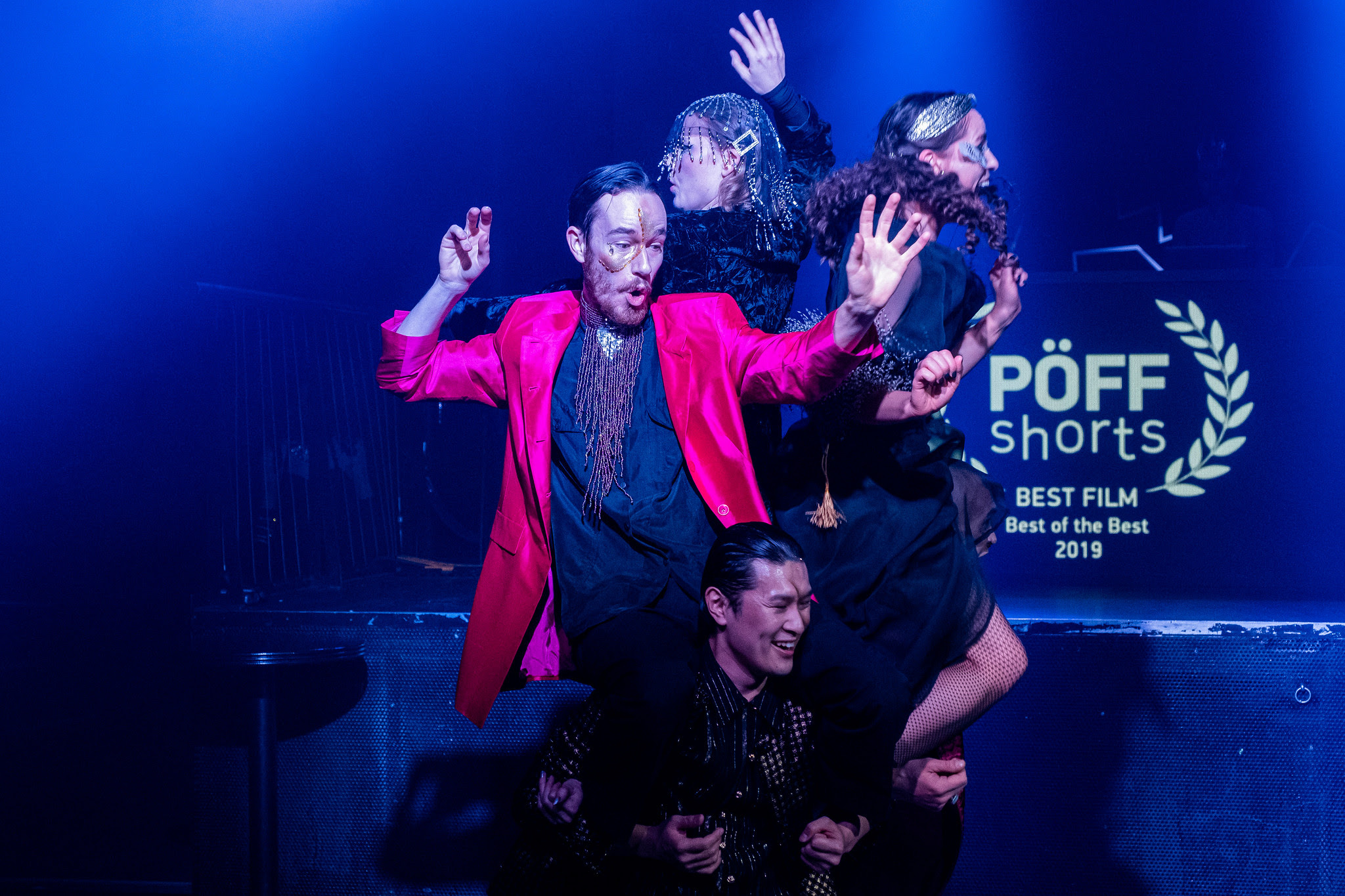 PÖFF Shorts Closing Ceremony
 PÖFF Shorts screening
Vodka, meme exhibition and short Films for Evening Strollers // Talents Take Flight // Accreditation and Press Conference
Wiesbaden/Frankfurt, 2 March 2020
International meets local: with the generous support of Kulturfonds Frankfurt RheinMain, the “Pan-European Picnic” programme is back for its second edition this year. The project aims to make Central and Eastern European culture in the region visible. One of this year’s highlights is an evening short-film walk scheduled for the festival Friday, 8 May: expanding cinema beyond the silver screen, the films featured here will be projected onto the walls of houses, bridge pillars and shop windows in Wiesbaden’s Klarenthal district. Participants can expect a cinema experience that shows the neighbourhood in a new light. The idea for this unorthodox screening comes from the Hamburg-based artist collective “A Wall is a Screen”. In a re-definition of public space, the audience will stroll through a section of Wiesbaden that is also populated by many individuals with Central and Eastern European roots – an experience bringing Wiesbaden residents of diverse backgrounds and age groups together that is sure to open up unfamiliar perspectives, both regarding the films on display and the architectural surroundings.
In a curated exhibition, film critics Vladan Petković (Serbia) and Vassilis Economou (Greece) are bringing online meme culture to the goEast Festival Centre. As exhibition co-ordinator for goEast’s Pan-European Picnic Anastasiia Melai explains: “Memes are an important expression of today’s vox populi, the voice of the people. They demonstrate in a humorous way what’s going on in society at large and in people’s heads in particular, just as cinematography does too.”
In the scope of interactive language courses in an Eastern European supermarket, the Pan-European Picnic’s role as a cultural intermediary comes to the fore: under the guidance of a language tutor, attendees have the opportunity to buy goods in Polish or Romanian. Afterwards, there’s not much standing in the way of that next shopping spree in Warsaw or Bucharest!
Finally, in a casual, congenial atmosphere, the cultures of East and West will encounter one another on Saturday, 9 May, between 10 am and 3 pm at Wiesbaden’s Schlossplatz square. Guests large and small will come together over goulash and music and experience Central and Eastern European culture up close at a host of stands representing cultural associations from the Rhine-Main region. Actor Ivan Shvedoff, among others known for Babylon Berlin, will join us once again for a multi-lingual scenic reading.
This rich cultural experience will be rounded off by the RheinMain Short Film Award: eight short films from Central and Eastern Europe will be competing for the prize, endowed with 2,500 euros and presented by a jury composed of independent cinema operators from the Rhine-Main region.
Up-and-Coming Talents Take Flight
Young filmmakers still have the chance to register for the East-West Talent Lab until 5 March. In goEast’s programme for emerging artists, 30 filmmakers present their current projects, develop them further and extend connections among their peers and within the film industry. New points of focus this year are the ethics of working with actors and protagonists, as well as the production of serial formats. The grand finale is a public pitching session, presided over by a three-member jury made up of editor Jutta Krug (WDR/ARTE), feature-film producer Kirill Krassovski and producer/author Ira Tondowski. The most innovative project is honoured with the goEast Development Award, featuring a cash prize of 3,500 euros. In addition, a research grant, also valued at 3,500 euros, is awarded to a documentary film project with a focus on human rights issues. As Andrea Wink, co-ordinator of the talent development programme at goEast, states: “The East-West Talent Lab has become a crucial component in the development landscape for young filmmakers. goEast fosters young talents from Central and Eastern Europe here. Aside from providing a forum for the development of new projects, the goEast Development Award also brings them a significant step closer to realisation.”
Accreditation and Press Conference
Members of the press can register for accreditation for goEast – Festival of Central and Eastern European Film from now until 24 April at: Accreditation
The press conference for the 20th anniversary edition of goEast will take place at 11 am on 29 April at Wiesbaden’s Caligari FilmBühne. Please contact us to RSVP if you would like to attend.
THESSALONIKI: The 22nd edition of the Thessaloniki Documentary Festival will be postponed, probably for the end of May/beginning of June 2020, due to coronavirus. However, a significant part of the initiatives and projects hosted by Agora, the development branch of the Festival, will be carried out via the Internet.
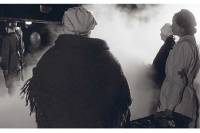
ZAGREB: Croatian Composers' Society and the Croatian Audiovisual Centre are organising a Day of Croatian Film and Music in Brussels on 24 March 2020, on the occasion of the current Croatian presidency of the Council of the EU.

WARSAW: Jan Komasa’s Corpus Christi was sold by New Europe Film Sales to MAD Solutions for Arab countries distribution. The film has already been sold to more than 50 territories and opened on over 80 screens in North America on 19 February 2020.
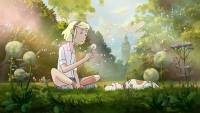
How Did Czech Animation Do in 2019 And What Does It Have in Store for the Audience This Year?
Press releases 02-03-2020Filmstill_Fritzi
Last year was a breakthrough one, especially for the youngest generation of filmmakers - they were successful at the most important international festivals and at the American Film Academy, so one could say that a “new wave” of animators was born in the Czech Republic.
Czech animation in Czech cinemas
A total of five animated feature films were produced in 2019, four of which were screened in cinemas, the fifth one’s distribution premiere is planned for early 2020 (The Impossible Voyage). Several of these were sequels to popular films or television and comics series (The Great Adventure of the Lucky Four, Pat and Mat: Handymen’s Adventures, TvMiniUni: The Question Thief). Cinema releases also included the coproduction Fritzi – A Revolutionary Tale, which familiarizes children with the fall of the Iron Curtain.
More and more often, short film reels for children and adults are shown in Czech cinemas. In 2019 Three Voices was presented to the audience, a set of three puppet student works created simultaneously at three Czech art schools - FAMU, UMPRUM and University of West Bohemia in Pilsen. The organizers of Anifilm festival compiled two short film reels for cinemas: Ready, Get Set, Go! (Ke startu připravit) or a set of films called The Grim Reaper Doesn’t Mow (Zubatá nekouše) directed by animators who took a close look at death – both in a serious and not so serious way.
International short film achievements
The Czech animations most talked about abroad were shorts. Diana Cam Van Nguyen’s animated documentary about the loss of a loved one, Apart, premiered at the prestigious festival in Rotterdam in January. In February Martin Smatana followed up on that success with his The Kite, about the relationship between a little boy and his dying grandfather, which was screened at the Berlinale. Both films managed to just about circle the globe during the year, even making it to the important Annecy International Animation Film Festival.
Annecy also hosted the premiere of what was without a doubt the most successful animated short of the year, Daughter, by Daria Kashcheeva. The puppet film about a girl trying to rekindle a relationship with her father after many years won the main Cristal for a Graduation Film at Annecy IAFF as well as the Junior Jury Award for a Graduation Film. A climax of the film successes its victory at the Sundance Festival, the Student Oscar for best animated film in the section for international schools and a nomination for the “classic” Oscar in the Animated Short Film category.
In the autumn, festival programmers’ attention turned to the short film SH_T HAPPENS by creative duo Michaela Mihályi and Dávid Štumpf loosely based on the story of Noah’s ark, which had its world premiere at the Venice Film Festival and later appeared at Sundance too.
Student work from the city of Zlín is making itself known in the world as well. Director Zuzana Čupová was awarded the Golden Slipper at the Zlín Film Festival with her film Cloudy, and, most recently, the Leaf by Aliona Baranová has made it to Berlinale 2020.
Television production of Czech authors
Viewers of the channel CT:D have started watching the Kosmix series from the directorial duo formed by Vojtěch Dudek and Klára Jůzová this year. Children can look forward to a total of 26 five-minute episodes about Kit the robot’s space adventure. Other upcoming TV projects have very good prospects too: the series Barney the Piglet (Filmovy uzel), Little Pilot (Kouzelná animace) and a children’s series based on Karel Zeman's Journey to the Beginning of Time (BareBear production) are being developed in Zlín. The nutprodukce company is preparing the series Overboard!, Bionaut is developing Animalies and Old & Rich Production is working on the Baldies project.
Upcoming feature films
Several animated films currently in development received positive attention at foreign coproduction markets in 2019. In March, the professional jury at the Cartoon Forum awarded the Eurimages Co-Production Development Award to the feature-length project Of Unwanted Things and People, based on a book by Arnošt Goldflam (MAUR film). Among the 66 projects from around the world another Czech project was presented – Pearl by director-producer Martin Kotík (Rolling Pictures) along with two other co-production films of the MAUR film company: The Crossing and Fritzi - A Revolutionary Tale.
Great news for Czech animation is the participation of three feature projects at the CEE Animation Forum - the aforementioned Pearl, Babu in the Night City from director Petr Vodička (Kuli Film), and My Sunny Maad, directed by Michaela Pavlátová.
What’s being prepared in Czech animation
Among the projects supported by the Czech Film Fund – both in development and production stages – there are several student short films worth noticing by film schools students and graduates, who made their mark in animation in 2019: including Abandon by Daria Kashcheeva, Hello Summer by Martin Smatana, Love, Dad by Diana Cam Van Nguyen, Mud Pie! by Kateřina Karhánková or The World’s End by Martin Kukal.
Supported feature animation projects in development include Aurel Klimt´s new film Tapa-boys (Studio Zvon). In 2019 the Czech Film Fund granted substantial support to production of animation feature films Babu in the Night City (Kuli Film, EUR 392 157), Rosentaal (MAUR film, EUR 392 157) and Diplodocus (PFX, EUR 196 078).
2020 Releases
Even Mice Belong in Heaven, directed by Denisa Grimmová and Jan Bubeníček, is nearly finished. The second half of the year should see the completion of the latest feature from director Jan Balej, A Colourful Dream or the ambitious French-German-Czech coproduction The Crossing by the debuting director Florence Miailhe.
To see the catalogue of Czech animated features and shorts (currently in postproduction, production and development) and which were supported by Czech Film Fund, please click here.
This press release was prepared in cooperation with the Czech Film Center.
What is ASAF?
Since 2014 the Association of Czech Animation (ASAF) has been bringing together animated film producers and representing the Czech animation community in relation to relevant institutions both in the Czech Republic (Czech Film Fund, Ministry of Culture, Czech TV) and abroad, especially in countries of Central and Eastern Europe.
One of our aims is to develop the animation industry as a significant part of creative industries in the Czech Republic. That’s why the Association of Czech Animation has published the “Strategic Concept of Animation Industry Development in the Czech Republic” to define steps to set up conditions for the development of animation on an industrial scale. The Association was at the origin international CEE Animation platform (known as the Visegrad Animation Forum earlier) with the aim of boosting the animation industry in the Central and Eastern European region. It creates opportunities for meetings between producers, studios, TV stations and film distributors that lead to collaboration on animation projects.
For more information about our activities see www.asaf.cz.
MORE ON THE FILMS
The Impossible Voyage (Media Film)
> for more information on the film go to http://www.cestadonemozna.sk/o-filme-cesta-do-nemozna.html
> trailer here
The Question Thief (Evolution Films)
> for more information on the film go to https://evolutionfilms.cz/?evofolio=tvminiuni-a-zlodej-snu
Fritzi – A Revolutionary Tale (MAUR film)
> for more information on the film go to http://www.maurfilm.com/portfolio-items/fany-a-pes/
Daughter (FAMU, MAUR film)
> the trailer, visuals and presskit can be downloaded here
A tribute to the Anthropocene Epoch
How does the human presence on Earth unsettle the balance and endanger the future of our planet? The 22nd Thessaloniki Documentary Festival explores a topic of geological, environmental, social, philosophical, political and cultural facets, through an original and provocative tribute on the Anthropocene Epoch.
In 2000, Nobel Prize winner, physicist Paul Crutzen introduced the term to describe the geological epoch following the Holocene Epoch. When the word “Anthropocene” came to life, the broader conversation begun about what it means, if it is valid and what kind of imprint it will leave on our planet in 2000 years.
Today no one can question climate change, the rapid extinction of species from the planet, the ecological damage, the consequences of nuclear tests, the excessive use of plastic and the uncontrollable meat consumption. Humans have created a novel, horrific reality that threatens the existence of life itself on Earth.
All of the above have left their traces on culture, art and cinema, not only because they document humans’ invasive behavior towards nature, but also because they change one’s way of thinking, expression and creation.
It is exactly this aspect that the tribute’s documentaries examine. Among them, we find the moving opening film of the 22nd TDF, My Octopus Teacher by Philippa Ehrlich and James Reed, which will have its world premiere in Thessaloniki.
The Festival also presents a bilingual special edition, titled “Anthropocene”, in which scientists, film and art historians and philosophers attempt to answer the various questions that arise from this new reality. “Anthropocene” will be available at the TDF shops and at selected bookstores.
My Octopus Teacher by Philippa Ehrlich and James Reed
#environment #animals #portrait
South Africa – Netherlands, 2020, 89΄
When experienced sea diver and director Craig Foster decided to skin-dive in the Cape of Storms, he could not have imagined the intimate relationship he would build with an octopus. The octopus guided him through unexplored sea depths and taught him to navigate himself within a seaweed forest, to engage with the fish and shells. It also taught him that we are not the dominant species on Earth. An unexpected adventure, a story of friendship, a tender lesson about respect, freedom and cosmology.
Anthropocene: The Human Epoch by Jennifer Baichwal, Edward Burtynsky and
Nicholas de Pencier
#environment #scienceandtechnology #society
Canada, 2018, 87΄
The filmmakers travel around the globe for almost four years, documenting the ways in which humans affect the planet and alter its future. Drawing inspiration from the Anthropocene Task Group which requires from the scientific community to acknowledge the epoch we live in as the Anthropocene, the directors created an impressive documentary of mental power and surreal, stunning beauty that conveys simultaneously the fear and the beauty, often via the same image. Narrated by Oscarwinning actress Alicia Vikander.
Northern Drift by Alexis Destoop
#environment #memory
Belgium – Norway, 2020, 57΄
Anthropological travel diary meets retro-futurist science fiction in the cold, sterile landscape, north of the Arctic Cycle. At the north end of Europe, at the Russia-Norway borders, there is one of the least inhabited areas of the world. Even so, the human interference is visible in almost every fascinating image captured by the director.
Ghost Strata by Ben Rivers
#memory #environment
United Kingdom, 2019, 45΄
Ghost Strata refers to the elements missing from the rock strata. Despite the absence, there are traces of what was once there. Shot in various parts of the world, mapping the personal mobility of the director, Ghost Strata explores the different levels of consequences that human presence has on the past, present and future of the Earth. Sounds and text compose a meditation about time, memory, what is left behind and extinction.
iHuman by Tonje Hessen Schei #scienceandtechnology #society
Norway – Denmark, 2019, 99΄
The clash between the human and the non-human, as well as the limits of virtual intelligence are explored in this daring and politically charged documentary that unfolds as a thriller and raises thorny and painful questions. With unique deep access to the inside of the booming AI industry, iHuman shows how the most powerful and far-reaching technology of our time is changing our lives, our society and our future.
Frem by Viera Čákanyová
#environment #scienceandtechnology
Czech Republic – Slovakia, 2019, 73΄
Humankind has begun to understand its insignificance and impermanence while the human identity is in crisis. Abstract poetic thoughts and parts of dialogue, music that gets interrupted by fluctuations and errors and the uninhibited, but cautious camera movement create a restless, philosophical reflection about the limits of human thought.
Earth by Nikolaus Geyrhalter
#environment #scienceandtechnology
Austria, 2019, 116΄
Every year, with different means, shovels, excavations, or dynamite, billions of tons of the earth’s land are moved and cut off from their natural environment. An engaging documentary that visits mines, quarries and construction sites, depicting the wounds caused by humans on the surface of the planet. A wake-up call in seven chapters, that warns us about the destructive consequences awaiting us.
Inland (Tierra Adentro) by Mauro Colombo
#environment #society #politics
Panama, 2018, 70΄
A jungle separates Colombia from Panama. Here, is the meeting point or rebels, drug dealers, refugees, indigenous people, farmers, wild animals and natives. The documentary observes more than the people in this no man’s land and focuses on the search for meaning in the jungle as a metaphor for the wilderness within. A political documentary that records the deforestation that affects not only the people living there, but also the whole planet.
Safety 1,2,3 by Julia Gutweniger, Florian Kofler
#environment #society #politics
Austria – Italy, 2019, 72΄
The human fight against nature takes center stage in Safety 1, 2, 3. In its visual journey through the Alps, the documentary observes the work and research processes of scientists, technicians and disaster relief agencies. The resulting stream of measurements and simulations provides deep insight into a massive yet largely invisible security system.
Dawson City: Frozen Time by Bill Morisson
#environment #memory
USA, 2016, 120΄
How did the virgin land of the indigenous Han turn into a badland? The intensive gold mining between 1910 and 1920 lead to the destruction of Dawson City in only a few years. Rare films that were buried in a pool at the depths of Yukon in Canada reveal the human interference with the environment, as well as the history of a whole city. Dawson City is also an emblematic film about cinema itself, narrating the odd but true story of a valuable cinematic collection.
Feature Length International Competition
For the first time in its history, the Thessaloniki Documentary Festival presents a feature length international competition section, where 12 films – among them three Greek documentaries - over 70 minutes in length will vie for the Golden Alexander and Special Jury Awards. The documentaries convey the fragile reality of everyday life in the most remote places in the world and consist of true stories that exceed the boundaries of imagination.
The Golden Alexander award is accompanied by a €15,000 cash prize. Τhe Special Jury Award is accompanied by a €5,000 cash prize.
Discover the documentaries of Feature Length International Competition:
Acasă, My Home by Radu Ciorniciuc, Romania – Finland - Germany)
In the wilderness of the Bucharest Delta, just outside the bustling metropolis, an 11-member family lives in total harmony with nature, following the cycle of seasons. When the area is transformed into a national park, they are forced to abandon their unconventional modus vivendi and adapt to the alienated modern world, where fishing is replaced by texting. As they strive to find a point of reference and remain united, they begin to question their place in society and dread the future. An empathetic glance at an unorthodox family that seeks acceptance and claims its own share of freedom.
The Fourth Character by Katerina Patroni, Greece
The parallel monologs of three people bring to light issues such as loss, guilt, faith, and the pursuit of atonement. Their confession-like stories are interweaved into the city, in a cinematographic arrangement of the characters’ inner world with the city’s landscape. Our heroes wander through the city, performing their small rituals.
Idomeni by David Aronowitsch, Sweden
In the village of Idomeni, in the borderline between Greece and North Macedonia, time seems to have come to a halt, as if trapped in a never-ending limbo: it is forbidden to move forward, it is unthinkable to take the long way back. Α heart-wrenching documentary that explores the parallel lives of two families that have fled the Yazidi genocide in Iraq. A tale of patience, resilience, hope, and indelible scars, set against a backdrop of torturing temporality.
King of the Cruise by Sophie Dros, The Netherlands
A rich and extravagant Scottish Baron spends his time on “love boats,” taking luxury cruises, surrounded by romantic couples, well-to-do families, hard-working staff, and retired elderly people. In this floating micro-community – steadily attractive to some, but irrevocably repulsive to others – the man who would be King is naked, even though he wears a cape. In the end, even amidst a sea of people, the man is left alone with his desire. A story about our need for recognition, the illusions of grandeur that serve as a defense mechanism but mostly about our passion to share our stories.
Meanwhile on Earth by Carl Olsson, Sweden
Death, in all its bare finality, triggers a series of practicalities that need to be taken care of, before our time with the living is over and out. Funerary rituals include a set of standardized procedures that tone down even the shattering realization of mortality. An elusive and idiosyncratic documentary built in a world of biting symmetry and eerie ambiance, which navigates through the invisible pathways of Sweden’s “last residence industry.” Illustrating a wide specter of subtle contrasts, such as juxtaposing the banal everyday noise and conversations with the mournful silence, this tale of transit unites the sacred with the profane.
The Music of Things by Menios Carayannis, Greece
Three people completely focused and dedicated to what they do. A musician, a carpenter, and a photographer invite us to their world and reveal the most sensitive aspects of their work. In the absence of words, images and sounds obtain a different meaning, while music becomes an offspring of togetherness. The film takes us on a journey with no destination, to a haven of details where the universe hives in.
The Painter and the Thief by Benjamin Ree, Norway
Czech painter Barbora Kysilkova was quite disappointed to see that two paintings of hers, stolen from an art gallery in Oslo, were nowhere to be found despite the arrest of the perpetrators. In an attempt not so much to trace the missing paintings but reconcile with the feeling of loss, Barbora approaches one of the thieves and asks him to pose for a portrait. An endearing tale of reaching out, forgiveness, and reciprocal understanding begins to unfold as two fragile souls let go of their preconceived roles and discover in each other a reflection of their inner scars, defeats, and gaps.
The Prophet and The Space Aliens by Yoav Shamir, Israel – Austria - South Africa – Canada
Religious cults have been associated with delusional megalomania, human naïveté, and blatant proselytism. What about religions, though? Why is it easier to accept the tale of a celebrated prophet summoned by a burning bush than the story of a man who received a calling by extraterrestrials? Had there been documentaries about holy men of ancient times during their lifetimes, what kind of uncomfortable secrets and inconvenient truths would they reveal? A thought-provoking and humorous documentary that trails along Rael, founder and leader of the world’s most popular UFO sect, contemplating on the notions of faith and salvation.
Sing Me a Song by Thomas Balmès, France – Germany – Switzerland
A nuanced portrait of a young man’s introduction to the world, the film follows a teenager who lives and studies in a picturesque monastery deep in the Himalayas. In this remote area, where technologies like Internet or TV were only recently allowed, daily pedantic rituals – such as candle lighting or the recitation of prayers – compete with the powerful lure of smartphones. Privately, the boy is passionate about love songs and forms a relationship with a young singer on WeChat. Unexpected and profound, this documentary provides an eye-opening lens on the effects of technology and challenges us to reassess our own perceptions of human relatedness and self-worth in an age of unparalleled connectivity.
Slow News by Alberto Puliafto, Italy
In this brave new world we’re living in, the unbearable overload of information we are daily fed has given birth to a dystopian paradox: we believe everything and we believe nothing at the same time, as our mind is drowned in a whirlpool of tweets, posts, videos, hoaxes, and fake news. Over the last years, in different parts of the world, islets of resistance have come to surface. Small crews of independent journalists are striving to build an alternative model based on a crystal-clear principle: we need to slow down. A militant documentary that hails journalism as the key pillar of democracy.
The Unknown Athenians by Angeliki Antoniou, Greece – Germany
The documentary follows the daily routine of stray dogs struggling in the center of Athens and the people who take care of them, in the course of five years. A hidden world emerges from the routes of these unknown Athenians, unveiling the unexpected face and the heart of Athens in the midst of change.
Welcome to Chechnya by David France, USA
Employing a guerilla style, this highly charged documentary slips inside the fraught day-to-day struggle of an underground pipeline of activists, who undertake unimaginable risks while striving to rescue LGBTQUIA+ victims from Chechen government’s “cleansing” campaign. In an environment of oppression and hatred, where countless members of the LGBTQUIA+ community are detained, tortured, gone missing, executed or, in the best-case scenario, living in the utmost terror, a vast network of solidarity works in the shadows. A searing journey through the darkness of obscurantism that uncovers unreported atrocities while lauding the astonishing courage of an extraordinary group of people.
Awards
Competition Sections
The 22nd Thessaloniki Documentary Festival will present four international competition sections.
Feature Length International Competition
Participating documentaries of over 70 minutes in length. Among them, up to three Greek documentaries will have the opportunity to take part, and to compete for the “Golden Alexander” and the Special Jury Award. The “Golden Alexander” Award is accompanied by a cash prize of 5,000€.
Newcomers International Competition
Participating documentaries of over 50 minutes in length, that constitute the first or second films of emerging filmmakers. Among them, up to three Greek documentaries will have the opportunity to take part, and to compete for the “Golden Alexander Newcomers” and the Special Jury Award. The “Golden Alexander Newcomers” award is accompanied by a cash prize of 8,000€. The Special Jury Award is accompanied by a cash prize of 3,000€.
Film Forward International Competition
Participating documentaries of under 45 minutes in length that experiment with the concept of form, examining documentary filmmaking through a radical prism. Among them, up to two Greek documentaries will have the opportunity to take part, and to compete for the “Golden Alexander Film Forward” Award. The “Golden Alexander Film Forward” Award is accompanied by a cash prize of 3,000€.
Virtual Reality International Competition (VR)
Participating virtual reality documentaries from around the world. The VR Award is accompanied by a 3,000€ cash prize, funded by the Greek Film Centre.
The FIPRESCI Awards
The International Federation of Film Critics FIPRESCI, which comprises of distinguished professionals from the field of film criticism, will present two awards: one for the Best Documentary from the Feature Length International Competition and one for the best Greek film that participates in the international festival program.
“Human Values Award” of the Hellenic Parliament
The television station of the Hellenic Parliament (Hellenic Parliament TV) presents its “Human Values” award to a Newcomers International Competition section film.
Hellenic Broadcasting Corporation Awards (ERT)
Within the framework of the 22nd Thessaloniki Documentary Festival, ERT will present its first award, which is accompanied by a 3,000€ cash prize, to the Greek production that will win the FIPRESCI Award. The Hellenic Broadcasting Corporation will present the “ERT – Thessaloniki Pitching Forum” Award, which is accompanied by a 2,000€ cash prize, to the best Greek project participating in the Thessaloniki Pitching Forum, which will be selected by the Forum committee.
Greek Film Centre Awards
In the framework of the 22nd Thessaloniki Documentary Festival, the Greek Film Centre will award three prizes: A 3,000€ prize award to a documentary participating in the VR Competition, a 3,000€ prize award to a documentary participating in Agora Docs in Progress and a 3,000€ prize award to a debut documentary feature (min. 50 minutes) that premieres in the Greek Program.
Amnesty International Award
The Amnesty International Committee which comprises of experts within the field of human rights, will this year present its award to a documentary from the festival program with the hashtag #humanrights.
Fischer Audience Awards
Two Audience Awards for films over 50 minutes in length (one Greek and one foreign) and two Audience Awards for films under 50 minutes in length (one Greek and one foreign). All Greek films having their first public screening at the Thessaloniki Documentary Festival, either in the Official Selection (the International, Platform, or Screen to Screen programs), are all eligible for the Fischer Audience Αward for a Greek Film. All foreign films are eligible for the Fischer Audience Αward for a Foreign Film, except for those presented as part of the tributes.
Kids Audience Award
The «Kids Audience Award» will be presented to the film selected by the kids who will attend the Docs for Kids educational screenings.
Youth Jury Awards by the Students of the Thessaloniki Universities
The Youth Jury comprises of students of the Aristotle University of Thessaloniki and the University of Macedonia and will be presenting the Best Film Award and the Special Jury Award. Eligible for these awards are the Greek films participating in the International Program.
The “Mermaid Award”
The Mermaid Award is an independent award presented by the Thessaloniki Documentary Festival to the best LGBTQI+ - themed film from the Festival’s official selection. The prize will be awarded to a documentary with the hashtag #LGBTQI+.
WIFT GR Award
The WIFT GR Award is presented by the Greek Chapter of WIFT (Women in Film & Television) to a woman filmmaker of a film selected from the official program of the Thessaloniki Documentary Festival.
Greek Association of Film Critics Award (PEKK)
The Greek Association of Film Critics (PEKK) awards the Best Greek Film that is screened in the official selection of the 22nd Thessaloniki Documentary Festival. The decision is made by the General Assembly of the members that have attended the Festival.
The Agora Awards
Agora Docs in Progress
Presented to documentaries, at the final stage before competition, from the Balkans and the Mediterranean, are:
- the 2|35 Award (post-production services)
- the MuSou Music Company Group Award (post-production services for sound or original composition)
- the Greek Film Centre Award of 3,000€ to a selected film
- free accreditation to the Visions du Réel Festival and a three-day accommodation to Nyon, Switzerland in April
- the Neaniko Plano Award (film subtitling services)
Thessaloniki Pitching Forum
The Thessaloniki Pitching Forum is the newly formed TDF co-production and co-financing platform for creative and television documentaries, as well as for new media (virtual and augmented reality) documentaries, that are heading towards film distribution, TV screenings and other forms of artistic exposition.
This year, the following awards will be presented:
- the Thessaloniki Pitching Forum Award (2,000€)
- the ERT - Thessaloniki Pitching Forum Award granted to a Greek project (2,000€)
- the Mediterranean Institute of Cinema Award (MFI Script2Film Workshop), a Doc Lab Scholarship of 2,500€ and accommodation at Nisyros and Rhodes for the year 2020 to one of the selected projects
- the DAE – Documentary Association of Europe Award (counseling sessions and a free member subscription)
- the Aylon Productions Digital Services Award (digitalization of material by Aylon Productions)
- The Beldocs Award (accommodation and accreditation for the upcoming Beldocs International Documentary Festival).

The international short film competition accompanies the Festival Two Riversides from its second edition. This year, 34 productions from all over the world were qualified for the competition. Today we met the winners.
The jury consisting of Martin Apostolov, Przemyslaw Khrushchev and Kuba Zhdi decided to award the following awards:
— I prize in the amount of 5'000zł: „PRISONER OF SOCIETY” directed by Rati Tsiteladze;
— II prize in the amount of 3'000zł: „ENTSCHULDIGUNG, ICH SUCHE DEN TISCHTENNISRAUM UND MEINE FREUNDIN” directed by Bernharda Wegnera;
— III prize in the amount of 2'000zł: „DESZCZ” directed by Piotr Milczarek.
The award-winning sponsor of the international short film competition is Maconline-insurance with culture.
[update: 2019.08.05] non-tax award for the youngest Creator qualified in MKFK, funded by 21. Social Lyceum named after George Grotovsky in the amount of 1000 zl gets Krzysztof Volzhsky author of the film "I ZNÓW BĘDZIEMY SZCZĘŚLIWI" (and not as previously given Jan Buinovsky author of the film "Krzyżówka"). We apologize to the authors and sponsors of the award and all of you for this mistake.
13. Film and Art Festival Two Riversides runs from July 27 to August 4, 2019.