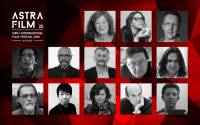
The 25th Sibiu International Festival Astra Film, which will take place from 15 to 21 October, has announced relevant film industry personalities as the 13 members of the Jury for its 5 competition sections: International, Central and Eastern Europe, Romania, Shorts, and Docschool. The jurors will choose the winners out of 55 titles in competition from 30 countries, selected from over 3,000 submissions from 93 countries. Prizes amount to a total cash value of over 25,000 euros.
The legendary Ally Derks, founder and director for 30 years of the International Documentary Film Festival Amsterdam (IDFA), the first international festival in its genre, is for the first time in the Astra Film Festival Jury. She is joined by Haruka Hama, Coordinator of the Yamagata International Documentary Film Festival (YIDFF), Japan; Michael Stewart, Director of the London Open City Documentary Film Festival, Professor at the University College London, UK; Cristi Puiu, Film Director, Romania; Marin Martschewski, Director, former Professor at Deutsche Film- und Fernsehakademie Berlin and at Béla Tarr Film School in Sarajevo; Alexandru Solomon, Film Director, Founding Director of One World Romania Film Festival (OWR); Dina Iordanova, Film Professor at the University of St. Andrews, UK; Cristian Tudor Popescu, Film Critic, Cinematography and Media PhD, Romania; Simon Kilmurry, Executive Director of the International Documentary Association (IDA), USA; Adina Popescu, Writer, Documentary filmmaker, Romania; Ruben Vermeersch, Film Director, Belgium; Liviu Tipurita, Film Director, United Kingdom; and Vintilă Mihăilescu, Writer, Professor of Cultural Anthropology, Romania.
Directors, producers, film critics, festival directors, professors, writers - the 13 elected members of the Jury represent all facets of the non-fiction film industry. Each brings a unique, fresh perspective and criteria to the final selections, as well as their dedication and experience in the industry. The winners of the competition sections will be announced on Saturday, October 20th.
"As a member of the jury, what you notice first is whether the movie gets your attention. You have to be patient, because sometime it can take a while until the story unfolds and reveals its true colours. Then, you notice the truth seized by the film, of course only if it indeed captured the truth. Any documentary film begins in the director's mind, with one of his obsessions. With something people cannot let go of. There is a certain thing, a story, a scene that still comes to your mind, and the movie is born to remove that obsession. I mean, it does not come from the outside, it comes from within." Michael Stewart, anthropologist, professor at City University of London, writer and documentary filmmaker, who has created the London Open City Documentary Film Festival inspired by Astra Film Festival Sibiu.
“We are honoured to announce the team of professionals who will judge the films at the Festival. For a quarter of a century, Astra Film Festival has been a landmark of the European cinema, a promoter of non-fiction productions and a constant supporter of the Romanian cinematography. The fact that more and more films are submitted each year shows that both the selective vision for the competition sections, and the Jury's effort towards objectivity throughout the editions, have created together an undeniable value. The Astra Film Festival Awards are considered a true international recognition for the genre authors," said Dumitru Budrala, founding director of the Astra Film Festival.
Sibiu International Festival Astra Film was launched in 1993 as a groundbreaking project in the Central and Eastern Europe. Its contribution to establishing a framework for the development of documentary cinema in the whole region, and in Romania in particular, has been consequential. It has constantly attracted industry’s attention to the art of non-fiction film by supporting the development of the genre and opening new horizons for the documentarists. Astra Film Festival 2018 is organized by Astra Film, CNM Astra and Astra Film Foundation, with the support of the County Council of Sibiu, the Ministry of Culture and National Identity, and the Romanian Film Center. The event is cofinanced by Sibiu City Council through the Sibiu City Hall and by the European Union through its Creative Media Program.
Astra Film Festival is held under the High Patronage of the President of Romania.
New Europe Film Sales launches a talent initiative
Warsaw-based New Europe Film Sales - the company behind the international success of such films as Grimur Hakonarsson’s Rams, Carla Simon’s Summer 1993, Hlynur Palmason’s Winter Brothers and Tomasz Wasilewski’s United States of Love - starts an annual talent initiative in its home town. The event will introduce talents from Poland and abroad to a leading film executives.
New Europe Warsaw Sessions (24-27 Sep) is an exclusive, closed workshop set in an original location outside Warsaw where six talents, hand-picked by New Europe’s team will mix with top film decision-makers. The participants, mentors and experts were chosen with a focus on filmmakers with success in the foreign-language space, who have the potential to make the step into an English language film as well as experts that could guide them through this process.
This year’s participating talents are Jan P. Matuszyński (Poland, The Last Family), Agnieszka Smoczyńska (Poland, The Lure, Fugue), Paweł Maślona (Poland, Panic Attack), Laura Moss (USA, Fry Day), Hafsteinn Gunnar Sigurðsson (Iceland, Under the Tree) and Jeppe Ronde (Denmark, Bridgend). They will be mentored by Mike Goodridge (UK, Screen International, Protagonist, Macao FF) and Julia Godzinskaya (UK, Rooks Nest, The Witch). The experts coming to Warsaw for the workshop are Dylan Leiner (USA, Sony Pictures Classics), Baltasar Kormakur (Iceland, director, Everest, 2 Guns, 101 Reykjavik), Sibila Diaz-Plaja (UK, Focus Features), Ben Giladi (UK, AI-Film), Julia Oh (UK, Film4), Vanja Kaludjercic (UK, Mubi) and Kim Magnusson (Denmark, M&M Productions).
“We are very happy to create this new platform. It’s a great opportunity for decision makers to meet new talents and spend time together in a creative environment through a series of relaxed masterclasses and meals and get to know each other in a safe, intimate environment away from big festivals and markets.” says New Europe’s CEO Jan Naszewski
Dylan Leiner, Senior Executive Vice President, Acquisitions & Production at Sony Pictures Classics added “Two years ago, Jan Naszewski was our guest at the first Bloom/Spiegel Partnership, a small filmmaker workshop in NY that grew out of a decade of The Marcie Bloom Fellowship in Film. Jan came away saying he wanted to spearhead a similar event in Poland and two years laterI’m excited to be joining this group that Jan has put together to introduce new filmmaking talent. I feel strongly that as our media landscape gets more consolidated and moves faster, these kinds of initiatives that promote more personal interaction between talent and the industry in a slow moving environment are more important than ever. And it’s in these arenas that often long lasting relationships are formed.”
Mike Goodridge, artistic director of International Film Festival & Awards Macao added ““I am very excited to participate in this new workshop concept where six film-makers can interact with the industry in a candid and meaningful discussions. And where the select industry participants can be inspired by these brilliant young directors. I feel it will become a fixture on the annual calendar."
Institutions supporting the event as partners are The Polish Film Institute, Mazovia/Warsaw Film Commission and Adam Mickewicz Institute. Private partners include Chimney Poland, Film Produkcja, Platige Image, Gigant Films, Forum Film, while other supporters are Monolith Film and Gutek Film.
New Europe has recently set up a new production company NEM Corp together with Ewa Puszczyńska (producer of Ida and Cold War) and Klaudia Śmieja (producer of Claire Denis' High Life and A.Holland's upcoming $8.5m Gareth Jones).
FULL THEATRICAL RELEASE VITAL FOR AUDIENCES SAYS EUROPEAN CINEMA TRADE BODY
Press releases 18-09-2018BRUSSELS, 17 SEPTEMBER 2018: The International Union of Cinemas (UNIC), representing cinema associations and key operators across 37 territories in Europe, has today added its own voice to those seeking to ensure that films selected for competition at leading film festivals receive a full theatrical release.
Following recent discussions around the selection of films at a number of major film festivals and the decision from the Venice International Film Festival jury to award Alfonso Cuaron’s Roma its Golden Lion prize, the association released the following statement:
“UNIC wishes to express its support for Italian cinema exhibition colleagues and others in encouraging festival competitions only to consider for inclusion those films intended for theatrical release.
Central to the film business is the shared experience of watching a feature film on the big screen, something which creates a strong sense of identity and community. Cinemas offer their audience unique cultural and social experiences, at the same time allowing films truly to do justice to their director’s vision and, through their exclusive nature, create unparalleled excitement around their release.
This is a proven strategy that ultimately benefits the entire film value-chain. The theatrical success of each film helps drive its performance and audience awareness on other platforms. Growth in subsequent markets – including Video on Demand – develops best on these strong foundations. It should not come at the expense of theatrical exclusivity.
The cinema industry can exist alongside streaming providers, but believes that their – and the audience’s – best interests are served by a film receiving a proper cinema release, including a clear and distinct window.
Respect for the life-cycle of a film not only supports a model that has proven successful in terms of cultural diversity, but also offers the opportunity for the widest possible audience to discover and enjoy as broad a range of film content as possible. Leading film festivals should encourage practices that benefit the audience as a whole, through the inclusion of films in their official selection that are within everyone’s reach and not just that of streaming platform subscribers. Should films be available solely on these platforms or receive only a "technical" release in another window - yet still benefit from festival selection as a marketing tool in addition to their considerable resources - the vast majority of their potential audience would be denied access to great content.
Films belong on the big screen and we therefore encourage leading international film festivals to take a lead from the Cannes Film Festival and celebrate the social, cultural and economic relevance of cinemas when designing their future selection policies.”
The International Union of Cinemas (UNIC)
The Union Internationale des Cinémas/International Union of Cinemas (UNIC) represents the interests of cinema trade associations and cinema operators covering 37 countries in Europe and neighbouring regions.
Slovenia-Serbia Co-production Meeting
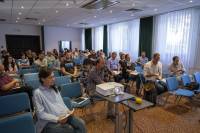
Part one of the co-production meeting organised by the Slovenian and Serbian film centres entitled Co-production Meeting – In focus: Serbia & Follow-up: Austria took place today as part of the Industry Events at the 21st Festival of Slovenian Film. The meeting will conclude on Saturday with business meetings between producers of the two countries.
Ever since the establishment of the Slovenian Film Fund, the Slovenian film industry has had a very constructive co-operation with filmmakers from the neighbouring countries. After the 1990s, when most co-productions were with the countries of the former Yugoslavia, this slowly began to include other European countries, especially Italy. As an evident deficit was identified in terms of co-operation with Austrian producers, the first Co-production Meeting focused on filmmakers, producers and relevant institutions from Austria. The second in a series of co-production meetings focuses on Serbian cinema, featuring presentations of funding opportunities, locations in Serbia, and examples of successful co-productions between Serbia and Slovenia and third countries.
The meeting welcomed many industry guests from the region who are leading players in their respective countries: directors and representatives of national and regional film centres and funds Gorjan Tozija, Ylljet Alicka, Danijela Radulović, Alessandro Gropplero, and representatives of major film institutions and festivals.
In the first part of the meeting, the activities of Serbia’s Film Center and its international co-production potential were presented by its Director, Boban Jevtić. This was followed by a brief summary of last year’s Co-production Meeting with Austrian Cinema and a case study presentation of the successful Slovenian-Austrian co-production Skiing in Scarves being produced by Boštjan Virc and directed by Haidy Kancler. Both of them are also members of this year’s festival jury.
An interesting fact related to the comparison of the three participating countries is that between 2016 and 2017 Slovenia recorded a 5% average growth in the number of completed feature films, Serbia also only slightly more than 6%, whereas neighbouring Austria recorded a 50% growth.
The event also featured project pitches: the second part included pitches of selected Slovenian works in progress that show interest in including in their co-production structure a co-producer from a neighbouring country and, above all, have adequate co-production potential for collaboration with producers from Serbia. Works in progress were presented by producer Rok Sečen (Zavod Mono O), Boštjan Ikovic (ARSMEDIA d.o.o), producer Ida Weiss (Senca Studio) and director Jurij Gruden, producer Miha Čelar (Astral Film) and producer Tamara Babun, producer Danijel Hočevar (Vertigo), producer Zoran Dževerdanović (Blade Production), producer and director Rok Biček (Cvinger film) and producer Danijel Pek, producer Lija Pogačnik (Zavod December) and director Tijana Zinajić.
Representing Serbian cinema were Boban Jevtić (Film Center Serbia), Miloš Ivanović (Platfroma), Marko Jocić (Viktorija film), Milan Stojanović (SENSE Production), and Biljana Tutorov (Wake Up Films).
The event was hosted by Jelka Stergel.
--------------------------------------------------------------------------------------------------------------------------------------
* FEATURE FILMS PRODUCED 2013 – 2017
|
2013 |
2014 |
2015 |
2016 |
2017 |
2016/2017 | |
|
SLOVENIA |
24 |
11 |
17 |
20 |
21 |
+5,00% |
|
AUSTRIA |
54 |
30 |
40 |
31 |
46 |
+48,39% |
|
SERBIA |
20 |
29 |
33 |
32 |
34 |
+6,25% |
Short of three months before the 28th FilmFestival Cottbus (FFC) opens on 6 November 2018, the opening film and the majority of the programme have already been confirmed. The passing of the official submission deadline on 1 August rang in the last round of viewings and selection of potential festival films. Once the final programme selection has been determined, the seven-strong team of researchers and curators will have watched a total of about 700 films.
COLD WAR | ZIMNA WOJNA is the opening film of the 28th FFC. Director Paweł Pawlikowski tells an emotional story laced with innuendo that is set in the Cold War period and influenced by his parents’ personal history. COLD WAR won him the Award for Best Director at this year’s Cannes Film Festival, among others. Pawlikowski was the first Polish film maker to win the Academy Award in the category Best Foreign Language Film in 2015 with his drama IDA.
“High-quality films illustrating the range of contemporary Central and Eastern European cinema obviously are given centre stage also in this year’s issue of the FilmFestival Cottbus”, says Programme Director Bernd Buder. The competitions Feature Film, Short Feature, U18 Youth Film and Cottbus Filmshow are augmented by the film series Spectrum, Russkiy Den, Polskie Horyzonty, Homeland | Domownja | Domizna, National Hits and Children’s Film. The festival’s main programme additionally features focus areas reflecting highly topical, political and social developments.
For instance, the film series Close Up UA presents the contemporary Ukrainian cinema that illustrates the process of a difficult search of identity in a country that is in a state of war, yet is at the same time heading for Europe.
With Regio Silesia, the FFC focuses on a region characterised by considerable structural change: Silesia. “For Lusatia”, explains Bernd Buder, “taking a look at Upper Silesia is clearly of interest here, where coal mining is being replaced by the development into a site for the service industry, electrical industry, the arts, culture and tourism.”
A series of films from various former socialist countries titled The Friend as Enemy investigates the mystery of what motivates people in authoritarian systems to abuse the trust of others, to spy on them and to betray loved ones.
The 28th FFC also focuses on the film country Georgia. “What is noticeable regarding contemporary Georgian feature and short films is the comparatively high number of female directors and figures of identification who address relevant contemporary topics”, Bernd Buder comments.
A selection of important films moreover familiarises FFC audiences with István Szabó’s oeuvre and outstanding films that had a determining influence on him. The Hungarian director and Honorary President of the FilmFestival Cottbus celebrated his 80th birthday in February 2018. Szabó was the first Hungarian film maker to win the Academy Award for Best Foreign Language Film in 1982 with his drama MEPHISTO.
In the context of the 28th FilmFestival Cottbus, on 8 and 9 November, the East-West co-production market connecting cottbus (coco) will take place for the 20thtime. Over 120 feature film projects from 29 countries have been submitted, of which ten projects in their development stage and five post-production stage projects will be selected by mid-September.
CEE Animation Workshop Opens the Call for Submissions
CEE Animation Workshop is a year-long project development and production skills advancement programme for professionals: established producers and creative teams with animated projects of any format (short, TV, features, hybrid) in development. It is also open to a limited number of participants without projects, representatives of industry and public institutions.
The workshop delivers a comprehensive and integrated approach on script and art design development, legal matters and copyright, funding opportunities and production models, production planning and cash flow, music and sound, acting and dubbing for animation, distribution and exhibition, promotion, new technologies and marketing. It focuses on the roles of producer’s portfolio, project’s bible, producer’s package and pitching preparation. It helps identify a clear roadmap for project execution (target audiences, marketing and promotion, distribution strategies, production plans) and promotes co-production possibilities.
The programme is structured as a combination of group work, lectures, masterclasses, panels and case studies, with a practical orientation towards concrete progress of projects and participant’s skills. It offers an opportunity to present projects to a large group of selected decision-makers, representatives of the industry, funding bodies, broadcasters and sales agents and to pitch projects in front of the CEE Animation Forum audience.
Timeline
The programme consists of three workshops each lasting 6 days and taking place at a different location:
- 29 November – 5 December in Ljubljana, Slovenia
- March 2020 in Tallinn, Estonia
- May 2020 in Trebon, Czech Republic (merging with the CEE Animation Forum)
Who can apply
- with a project in development – This type of application is intended for a producer and one additional creative team member (director, scriptwriter) with an animated project of any format. Hybrid projects must contain at least 50% animation.
- without a project – This type of application is intended for individual professionals working in the field of animation.
All participants must come from one of the low production capacity countries (Albania, Bosnia and Herzegovina, Bulgaria, Croatia, Cyprus, Czech Republic, Estonia, Georgia, Greece, Hungary, Iceland, Latvia, Lithuania, Luxembourg, Macedonia, Malta, Moldova, Montenegro, Norway, Portugal, Romania, Serbia, Slovakia, Slovenia, Tunisia, Ukraine) and must be present at all workshop modules. No later substitutions are possible.
Participation fee
- Two participants with a project in development: 2,700.00 EUR
- One participant without a project: 1,800.00 EUR
The participation fee includes participation in the programme, online script consultancy sessions, accommodation and meals during the workshops. Costs of travel to/from the workshop location and any additional costs not listed above are not covered by the organiser. There is no registration fee for submitting your application.
You may submit a request for a scholarship through the application along with an explanation on why you would need it. CEE Animation Scholarship is granted as a partial reduction of the full fee, not as a complete exemption of payment. The amount granted to a project or an individual is based on the selection committee’s assessment of the state of animation in the applicant’s country and the submitted explanation.
The deadline to submit your application is 30 August.
You can apply by filling out the form on the following links:
- with a project in development (application must be submitted by the producer)
- without a project
We suggest you read the instructions and prepare all the required content before you start filling out the form. For any additional questions please contact us at This email address is being protected from spambots. You need JavaScript enabled to view it.
CEE Animation Workshop is organized with the support of Creative Europe – MEDIA Programme of the European Union.
The 54th Karlovy Vary International Film Festival (KVIFF), held from June 28th through July 6th, had two wins in store for Estonian films: with the world premiere at KVIFF, the documentary feature Immortal by Ksenija Okhapkina won the Grand Prix for the best documentary, and feature film Scandinavian Silence by Martti Helde won Europa Cinemas Label prize.
Immortal explores how citizens, whose utmost goal is to give their lives for their Fatherland and thus achieving immortality, are ‘bred’ in today’s Russia.
„It’s a film about people influenced by propaganda,“ Okhapina said. „After making the film, I, too, understand better what is going on in Russia, why people support the government and the political system that acts against them and their children.“
Immortal is the second collaboration between the Russian director Ksenija Okhapina and Estonian producer Riho Västrik. The film was produced by Vesilind OÜ in collaboration with Latvian film studio VFS Films.
Martti Helde’s black-and-white feature Scandinavian Silence won Europa Cinemas Label prize which is awarded only at Berlin, Venice Locarno, Cannes and Karlovy Vary film festivals. The prize was established in order to promote the reach and distribution of the awarded films.
„I’m particularly pleased because of Scandinavian Silence began its journey on festivals with such a high accolade. Europa Cinemas Label award is a hallmark that will help our film to travel and reach to considerably wider audiences. This is important for both the film itself but also for Estonian film in general,“ Helde said.
The film’s producer is Elina Litvinova from the film studio Three Brothers. The film is produced in collaboration with French and Belgian boutique distributors.
Listed as one of the category A film festivals, Karlovy Vary International Film Festival is one of the most prominent film events in Europe.
Additional information about the festival:
Additional information about the films:
Immortal – www.immortal.ee
Film’s trailer: https://vimeo.com/289813140
Scandinavian Silence – https://www.facebook.com/scandinaviansilence/
Film’s trailer: https://vimeo.com/314322683
Additional information:
Aurelia Aasa
Estonian Film Institute
International Distribution Coordinator
This email address is being protected from spambots. You need JavaScript enabled to view it.
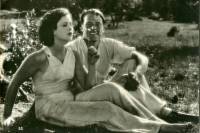
Czech Restored Classic Ecstasy Selected for the Pre-opening Event of the 76th Venice IFF
Czech Republic 15-07-2019PRAGUE: A new digital copy in 4K of the Czech film Ecstasy / Extase directed by Gustav Machatý and starring Hedy Kiesler (Hedy Lamarr) will be screened at the Pre-opening event of the 76th Venice International Film Festival of the Biennale di Venezia on 27 August 2019.
PALIĆ: The Competition of the 26th edition of European Film Festival Palić, which will take place in Palić and Subotica from 20 to 26 July 2019, includes the Serbian / Montenegrin coproduction Ajvar by Ana Maria Rossi. The film will have its world premiere during the festival.
NICOSIA: South Eastern European Cinema Network (SEE) is launching a contest for short fiction films. Exclusively national productions of a SEE CINEMA member-state (Cyprus, Greece, Serbia, Albania, Republic of North Macedonia, Montenegro, Kosovo, Romania and Bulgaria) can apply.