New Horizons Studio+, organized by the New Horizons Association and Creative Europe Desk Poland, is a training programme for first and second-time directors and producers willing to work in international environment. It consists of 4 days of workshops and lectures on different aspects of project promotion and development. Its main task is to provide young professionals with knowledge about the international film market, as well as to help them in determining their career paths.The partners of New Horizons Studio+ are EAVE and London Film Academy.
The 20 participants of the eighth edition will include 10 individuals from Poland (five director–producer pairs) selected from among applicants, as well as 10 individuals from abroad recommended by event partners.
DATES: 27 – 30 July, during 18. New Horizons International Film Festival (26 July -5 August 2018).
Applications from Polish participants will be accepted from 27 March through 31 May 2018. Filmmakers from other countries interested in New Horizons Studio+ should contact: Weronika Czołnowska at This email address is being protected from spambots. You need JavaScript enabled to view it.
DEADLINE FOR APPLICATION: May 31st, 2018
Creative Europe Media
15/03: Interim evaluation of EACEA – European Commission
The interim evaluation of the Education, Audiovisual and Culture Executive Agency Citizens will be conducted between 15 March and 12 April. Citizens and stakeholders are in particular invited to provide views on the Commission's understanding of the problem and possible solutions and to share any relevant information that they may have.
15/03: A stronger MEDIA budget to support Europe’s values, creativity & cultural diversity throughout the Union and the world – EFADs Press Release
As the European Institutions reflect on the next Multi Financial-Framework (MFF) and the future of EU programmes, the European Film Agency Directors (EFADs) call on all EU policy makers to reinforce MEDIA and significantly increase its budget from just over 100M€ per year today to €150 million per year in the next MFF to reinforce successful schemes and develop new actions.
Geo – Blocking
23/03: Rules against unjustified Geo-blocking enter into force – European Commission
The new rules against unjustified geoblocking entered into force on 22 March 2018 and will be a reality for citizens as of 3 December 2018 – they will be able to find the best deals online when buying goods and services across the EU without being discriminated based on nationality and residence.
22/03: 10 Key Features of the Geo-Blocking Regulation – European Commission
For a better understanding of the Regulation to end unjustified geoblocking adopted on 28 February 2018, here are its 10 key features.
22/03: Geo-blocking – Questions and Answers – European Commission
The Geo-blocking regulation addresses the problem of customers not being able to buy goods and services from traders located in a different Member State for reasons related to their nationality, place of residence or place of establishment. This Q & A aims to give a better understanding of the Geo-blocking regulation.
European Institutions
12/03: MEPs threaten to postpone arrival of Commission budget amid Selmayr row – The Parliament Magazine
MEPs say that the case of Martin Selmayr, whose promotion to head the Commission’s civil service has sparked fury, shows that “promotion of EU posts must go to the best not to the best connected.”
Digital Taxation
14/03: Moscovici unveils plans for tax crackdown on digital companies – The Parliament Magazine
European economic affairs Commissioner Pierre Moscovici has outlined upcoming plans for a tax crackdown on digital companies, admitting that the current system is not fit for purpose.
Event
27-28 March: Digitising European Industry Stakeholder Forum 201828 March: Informal meeting of education, youth, culture and sport ministers on culture (EYCS): Media Advisory 17, 18 & 19 April: EUIPO Working Group Meetings 24 April: European Parliament Vote - Copyright Directive 3 May: AAPA/EUIPO - Enforcement Database and Online Digital In
WARSAW: FNE has teamed up with the Brussels based team of the International Union of Cinemas (UNIC) to bring you regular updates on EU cinema policies that impact all industry professionals across Europe. Click here for FNE UNIC EU Cinema Policy Update.
LJUBLJANA: Teaching European History through Cinema (TEHC), a film education programme using European films as a tool for learning history, will be implemented in 2018 in Slovenia, Bulgaria and Romania alongside Italy, which initiated it.
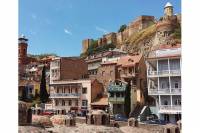
TBILISI: The shooting for a new Indian film directed by Dr Anil Viswanath and starring Southern Indian stars Naveen Chandra and Shalini Vadnikatti wrapped in Georgia in March 2018.
These grants were announced by the Czech Film Fund on 22 March 2018.
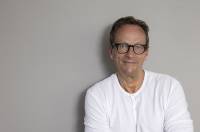
Learn About Film Marketing from an Expert Working with Disney, Universal and 20th Century Fox
Festivals 23-03-2018
On March 27–29, film industry professionals from Lithuania and all of Europe will focus their attention on the international industry conference Meeting Point – Vilnius. Lectures, Coming Soon sessions, and private film screenings are just some of the events planned for the three-day conference.
This year’s conference will include a presentation on film marketing from Christian Have, one of the leading voices on arts and culture in Denmark. As the Creative Director of Have Communications, which he founded in 1983, he has worked with celebrated artists and world-renowned stars. His agency’s list of clients includes Disney, Universal (Universal Music Group), European Film Academy, 20th Century Fox and other film companies.
Christian Have’s presentation at Meeting Point – Vilnius is introduced by the Embassy of Denmark in Lithuania and the Danish Cultural Institute in Estonia, Latvia and Lithuania.
Mr. Have, you have been working in the culture and arts field since 1983. You are the author of eight books, communication futurology expert, film marketing specialist. Could you tell us about the most remarkable cinema-related projects you remember?
– The first that comes to mind is Gabriel Axel’s Babette’s Feast from 1987. I had the honor of being part of the process from a very early stage – when the script was still being developed. The film featured a lot of completely unknown actors, so we applied a unique food theme for its launch, which was a pretty original approach. The film was shown at Cannes, and it ended up being the first Danish Oscar winner ever. I’ve had the pleasure of working with the promotion of the only other two Danish movies that have won Oscars in the Best Foreign Language Film category – Bille August’s Pelle the Conqueror from 1988 and Susanne Bier’s In A Better World from 2010 – and both of these were of course remarkable experiences, too.
Your communication agency’s client list includes such big names as Disney, Universal, Zentropa Productions, 20th Century Fox. Could arthouse cinema with smaller promotion budgets learn anything from these companies’ productions?
– Whether you’re Universal or an arthouse production company, the same basic rules of storytelling apply. It’s all about telling a story that excites and engages your audience – and your budget does not limit how good a story you’re able to tell. The budget only affects how far and easily you can distribute it. So, when you have fewer resources, you have to prioritize your efforts. One thing that smaller production companies can learn from the American giants, however, is how to make use of content marketing and how to really engage audiences on social media. They are generally really good at that, and there’s a lot we can be inspired by and apply in countries like Denmark and Lithuania.
Is there a big difference in how and by which means to promote high-budget and low-budget movies? If so, what measures or techniques are crucial for the promotion strategies for both types of movies?
– Again, having a smaller budget should not affect your ability to tell a really good story. But of course, it increases the importance of truly having a great story to tell – and that you’re telling it in the best way possible. In some ways, however, there is an advantage to having a small budget, because with the promotion of high-budget movies, people tend to stick to what they always do. With low-budget movies, you are freer to do whatever you want. Also, there is a huge market for movies and filmmakers that are brave and unpredictable, and this is definitely to the advantage of low-budget movies.
Denmark in its size is like Lithuania, but the Danish film industry is much more remarkable and competitive in the global cinema market. What successful steps, in your opinion, where made in Danish culture policy to achieve such a result?
– In Denmark, it is a public priority that the Danish film industry should produce films of the highest international quality, so the field is generally met with a lot of support and has a sizable amount of public funds to distribute. Through the Danish Film Institute, the subsidies are distributed to a wide variety of productions and projects, including fiction and non-fiction, script and talent development, marketing and partnerships, regional support and support for international co-productions – and so on. The arm’s length principle is all-important, as it helps ensure artistic freedom and harmonious collaborations between public and private partners in the film industry.
How do you see the change happening in film promotion tools? And what would be your predictions for viewer behaviour in the future? Will people stop watching films in cinemas?
– Of course digitization, streaming and social media affect how films are marketed and experienced. But the cinema definitely still has an appeal. It’s important, however, that movie theaters understand that they must provide experiences that differ from what people can experience at home. This means, of course, picture and sound of impeccable quality, combined with great comfort and delicious snacks and drinks. But it also means that movie theaters should embrace their potential of being a social meeting place – somewhere you can meet new people, attend events and have a variety of movie-related experiences beyond the movie-watching experience itself.
Which films should our audience watch before hearing your presentation in Meeting Point – Vilnius? And what expectations do you have for this conference?
– There are no specific requirements in terms of films that must be seen in order to understand my presentation. But among the films I will be talking about, you will find A Horrible Woman, Darkland and Team Hurricane. I’m looking forward to the conference a great deal, and I’m excited to get to experience the blooming Lithuanian film industry up close.

HAMBURG: Docs from Estonia, Czech Republic, Slovakia, Kosovo, Croatia, Serbia and Bosnia and Herzegovina are among the ten European documentaries selected by the European Film Promotion (EFP) and Hot Docs – the Canadian International Documentary Festival (26 April - 6 May 2018) to be presented in the new programme THE CHANGING FACE OF EUROPE at Hot Docs, Toronto.
Apply now for Ex Oriente Film 2018 and get a tailor made training for the development of your film with the help of more than 25 world renowned film professionals!
A new generation of creative documentary filmmakers and artists heads to ARISTOTELES WORKSHOP every year for a 5-week filmmaking boot camp experience. Artistic characters ensue, since 2006.
Their output landed and won on the festival circuit: Quinzaine des Realisateurs at the Cannes Film Festival, Locarno International Film Festival, Dok Leipzig, Vision du Reel, International Documentary Festival Amsterdam or Tampere International Film Festival 2017.
We’re now calling for you if you are:
- a (starting) director, cinematographer or editor with completed work;
- fluent in English;
- driven to make a documentary from pitch to final cut, with a crew you just met, in 5 weeks;
- ready for one of the most intense learning experiences you’ll ever have.
This is your chance to:
- be a director, cinematographer or editor in one of our four crews. You bring the ideas. We provide the production and post production equipment;
- meet bright young artists like you from all over the world and work together in a pristine natural setting;
- get full tutoring and mentoring from film industry professionals shaping the documentary landscape today;
- be on the festival circuit, if your film rises to the challenge.
How to apply:
- submit your form online and receive detailed instructions to complete application in your inbox.
- more information on the workshop online at www.aworkshop.org.