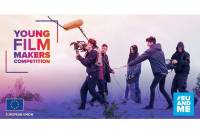
BRUSSELS: Young filmmakers from Poland, Romania, Estonia and Hungary are among the five filmmakers who received EU support for their short films as winners of the #EUandME Young Filmmakers Competition. The films are now accessible on the #EUandME online hub.
META Cultural Foundation organizes the second edition of the creative residence
Press releases 23-07-2019SLON CREATIVE RESIDENCY
with emerging artists from the MagiC Carpets platform
10.07 – 7.08.2019
Slon, Ceraşu, Romania
Artists in residence:
Marta Elina Martinsone (LV)
Luisa Sequeira (PT)
Vlad Dinu (RO)
Daniel Djamo (RO)
Project team:
Radu Pervolovici - Managing Director
Romelo Pervolovici - President
Raluca Elena Doroftei - Curator
Iosif Prodan, Florian Alexandrescu - PR
Adrian Drăgoi - Production Manager
Flori Strâmbeanu, Raluca Stoica, Cătălina Stoica - Catering
META Cultural Foundation organizes the second edition of the creative residence involving artists through the Magic Carpets - Creative Europe Platform, co-funded by the Creative Europe Programme of the European Union.
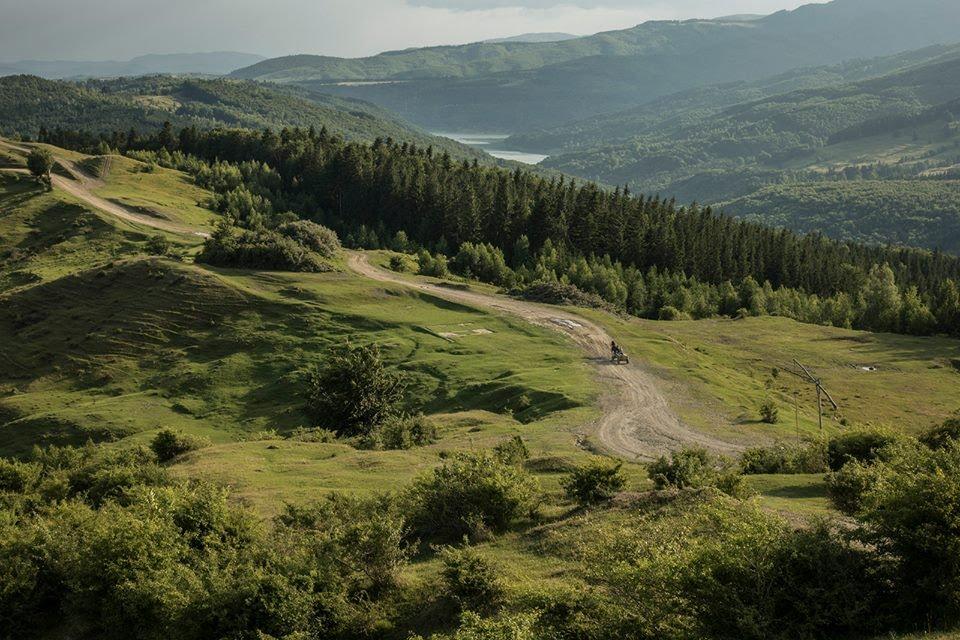
The event takes place in the village of Slon, Ceraşu, Romania, between 10th of July and 7th of August, 2019. The curator assigned by META Cultural Foundation is Raluca Elena Doroftei. Four emerging artists were invited to this year’s edition: Marta Elina Martinsone (Latvia), Luisa Sequeira (Portugal), Daniel Djamo (Romania) and Vlad Dinu (Romania).
Marta Elina Martinsone is a theatre and film director, residing in Riga, Latvia. In her works, as a theatre director, but also as film director, she analyses the relationship between imagination and reality – how we conceive worlds in our mind and how they clash with the reality creating existential conflict. She is interested in mixing theatre and film, by including theatrical means of expression in film and experimenting styles of acting. Marta holds a Master of Arts degree in Audiovisual Arts: Film directing and producing, and in Theatre Arts: Theatre directing, from the Latvian Academy of Culture, and a Master of Arts degree in Art history and theory, from the University of Essex, UK. Also, she studied a BA in history, at the University of Latvia.
Luisa Sequeira is a filmmaker and film curator, living in Porto, Portugal. She works on multiple platforms, such as film, video and photography exploring the intersections of cinema, design and emerging media. She studied journalism and specialized in directing documentaries at Porto University. Currently, she’s pursuing a PhD in Media Art, developing a research in memory, archive, archaeology and cinema. Since 2010, she is the artistic director of Shortcutz Porto and organizes Super 9 Mobile Film Fest, an online festival exclusively dedicated to mobile cinema. In cinema, she made several short, documentary and experimental films that have been screened at various international film festivals, exhibitions and symposiums.
Vlad Dinu is a Romanian visual artist and photographer, who lives and works in Bucharest, Romania. Vlad approaches ideas such as soul and metamorphosis of the human body, explores and observes nature, the urban medium and architecture, frequently using abstract filters. He is licensed in Photography and Video – Computerized Image Processing Department, at Bucharest National University of Arts and is currently pursuing Master studies in Photography and Dynamic Image at the same university.
Daniel Djamo is a Romanian visual artist and filmmaker. He is fascinated by the origins and stories of individuals and groups, as well as themes such as national identity. Blending film with performance and video art, he also creates photographic installations which evoke the past and underline ‘the instant’. Daniel holds a Master and a Bachelor degree of Arts from the Photography and Video – Computerized Image Processing Department of Bucharest National University of Arts, and obtained a Doctorate in Visual Arts from the Art History and Theory department of the same university. He also has a BA in Journalism, Public Relations and Communication Sciences from the Bucharest University. He has been awarded multiple prizes, including the ESSL Award CEE, the Henkel Art.Award. Young Artist Prize CEE, the Startpoint Prize Romania, Special Award for Documentary Film. His videos have been screened in numerous video art and film festivals, while also winning several awards for his artworks in the competitions.
/
Magic Carpets is a platform developed by thirteen European partners – Kaunas Biennial from Lithuania – the initiator of the project, Ideias Emergentes from Portugal, Eva International from Ireland, Folkstone Fringe from UK, KUNSTrePUBLIC from Germany, Prague Biennale from Czech Republic, Openspace from Austria, Latitudo from Italy, Lab852 from Croatia, Novo Kulturno Naselje from Serbia, Meta Cultural Foundation from Romania, New Theater Institute from Latvia, The Center for Contemporary Art from Georgia. The platform is designed for emerging artists, who have the opportunity to be selected by one of the thirteen partners for a one-month residency program. The aim is to encourage artistic productions together with local artists and communities. The project is co-funded by the European Union through the 2014-2020 Creative Europe – Culture program.
Two of the Romanian artists proposed by META Cultural Foundation have been selected by our partners to participate in their residences:
Anca Benera & Arnold Estefan, https://www.beneraestefan.ro/, by EVA International (https://www.eva.ie/) from Ireland.
Odeta Catana, https://odetacatana.com/, by New Theatre Institute (Homo Novus festival) http://www.homonovus.lv/eng/index, from Latvia.
The video works created at the Slon Residency through the Magic Carpets platform have the opportunity to be included in META Cinema’s selection programs and be promoted and enrolled in national and international competitions. In recent years, the shorts produced in Slon have been selected at prestigious international festivals: CineFestival, Los Angeles (USA) – 2016, Dublin International Short Film and Music Festival (Ireland) – 2016, Festival Corto Corrente (Rome, Italy) – 2016, Bucharest French Film Festival – 2015, 2016, 2017 (Romania), Sundance Film Festival (Utah, USA) – 2016, International Film Festival (Berlin, Germany) – 2018, etc.
You can find more about the residence on META website: http://metacinema.ro/index.php?year=201902
More information about the MagiC Carpets project can be found on: http://magiccarpets.eu/?fbclid=IwAR0KTauBTUFOitljLPXWTOdb9FnasaPkOzQukB6vJjXGVHSMS-UVH5oHrB8

ZAGREB: American sci-fi Bliss, starring Salma Hayek and Owen Wilson, and directed by Mike Cahill, will start shooting in Croatia next week. The film is produced by Amazon Studios and Endgame Entertainment.
We already know the results of the selection for the Short Films Competition of the 44th Polish Film Festival in Gdynia.
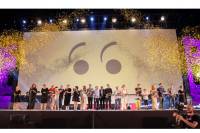
PULA: The Diary of Diana B. was awarded Grand Golden Arena for Best Festival Film and also best director and audience award at the 66th Pula Film Festival, which took place 13 to 21 July 2019.
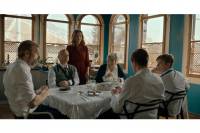
SARAJEVO: Nine feature films will compete for the main prize of the 25th Sarajevo Film Festival. A total of 53 films were selected in the four competition sections – for feature, documentary, short and student films.
ODESSA: Participants from Czech Republic, Slovakia, Georgia, Montenegro and Poland are among the selected participants at the 7th edition of SOFA – SCHOOL OF FILM ADVANCEMENT.
SOFA – SCHOOL OF FILM ADVANCEMENT Reveals the New Line-Up of its 7th Edition at Odesa International Film Festival
Press releases 19-07-2019Odessa, July 19, 2019. SOFA is a training programme dedicated to bringing innovative projects of up-and-coming film professionals to life in regions where an independent film scene is still struggling to (re-)build a functioning infrastructure. With its unique focus on Middle and Eastern Europe, Germany (SOFA’s Home), Greece, Israel, Central Asia, the republics of Caucasus and the MENA region, SOFA selects projects that promote and support the region’s national film industries, its films and cinematic heritage. With its tailor-made workshops and hand-picked internationally renowned mentors, SOFA jumpstarts the projects and careers of a new generation of film professionals who will shape the future of their industries.
The New Participants
The following projects in development have been selected for the seventh edition of SOFA:
Bionaut Kids, a curated VOD platform offering animated films for curious kids and parents in the Czech Republic and Slovakia, the first of its kind in the region. Premysl Martinek, who brings along an extensive background in distribution and film marketing, is in charge of the project.
Medea Sharikadze, promotion and event specialist from Georgia, convinced us with her vision of a New Horizons Forum, an interdisciplinary event taking place during CineDOC – Tbilisi International Film Festival in Georgia in 2021. Professionals from diverse fields of expertise will present and discuss their ideas on the topic of “When Present Meets Future”.
Taking a strong stand for outstanding first-time feature film directors from Greece and Georgia is Viki Antonopoulou, who has been working for major studios in Greece and the UK as well as managing NGOs. She developed the concept for Attis – Bold Film Sales, a boutique world sales company.
After returning to her hometown Ulcinj in 2016 and establishing a cultural production agency, Drita Llolla is set to open the first arthouse cinema in Montenegro right on the border to Albania. Dreams on Buckram also aims to re-establish the identity of Ulcinj as a multi-cultural, multi-ethnic and multi-confessional place and revitalise the cultural centre of the seaside resort.
Award-winning multimedia artist Pavel Braila from the Republic of Moldova aims to bring new impetus to the Moldovan AV sector by initiating the world’s first International Wedding Film Festival. Apart from agriculture and wine, weddings are the most thriving business in Moldova.
Last but not least, Irena Gruca-Rozbicka, award-winning founder of the Polish magazine FilmPRO, will introduce the successful German platform for film professionals Crew United into Poland and provide its flourishing film industry for the first time with a web-based network connecting all departments involved in the filmmaking process.
For more information on the 2019/20 participants and projects please go to http://joinsofa.org/projects-participants/
Past Success Stories
Thanks to the guidance and support from industry experts, many projects have been successfully given a boost by SOFA. Three of the recent flagship projects are: Nafilm – National Film Museum in Prague developed by Terezie Křížkovská (SOFA 2016/17) and Adéla Mrázová, which opened in mid-January 2019 and has attracted more than 55.000 visitors so far (www.nafilm.org). Producer’s MAP (Mentoring Action Plan), initiated by Agnieszka Sekowska from Poland (SOFA 2017/18), has been providing a broad range of professional workshops for emerging Polish producers since November 2018 with extensive insight and knowledge of the international film industry. Due to the political upheaval in the Ukraine it took Ivan Kozlenko, an alumnus of SOFA’s first edition in 2013 and General Director of Dovzhenko Centre in Kiev since 2015, much longer than expected to open the centre’s Film Museum. But in September 2019, his dream project will finally come to life. (www.dovzhenkocentre.org/eng/)
With their dedication and determination, SOFA alumni from 18 countries have managed to fill the void left after the demise of nationalised film industries with a lively and up-and-coming independent infrastructure. A quality that SOFA’s Head of Studies Nikolaj Nikitin especially cherishes: ”So many of the dream projects selected achieve a great impact reaching out to thousands of film lovers and providing services and infrastructures in regions where an independent film scene is almost non-existent, where film funding or promotion, educational measures or any form of film presentation are often still at the very beginning and where only SOFA provides the much needed support and expertise to make these dream projects become reality.“
SOFA becomes School of Film Advancement
Film is the most flexible art form of our times. With every new invention in the digital audio-visual industry, the art form film adapts itself to the technology’s specific demands. Cinema as a cultural and social place has been film’s favourite spot and media for over a century – but, for many years now, it’s by no means the only one. Therefore SOFA commits itself to the advancement of the art form film on any given platform, by supporting projects that further explore film's potential in the audio-visual industry and guide it towards new audiences. Once selected for SOFA, the participants enroll in a training programme dedicated to the very needs to bring their ideas to life.
SOFA – School of Film Advancement is a joint project of Filmplus gUG (Cologne) and Institute for Democratic Changes (Tbilisi), funded by German Federal Foreign Office and Creative Europe – MEDIA Programme of the European Union. Furthermore, the 2019 workshop in Poland is supported by the Polish Film Institute, the Foundation for Polish-German Cooperation, and Mazovia Warsaw Film Commission. In addition, the 2019 Lithuanian workshop will be funded by the Lithuanian Film Centre.
Dates for SOFA workshops 2019/20
August 18 – 23, 2019 in Warsaw
April 25 – 30, 2020 in Tbilisi
September 15 – 19, 2020 in Vilnius
The organizers also wish to thank the strategic partners: Goethe-Institut, EAVE, Meeting Point Vilnius, Midpoint, Network of Arab Alternative Screens (NAAS) and Odesa IFF.
www.joinsofa.org / www.facebook.com/SchoolofFilmAgents/
For further information, press material, and interview requests please contact:
Doris Bandhold, e-mail: This email address is being protected from spambots. You need JavaScript enabled to view it., cell phone: +49 179 652 15 75
FNE IDF DocBloc: Director Artemio Benki: "I Like Strong, Personal Stories that Are a Bit Extreme"
Czech Republic 19-07-2019Click HERE for an interview with the French-born Czech filmmaker Artemio Benki about his documentary Solo.