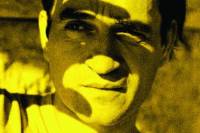
BRATISLAVA: Marko Škop's second feature film Let There Be Light / Nech je svetlo has been selected as Slovakia’s candidate for the 92nd Academy of Motion Picture Arts and Sciences award in the best international feature film category. The film is a Slovak/Czech coproduction from Artileria and Negativ.
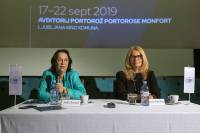
22nd Festival of Slovenian film to show a best-of of Slovenian cinema and promote international cooperation
Festivals 13-09-2019This year's edition of the Festival of Slovenian Film runs from 17 to 22 September 2019 in Portorož, with screenings and events taking place in two venues: Avditorij Portorož and Monfort Cinema. After the festival, between Tuesday, 24 September, and Saturday, 28 September, the award-winning films will also be screened in the Komuna Cinema, Ljubljana. The line-up will be announced after the awards ceremony on 22 September. As already revealed, the 2019 Badjura Award goes to the filmmaker and sound composer Andrej Zdravič. To pay tribute to the laureate, the festival is showing a selection of 14 of his experimental works.
At the 22nd FSF press conference, the Festival Director Jelka Stergel outlined the structure of the line-up, emphasising the large share of world premieres. In terms of subject matter, “compared with last year, there has been an apparent shift from social drama to drama that is more political, verging even on political thriller”. Minority co-productions are represented very strongly in this edition, “which suggests that Slovenian producers are good at recognising films that deserve financial and creative support”. In the light of this trend, Stergel highlighted the industry programme as an increasingly vital pillar of the festival, its aim being to set up a platform for filmmakers to exchange their knowledge and experience and seek international partners for their ongoing or future projects.
The industry programme will span five days from Wednesday, 18 September, to Sunday, 22 September. Its main event is the Coproduction Meeting (CPRM) – In Focus: Italy, with a rundown of Italian institutions making up the funding network for film production and cultural exchange (MiBAC, ANICA, regional funds, the Italian Cultural Institute in Ljubljana, the Italian Trade Agency in Slovenia) and pitching sessions for selected projects in development and postproduction to further facilitate and promote co-productions between the two countries, after endeavours in the recent years have already started to bear fruit. The programme also features a series of workshops, lectures, and debates. Among these other events, Stergel drew attention to a pitching event organised in collaboration with the Slovenian Book Agency, in which editors and publishers will pitch, to an audience of film producers, notable literary works that lend themselves perfectly to adaptation for the screen. Inspired by Cannes’ Shoot the Book! and Berlin’s Books at Berlinale, the aim of the event is to encourage adaptations of books by Slovenian authors for the screen, and to join the efforts for 2022, when Slovenia is the guest of honour at the Frankfurt Book Fair.
The festival will open with the premiere screening of Metod Pevec’ new feature I Am Frank. The host of the opening is Jure Longyka. Featuring an appearance by the popular local singer-songwriter Rudi Bučar, the ceremony will be followed by a reception in the Avditorij foyer.
The organisational aspects of the festival were presented by the 22nd FSF Project Manager Tjaša Smrekar. The screenings will take place in two venues, Avditorij Portorož and Monfort Cinema, connected by a minibus service. The Monfort Cinema is also the venue for daily post-screening socialising with a varied live-music line-up. Admission to Monfort screenings starting before 5 pm is free, subject to capacity, while tickets are required for screenings after 5 pm. Evening events are open to visitors with a festival pass or a ticket for any festival screening.
The festival will close on Sunday, 22 September at 19:30 with the awards ceremony hosted by three actors from last year’s award-winning film Consequences. Unlike previous years, the event will be broadcast live on TV Slovenia.
Over a little less than a week, the main Slovenian film event will provide a curated overview of the latest Slovenian cinema, which includes fiction, documentary and animated films of all lengths. A total of 157 films were submitted to the festival for consideration by the Programming Board, with 106 films making it into the official selection. Of this, the Official Competition includes 57 films: 11 feature-length films, 10 minority co-productions (8 feature-length and 2 short), 5 medium-length films, 19 short films, and 13 student films.
AWARDS AHEAD?

We are glad to share the news that two entries from the Black Nights Official Selection of 2018 have been shortlisted by the European Film Academy in the feature film category!
Bad Poems
A poetic, playful, witty tale by director-writer-lead actor Gabor Reisz about a 30-something dealing with a rough breakup. As critic Wendy Ide wrote in Screen International 'Reisz maintains a gently mocking levity when it comes to his character’s sad sack melancholy and there’s a deft sleight of hand in the way the film negotiates the transitions between the glum reality and the fantasies and flashbacks'. Read the review.
Werewolf
The World War II-themed allegorical thriller was a success among the critics and audience, winning the Audience Award and the Ecumenical Award of the festival. The Hollywood Reporter's critic Stephen Dalton called it '...a thematically rich combination of coming-of-age drama, wartime thriller and horror movie'. Read the review.
ANOTHER WIN FOR BABYLON BERLIN
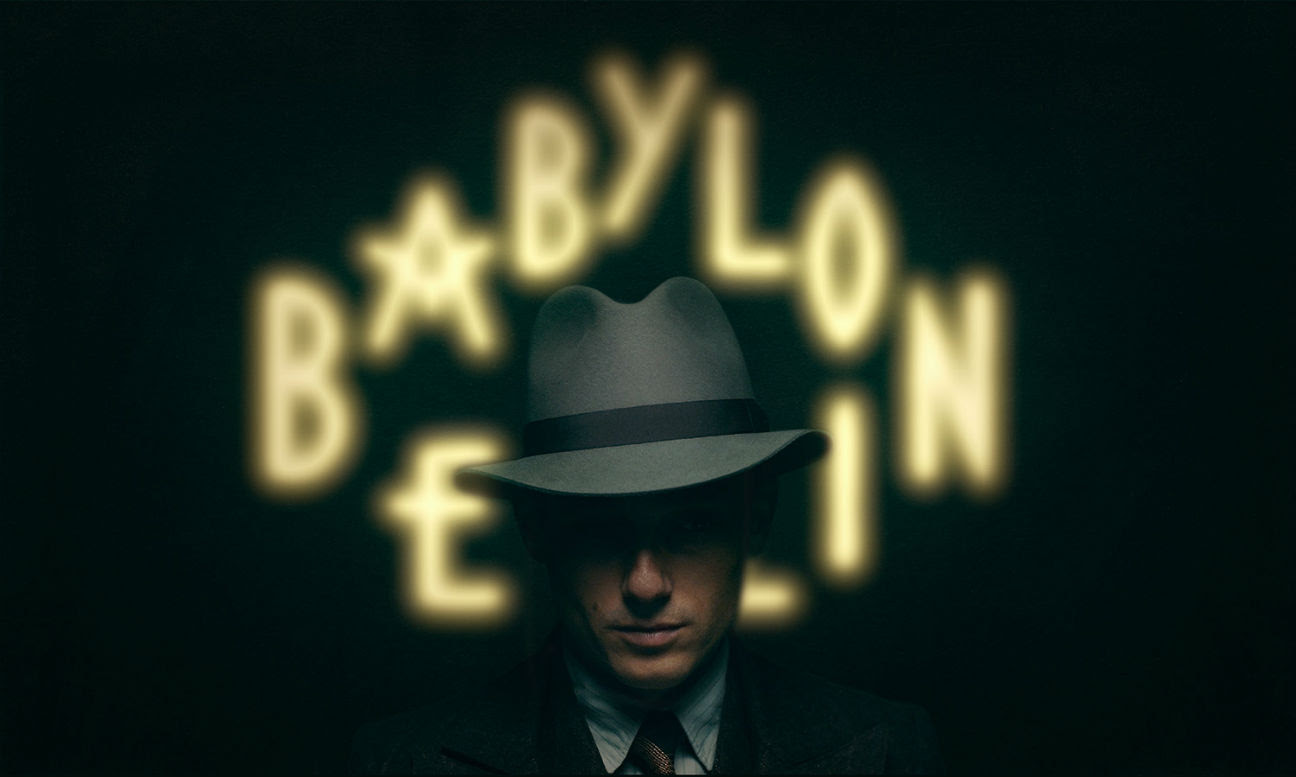
Babylon Berlin, the series with the biggest budget ever in Europe, continues its winning streak! After a series of screenings at several festivals, including a gala screening at Black Nights with the attendance of the key members of the crew (creators Achim von Borries, Henk Handloegten) and cast (leading stars Volker Bruch and Lisa Liv Fries), followed by an acquisition by Netflix, the series will now be the first series ever to be honored by the European Film Academy!
READ THE STORY IN SCREEN INTERNATIONAL
ON A FESTIVAL SPREE

Our last year's First Feature Competition entry Why Don't You Just Die! continues its bloody festival spree, adding a New Flesh Award (best debut) at Fantasia and screenings at Fantastic Fest and What the Fest to an already impressive run.
After seeing the film in Tallinn critic Stephen Dalton (The Hollywood Reporter) called it "a splatterpunk action comedy drenched in gleefully dark Russian humor" and mentioned early echoes of Tarantino. Sounds like fun, doesn't it?
PÖFF LAUNCHES KINOFF

Black Nights will launch a new side-festival called KinoFF that will take place in two cities - Narva and Kohtla-Järve - in the prominently Russian-speaking region Ida-Virumaa in Eastern Estonia. The new festival, running parallel to Black Nights and screening selected films from its programme, will hold a special focus on Russian cinema. The programme, curated by the programmers at the Black Nights Film Festival, is currently under consideration.
ACCREDITATION DISCOUNT ALERT!
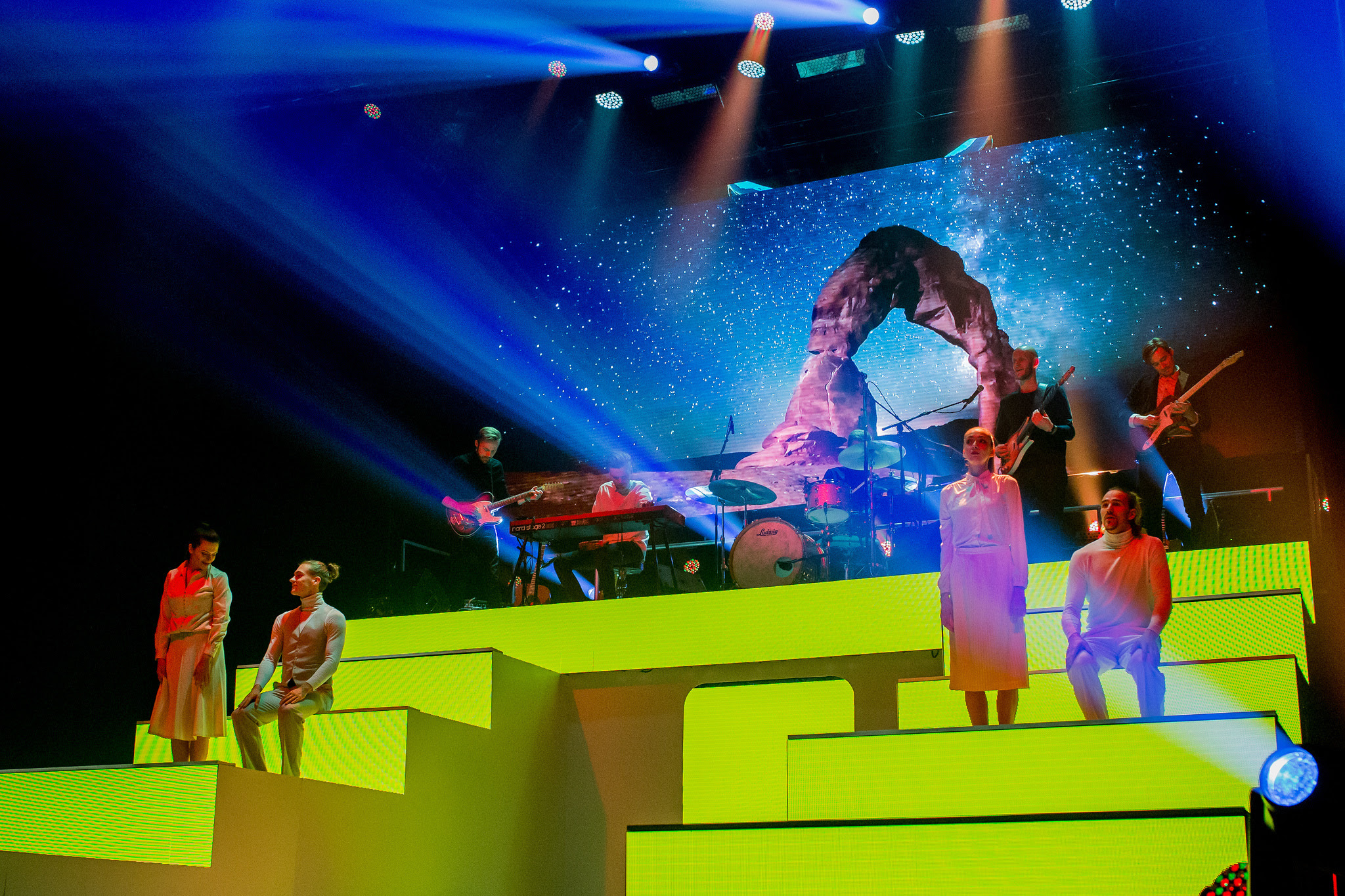
The Tallinn Black Nights Film Festival and Industry@Tallinn &; Baltic Event accreditation is available at a discount price for the last days - 125 EUR - until the 16th of September!
The Festival + Industry@Tallinn &; Baltic Event accreditation is reserved exclusively for film industry professionals and is valid for the festival period, from the 15th of November until the 1st of December, 2019. It allows you to get the most out of Tallinn - take part of all the open lectures, pitch sessions, the audiovisual conference European Film Forum Tallinn, numerous workshops and events of Industry@Tallinn &; Baltic Event and to see up to 40 films from the programme of Black Nights.
WARSAW: Warsaw Kids Film Forum, an international co-production forum for films and television series aimed at the children’s market, have selected 25 projects to be pitched at the third edition, taking place 25-27 September 2019.
EXCLUSIVE: Explore New Programme of Warsaw Kids Film Forum
Inspiration Day supported by FNE and CEI 2019 28-08-2019WARSAW: After the successful previous editions, the 3rd edition of Warsaw Kids Film Forum has significantly extended its offer by expanding the programme and the list of attending guests. The Warsaw Kids Film Forum will be held at the Muranow cinema in Warsaw from 25 to 27 September 2019.
Meet the Guests of Warsaw Kids Film Forum 2019
Inspiration Day supported by FNE and CEI 2019 06-09-2019WARSAW: More than 200 guests from 25 countries will attend the 3rd edition of Warsaw Kids Film Forum, set to take place at the Muranow cinema in Warsaw from 25 to 27 September 2019. The list includes 100 foreign guests from Europe and abroad. Warsaw Kids Film Forum is an industry part of the Kids Kino IFF (September 2019).
BREAKING NEWS
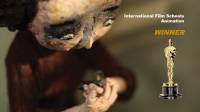
Student Academy Award goes to Czech short Daughter
The Academy of Motion Picture Arts and Sciences has announced this year's winners of the Student Academy Awards. The student Oscar for the best animated film from international schools goes to Czech short Daughter. Daria Kashcheeva, a student of FAMU, will become the third ever Czech director to be awarded with the student Oscar, which she will receive on 17 October, 2019 in Los Angeles.
Fifteen minutes long Daughter succeeded in the animation category for international film schools and will be awarded the Student Oscar 2019. Daria Kashcheeva will become the third Czech director honored with this prize, after Jan Svěrák (Oil Gobblers, 1989) and Marie Dvořáková (Who’s Who in Mycology, 2017). Several Czech and Czechoslovak authors were nominated for the student Oscar in the past: Miloš Zábranský (Horečka všedního dne, 1982), Aurel Klimt (Bloodthirsty Hugo, 1997), Václav Švankmajer (Test, 2000) and Ondřej Hudeček (Peacock, 2016).
Daughter was produced by Zuzana Roháčová at Prague's FAMU (Film and TV School of the Academy of Performing Arts in Prague), in co-production with MAUR film, a Czech production company with many years of experience in the field of animation. The production of the film was supported by the Czech Film Fund as part of a package of three short animations called Three Voices, altogether with amount of 15 294 EUR.
The film world-premiered earlier this year at Annecy International Animation Film Festival and received there two awards - Cristal for a Graduation Film and Junior Jury Award for a Graduation Film... (read more)
ABOUT THE FILM
Daughter is a story of a girl who finds a dead bird and wants to share her pain with her father, hoping to find solace in his embrace. The father is preoccupied with his own worries: he is cooking lunch and pays no attention to his daughter’s state of mind and desires. The girl takes her father’s behaviour for rejection, cocooning herself in her inner world filled with a yearning for her father‘s love. From then on she grows increasingly distant from him and as an adult she cannot deal with any display of emotions from him. The guilt-ridden father tries to find a way of getting through to his daughter and rebuilding their shattered relationship. Only in hospital, when her father is dying, does the daughter understand that he has always loved her, in a final embrace of mutual forgiveness...
Kashcheeva: Parents sometimes can’t express their love for their child

Czech Film Center operates as a division of the Czech Film Fund
On November 5th, FilmFestival Cottbus (FFC) will open its 29th edition in a festive ceremony in the Staatstheater Cottbus (Großes Haus). Opening film is the cross-border comedy SMUGGLING HENDRIX, the feature film debut of director Marios Piperides. The production, in which "Soul Kitchen" star Adam Bousdoukos plays the protagonist, has won numerous international awards, including the Tribeca Film Festival in New York.
"The opening film SMUGGLING HENDRIX, set in Cyprus, is a mirror image of the 30th anniversary of the fall of the Berlin Wall: while we have been celebrating the fall of the Iron Curtain three decades ago, the island in the eastern Mediterranean has been divided by a heavily guarded border since 1974. At the same time, the film, co-produced by Greece, Cyprus and Germany, symbolizes the expansion of the territory of FilmFestival Cottbus, which this year will also show feature works from Finland, Turkey and Greece", says FFC Programme Director Bernd Buder. "SMUGGLING HENDRIX, which plays on the border between the Greek and Turkish parts of Cyprus and thus also between the European Union and the non-EU, fits in well with this broader Eastern Europe of the festival."
Dialogue jury
The perspectives with which the new film countries enrich the FFC are reflected in the composition of the festival's dialogue jury. The jury includes the Finnish-Russian actress Alina Tomnikov, the Athens-born director and producer Thanos Anastopoulos, who lives and works in Greece and Italy, as well as the Turkish filmmaker Aslı Özge, who has been based in Berlin since 2000. Özge impressed audiences at the major festivals in Locarno and Berlin with works such as MEN ON THE BRIDGE (2009) and AUF EINMAL (2016). The trio discusses which work from the 2019 FFC programme most convincingly artistically shapes intercultural dialogue in the sense of understanding between cultures. The winning film will receive prize money of EUR 3,000, donated by the Federal Foreign Office.
The opening film: SMUGGLING HENDRIX
In SMUGGLING HENDRIX Adam Bousdoukos plays the unsuccessful musician Yiannis. The Greek Cypriot wants to leave Nicosia and Cyprus behind to start a new life in Western Europe. After his girlfriend has left him, dog Jimi remains his last ally. The dog named after the guitar god Hendrix, is running away into the Turkish part of the island – and an EU law strictly forbids animals to enter from the Turkish to the Greek side of the border...
Download film stills SMUGGLING HENDRIX and FFC logo
www.filmfestivalcottbus.de/press
About the FilmFestival Cottbus
The 29th FilmFestival Cottbus will take place from November 5 – 10, 2019. In four competitions and eleven side sections, the FFC will show around 200 films competing for prize money of more than EUR 80,000 and the coveted prize sculpture LUBINA (Sorbian: the Lovely).
Over 22,000 spectators attended the Festival of Eastern European Film in Cottbus in 2018.
The 29th FilmFestival Cottbus is decisively supported by the Federal State of Brandenburg, Medienboard Berlin-Brandenburg GmbH, the city of Cottbus, the Federal Foreign Office and the Creative Europe programme of the European Union.
Accreditation possible
Reporting press can now be accredited online here:
www.filmfestivalcottbus.de/accreditation
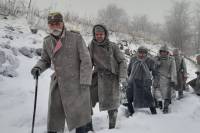
BELGRADE: Petar Ristovski’s historical drama King Petar / Kralj Petar Prvi has been selected as Serbia’s candidate for the 92nd Academy of Motion Picture Arts and Sciences award in the best international feature film category. The film is a Serbian/Greek coproduction.
These grants were announced by the Georgian National Film Center (GNFC) on 10 September 2019.