Film incentives in the Czech Republic in 2019 attracted almost CZK 9 billion (USD 393 million / EUR 363 million) in expenditures; interest in filming continues to rise
Press releases 20-02-2020Thanks to film incentives, nearly 80 films and series were shot in the Czech Republic in 2019. Implementation of projects brought revenues of almost CZK 9 billion (USD 393 million / EUR 363 million) to the Czech economy. A large portion of this comprises series filmed for online platforms such as Netflix or Amazon.
"We have calculated the revenue from projects filmed in the Czech Republic last year at CZK 8.9 billion. Foreign productions alone almost doubled compared with 2018, and are at their absolute peak since we began following this indicator. For the state it is most advantageous to provide as many film incentives as possible because higher incentives generate higher returns for the Czech economy," said Helena Bezděk Fraňková, director of the Czech Film Fund.
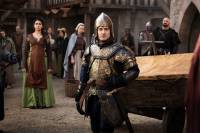
Among the most significant projects filmed in 2019 in the Czech Republic were major television series such as the second season of Carnival Row for Amazon and the epic fantasy The Wheel of Time for Amazon and Sony. Filming of both series will continue this year. The family film A Boy Called Christmas, the fantasy series The Letter for the King, and the sci-fi drama Tribes of Europa were all filmed in the Czech Republic for Netflix. Other productions included the mystery thriller Shadowplay, the second season of the wartime drama Das Boot, as well as the second season of Miracle Workers starring Steve Buscemi and Daniel Radcliffe.
Over the past two years, the pressure to produce audiovisual content has increased worldwide. Individual countries have begun responding flexibly, introducing film incentives in places where they previously didn’t work, and increasing the percentages. Head of the Czech Film Commission Pavlina Žipková confirms this increase in foreign productions, particularly television series: "In 2018, series made up about 65% of the total; in 2019 that increased to nearly 80%. More and more often, entire series are filmed here, not just several or even individual episodes, as was the case in the past. The primary attraction for foreign producers is and will be film incentives – there's no question. But the wide variety of Czech locations, the architectural diversity, and more also play a huge role, not to mention our highly-skilled Czech craftsmen. Our film professionals are some of the best in the world – Czechs excel not only in directorial positions but also in individual production departments."
In 2019, the Czech Film Fund paid a total of CZK 1.2 billion (USD 52.4 million / EUR 48.3 million) in incentives to 71 projects. This total includes projects that were filmed in the Czech Republic in previous years, such as the first season of Carnival Row with Hollywood megastar Orlando Bloom (filmed for Amazon in 2017-2019). This project is also the current record holder, incurring almost CZK 1.7 billion (USD 74.2 million / EUR 68.5 million) of eligible costs. The Czech Film Fund refunded an amount of CZK 296 million (USD 13 million / EUR 12 million) to the project. Film productions spend much more in the Czech Republic than only eligible costs, such as expenses that are not eligible under the incentive system, as well as private expenses incurred by actors and crew members.
In 2019, the Czech Film Fund received 117 applications for registration of new projects that would be filmed here. These included not just turnkey production for international projects, but also co-production projects. In comparison, in 2018, 112 applications were received and 76 in 2017.
International productions spent over 1400 shooting days in the Czech Republic last year making it over 400 more than in 2018. Interest in filming in the Czech Republic continues to rise.
Among films awarded at the Sundance film festival were also two documentaries developed in the Czech dok.incubator workshop
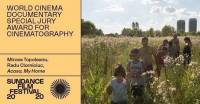
Press releases 18-02-2020In addition to the short film entitled Dcera (Daughter), two more films developed in the Czech Republic within the dok.incubator workshop also scored points at the prestigious Sundance American film festival awards ceremony on Saturday. The Ukrainian filmmaker Iryna Tsilyk won the Documentary Directing Award for her debut documentary The Earth is Blue as an Orange depicting a family facing life traumas in the middle of a war zone. The camera prize went to Mircea Topoleanu and Radu Ciorniciuc for the peculiar Romanian documentary Acasa, My Home. Radu Ciorniciuc, director, screenwriter and director of photography, presents a dramatic story of a family forced to leave the Bucharest Delta wilderness and to adapt to the life in the city. Both are debut films by young filmmakers. They succeeded in getting to Sundance film festival also thanks to the remarkably high-quality film production and creative editing which they worked on for six months under the professional guidance of twenty leading European lecturers within the Czech dok.incubator workshop.
The prestigious Prague workshop which has been helping to develop ambitious documentary projects from all over the world for nine years, has achieved great success this year. And it was not only the success of the three films at the Sundance competition. Two other films that went through the dok.incubator were shown at Berlinale last year (Lapü and Searching Eva), one film was nominated at the European Film Awards (The Disappearance of My Mother), and another film won the Emmy Award (Worker’s Cup). The dok.incubator films are frequently acquired by the major world players and can be viewed on Netflix, HBO or as a part of POV television series.
The dok.incubator is a unique workshop intended for documentary filmmakers with international ambitions that does not operate exclusively within the European context. It helps with creative editing, but it also focuses on marketing and distribution planning, ensuring the documentaries stand the best chance of succeeding in the international competition. “Dok.incubator has proven to be an invaluable source of fresh talent and surprising, unconventional approaches to storytelling. Based on our experience, I can say that this is a workshop that is very intense on the one hand but, on the other, has the capacity for finding a very personal approach of lecturers and mentors to each film. And it is this very approach of lecturers and mentors that helps to create the most interesting film stories,” says Sundance festival selector Harry Vaughn who regularly visits the workshop to select films for the competition section. The Earth is Blue as an Orange, the Sundance winning film, will have its Czech premiere in Prague as a part of the One World film festival (5th – 14th March 2020), with the award-winning film director Iryna Tsilyk expected to be present.
Detailed information about the dok.incubator: Facebook | Instagram | Twitter | Web
Established in 2010 in collaboration with the DOK Leipzig festival, dok.incubator is a think-tank of experienced providers of professional education intended to help medium-sized and small production companies from different countries to face the crisis of the audiovisual industry. The first year took place in 2012 and a great success followed immediately. The film entitled The Machine Which Makes Everything Disappear won the main prize for directing at the Sundance Film Festival in the United States. Another success came the following year and the good reputation of the workshop made it possible to recruit the most well-known editors from Europe and other countries, invite respected sales agents as well as producers and selectors of the leading international festivals. These experts count among active players of the world cinematography and participate in creation of numerous international films. Both their practical experience and their know-how contributed significantly to the development of the practical format of the workshop.
The workshop also collaborates with Czech filmmakers and participated in a whole range of important Czech documentaries and has helped a number of Czech film directors with introducing their debut documentaries to the leading European film festivals. These documentaries included, for instance, the following:
Planeta Česko (Wilder Than Wilderness), Švéd v žigulíku (The Russian Job), Budovatelé říše (The Empire Builders) and Central Bus Station. “As early as the first year, we offered the Czech film professionals intensive editing and dramaturgic consultations that often spontaneously led to a longer-term collaboration based on the enthusiasm of the lecturers. The success of the student film entitled Nebezpečný svět Rajka Dolečka (The Dangerous World of Doctor Doleček) which came to us in its creative crisis and was taken care of by the French editor Yael Bitton or the Stále spolu (Always Together) documentary made by the journalist Eva Tomanová, has shown us to what extent the long-term creative and production support as well as the fresh outside view can affect the quality and distribution of Czech films,” explains the workshop director Andrea Prenghyová.
The doc.incubator project is supported by Creative Europe - MEDIA Program, State Cinematography Fund, Ministry of Culture of the Czech Republic, Audiovisual Fund, EEA and Norway Funds, International Visegrad Fund, APA - Audiovisual Producers Association, AVEK - Promotion Centre for Audiovisual Culture, Nordisk Film & TV Fond and the Czech Centre.
congratulations to 61 participants of european shooting stars and producers on the move with premieres at the berlin international film festival
Press releases 20-02-2020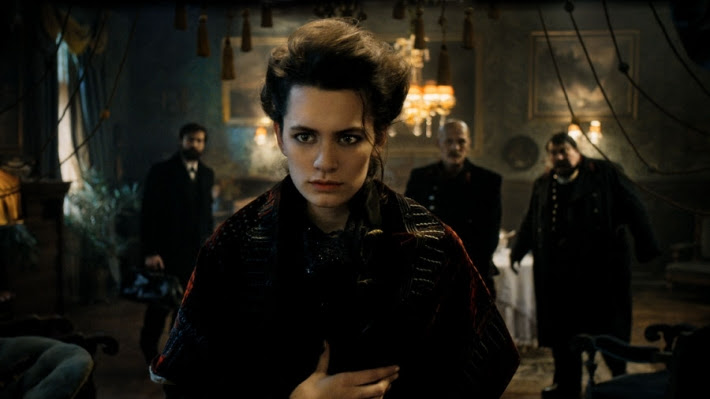 European Shooting Star Ella Rumpf from Switzerland plays one of the lead roles in the series FREUD by Marvin Kren
EFP (European Film Promotion) congratulates 22 participants of EUROPEAN SHOOTING STARS and 38 former PRODUCERS ON THE MOVE who will be celebrating the premieres of their films during this year's Berlin International Film Festival. The 2020 Dutch Shooting Star Bilal Wahib joins Jonas Smulders (participant in 2018) in the drama Paradise Drifters, while the current Swiss Shooting Star Ella Rumpf is playing one of the leads in Freud which will open the Berlinale Series section. The Class of 2019 is also making a splash: three of last year's Shooting Stars are returning to the festival with their latest films: Franz Rogowski, who has two films: Undine in Competition and Black Milk in the Panorama section. The Panorama will also be featuring Elliott Crosset Hove, starring in Wildland, while Milan Maric is appearing in The Father. Coming full circle, Luca Marinelli (participant from Italy in 2013) is a member of this year's International Jury.
Former PRODUCERS ON THE MOVE have also been very busy. Switzerland's Dan Wechsler (participant in 2011) produced or co-produced four films: All the Dead Ones in Competition, A Common Crime and Pari in the Panorama section, while Malmkrog will be presented in the new Encounters programme. His Swiss colleague Joëlle Bertossa (participant in 2013) also co-produced The Salt of Tears - showing in Competition - and the Generation 14plus title Yalda, a Night for Forgiveness, while the Romanian producer Ada Solomon (participant in 2011) is presenting two films in the Forum, The Exit of the Trains and Uppercase Print, which were both directed by her longtime collaborator Radu Jude - to name just a few.
Please find below the full list of films with participation by EUROPEAN SHOOTING STARS and PRODUCERS ON THE MOVE. Both programmes are made possible thanks to the support of the Creative Europe - MEDIA Programme of the European Union and the participating national film institutes, EFP's member organisations.
In Competition
All the Dead Ones by Caetano Gotardo, Marco Dutra
Brazil, France
associate produced by Dan Wechsler
world premiere
Bad Tales by Fabio and Damiano D'Innocenzo
Italy, Switzerland
featuring Elio Germano
co-produced by Tiziana Soudani ()
world premiere
Berlin Alexanderplatz by Burhan Qurbani
Germany, The Netherlands
featuring Jella Haase
produced by Jochen Laube, co-produced by Leontine Petit
world premiere
Delete History by Benoît Delépine, Gustave Kervern
France, Belgium
produced by Sylvie Pialat
world premiere
Hidden Away by Giorgio Diritti
Italy
featuring Elio Germano
world premiere
My Little Sister by Stéphanie Chuat, Véronique Reymond
Switzerland
featuring Nina Hoss
world premiere
The Salt of Tears by Philippe Garrel
France, Switzerland
co-produced by Joëlle Bertossa
world premiere
Siberia by Abel Ferrara
Italy, Germany, Mexico
produced by Marta Donzelli
world premiere
Undine by Christian Petzold
Germany, France
featuring Franz Rogowski
world premiere
Panorama
A l'abordage by Guillaume Brac
France
produced by Grégoire Debailly
world premiere
Black Milk by Uisenma Borchu
Germany, Mongolia
featuring Franz Rogowski
world premiere
A Common Crime by Francisco Márquez
Argentina, Brazil, Switzerland
co-produced by Dan Wechsler
world premiere
Digger by Georgis Grigorakis
Greece, France
produced by Maria Hatzakou
world premiere / debut film
Exil by Visar Morina
Germany, Belgium, Kosovo
produced by Janine Jackowski
Father by Srdan Golubovic
Serbia, France, Germany, Croatia, Slovenia, Bosnia and Herzegovina
featuring Milan Maric, Nikola Rakocevic
produced by Jelena Mitrovic, Adis Djapo
world premiere
Hope by Maria S¢dahl
Norway, Sweden
exec. produced by Yngve Sæther, co-produced by Lizette Jonjic
Mare by Andrea Staka
Switzerland, Croatia
featuring Marija Skaricic, Mateusz Kosciukiewicz
world premiere
Mogul Mowgli by Bassam Tariq
United Kingdom
featuring Riz Ahmed
produced by Riz Ahmed
world premiere
Pari by Siamak Etemadi
Greece, France, The Netherlands, Bulgaria
produced by Giorgos Karnavas, Konstantinos Kontovrakis, co-produced by Borislav Chouchkov, Dan Wechsler
world premiere / debut film
Wildland by Jeanette Nordahl
Denmark
featuring Elliott Crosset Hove, Joachim Fjelstrup
produced by Eva Jakobsen, Mikkel Jersin, associate produced by Mimmi Spang, Maria Ekerhovd
world premiere / debut film
Generation Kplus
Monty and the Street Party by Anders Morgenthaler and Mikael Wulff
Denmark
featuring Iben Hjejle (voice)
co-produced by Lizette Jonjic
International Premiere / Animation
Schoolgirls by Pilar Palomero
Spain
featuring Natalia de Molina
world premiere / debut film
Generation 14plus
Cocoon by Leonie Krippendorff
Germany
featuring Jella Haase
world premiere
Jumbo by Zoé Wittock
France, Belgium, Luxembourg
co-produced by Gilles Chanial
debut film
Paradise Drifters by Mees Peijnenburg
The Netherlands
featuring Jonas Smulders, Bilal Wahib
Internationale premiere / debut film
Pompei by Anna Falguères, John Shank
Belgium, France, Canada
produced by Joseph Roushop, Kim McCraw (Producers Lab Toronto)
Yalda, a Night for Forgiveness by Massoud Bakhshi
France, Germany, Switzerland, Luxembourg, Lebanon, Iran
co-produced by Nicole Gerhards, Joëlle Bertossa, Alexander Dumreicher-Ivanceanu
Programme "On Transmission":
The Architect by Ina Weisse
Germany 2008
featuring Maria Hofstätter
On Body and Soul by Ildikó Enyedi
Hungary 2017
featuring Réka Tenki
produced by András Muhi
Programme Encounters
Malmkrog by Cristi Puiu
Romania, Serbia, Switzerland, Sweden, Bosnia, North Macedonia
produced by Anca Puiu, co-produced by Milan Stojanovic, Dan Wechsler, Labina Mitevska
world premiere
Servants von Ivan Ostrochovsk¤
Slovak Republic, Romania, Czech Republic, Ireland
co-produced by Oana Giurgiu, Pavel Strnad, Marek Urban
world premiere
Forum
The Exit of the Trains by Radu Jude, Adrian Cioflânca
Romania
produced by Ada Solomon
world premiere / documentary
Uppercase Print by Radu Jude
Romania
produced by Ada Solomon
International premiere
Window Boy Would Also Like to Have A Submarine by Alex Piperno
Uruguay, Argentina, Brazil, The Netherlands, Philippines
co-produced by Frank Hoeve
world premiere
Perspektive Deutsches Kino
Opening film
Kids Run von Barbara Ott
Germany
featuring Jannis Niewöhner
world premiere / debut film
Sleep by Michael Venus
Germany
featuring Agata Buzek, Max Hubacher
produced by Verena Gräfe-Höft
world premiere
Berlinale Special
Charlatan by Agnieszka Holland
Czech Republic, Ireland, Poland, Slovak Republic
co-produced by Klaudia Smieja
world premiere / gala
Curveball by Johannes Naber
Germany
produced by Amir Hamz
world premiere / gala
Numbers by Oleg Sentsov
Ukraine, Poland, Czech Republic, France
co-produced by Helena Uldrichova
world premiere
Berlinale Series
Freud by Marvin Kren
Austria, Germany, Czech Republic
featuring Ella Rumpf, Georg Friedrich
Broadcaster: ORF, Netflix
world premiere
Sex by Amalie Næsby Fick
Denmark
executive produced by Ditte Milsted
Broadcaster: TV 2 Denmark
Internationale Premiere
Trigonometry by Athina Rachel Tsangari (Ep. 1-5), Stella Corradi (Ep. 6-8)
United Kingdom
featuring Lucy Russell
Broadcaster: BBC2, HBO Max (USA)
world premiere
EFP is supported by
EFP is supported by
EFP (European Film Promotion) is an international network of film promotion institutes from 37 countries from throughout Europe, each representing their national films and talent abroad. Under the EFP flag, these organisations team up to jointly promote the diversity and spirit of European cinema and talent at key film festivals and markets, in particular outside of Europe.
EFP is financially supported by the Creative Europe - MEDIA Programme of the European Union and by its member organisations. The Hamburg-based office is backed by the German Federal Government Commissioner for Culture and the Media, the Film Fund Hamburg Schleswig-Holstein and the Ministry of Culture of the City of Hamburg.
Having worked on the initial idea, the world, the characters, and the outlines of their stories, Kids Kino.Lab participants will now focus on writing extended treatment and taking first steps to prepare the production package for their projects. Not only will they start fully developing their stories, but they will also learn more about financing the production, negotiating the contracts, and targeting the right audience.
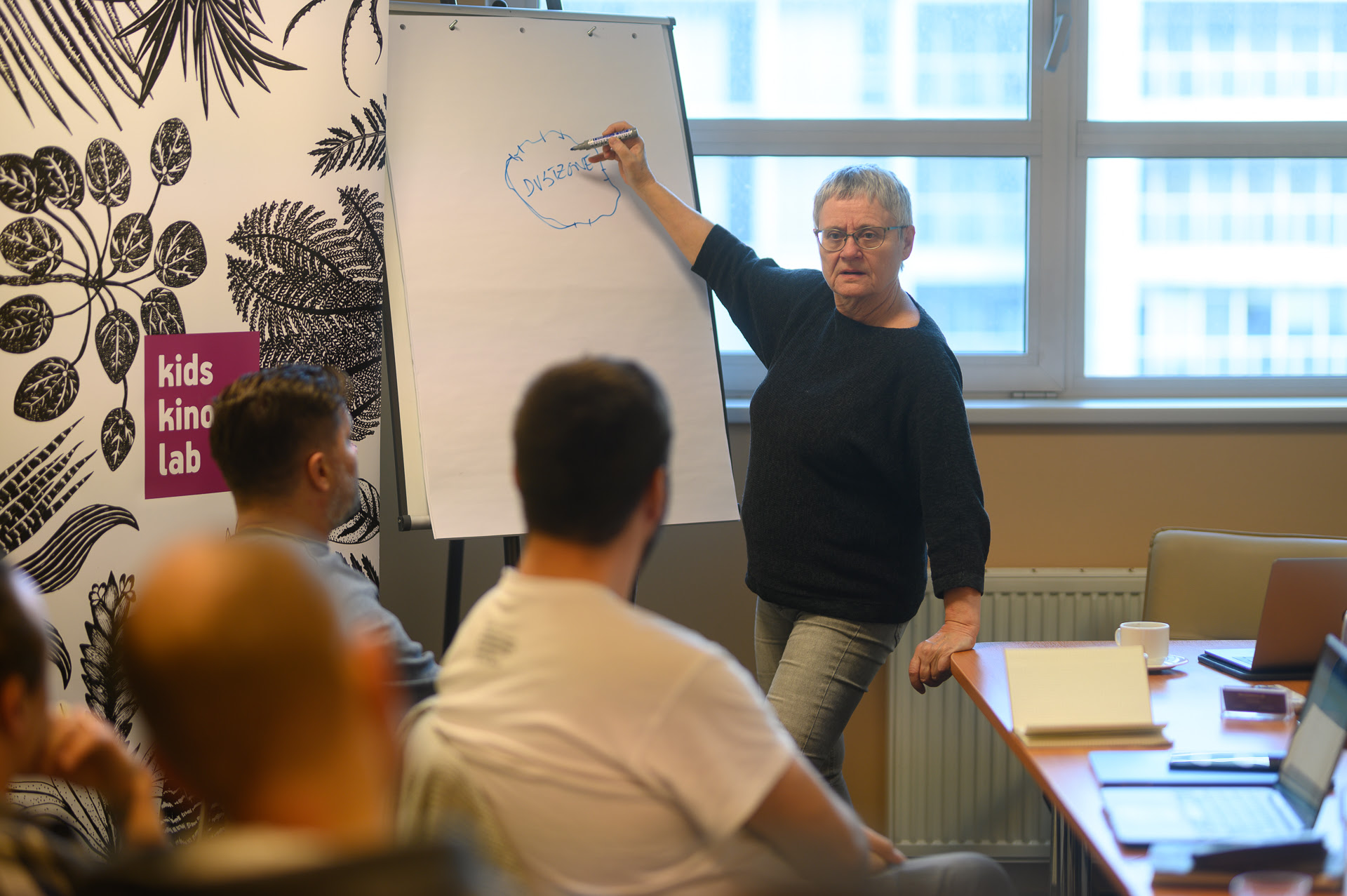
The schedule of the second session includes: individual and group sessions with the tutors for both writers and producers, presentation by Greek Film Center and EKOME on co-production possibilities and the new cash rebate system in Greece, as well as Creative Europe Media Desk showcase of funding opportunities in Europe, and…a role-play for producers imitating the conversation with the executives and head studios.
Additionally, for an extra dose of inspiration, the second session of Kids Kino.Lab will include sightseeing activities in Athens; presentation from a guest speaker Fulko Kuindersma; and screenings of the participants’ past work – showing their films as a case study which will provide an opportunity for further discussions. Fulko Kuindersma, Acquisitions Executive of Dutch Features, will give a presentation focused on selling content for children. As a member of Holland’s leading sales agency, specialized in world sales and distribution, he will share his experiences with the participants and answer their questions concerning their own projects.
Crafting films for younger audience is a challenge! That is why we’re shifting into second gear and taking off – focusing equally on both: writing and the work that will let the writing come alive.
CO-FUNDED BY:
OUR PARTNERS:
OUR GREEK PARTNERS:
CONTACT:
Zosia Horszczaruk - industry project coordinator - This email address is being protected from spambots. You need JavaScript enabled to view it.
Wojtek Jankowski - production assistant - This email address is being protected from spambots. You need JavaScript enabled to view it.
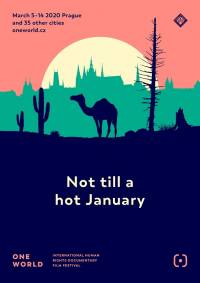
Climate change and its impacts on the local landscape – that is the subject that we have decided to focus on at this year’s One World film festival under the motto of “Not till a hot January.” The festival has looked at environmental issues since nearly the very beginning, and over the past three years films on this subject have had their own category, UnEarthed. This year, it is our main thematic category. In addition, all virtual reality documentaries will be on the subject of nature and the environment, supplemented by a special nature installation. “By combining creative documentaries, accompanying events, and VR projects, we hope to provide a broad overview of the climate crisis – compared to other festivals that also address this subject, the diverse range of perspectives is truly unique. For instance, you can attend a workshop on fermenting seasonal vegetables, see a film on environmental racism (a subject almost nobody talks about in our country), explore nature in a dead forest at DOX, or immerse yourself in an emotional VR environment,” says the festival’s programming director Ondřej Moravec. The 22nd edition of the One World festival takes place from 5 to 14 March in Prague, after which it will travel to 35 other cities throughout the Czech Republic.
The festival opens with the Oscar-nominated Honeyland. This internationally recognized documentary about traditional beekeeper Hatidze Muratova looks not only at a disappearing trade in the breathtaking mountain regions of North Macedonia, but is also a powerful parable about the state of our civilization. Hatidze lives a quiet life with her sick mother in an old mountain village, but her peace is upset by the arrival of a nomadic family that sees beekeeping as a quick way to make money. The poetic and understand yet multilayered film shows what it means to fully internalize the natural order and live in harmony with it. The film is being distributed in the Czech Republic by Artcam Films.
Besides the main category, UnEarthed, the festival consists of its three annual competition categories (Czech Competition, International Competition, and Right to Know), plus another thirteen thematic sections. The International Competition presents foreign documentaries made with an original approach that will be vying for Best Film and Best Director. Being shown in world premiere is Agnieszka Zwiefka’s Scars about the controversial life path of a former female fighter for the Tamil Tigers. The festival is also hosting the international premiere of Ninosca, a portrait of a woman from Nicaragua, whom director Peter Torbiörnsson (Best Director award at One World in 2002) followed for 40 years, from her early childhood in a village all the way to her emigration to Spain for work so that she could feed her family. These films will be competing with three documentaries that won awards at the Sundance film festival. The Painter and the Thief looks at the strange relationship between two seemingly very different people: Czech artist Barbora Kysilková and one of the thieves who stole two of her paintings from a Norwegian gallery in 2015. In Acasa, My Home, director Radu Ciorniciuc explores the life of a family living in the Bucharest Delta on the city’s outskirts who are forced by gentrification to move to the city. Family is also the central theme of Iryna Tsilyk’s The Earth Is Blue As an Orange, a portrait of single mother Anna and her four children living in a warzone in Ukraine.
In the Right to Know category, the Václav Havel Jury will be judging films that contribute, in a unique manner, to protecting human rights or that present powerful stories of people engaged in fighting for human rights. One of this year’s contenders is Advocate, which shows Israeli attorney Lea Tsemel’s endless struggle for legal justice. Tsemel, who has spent her entire career fighting for the rights of Palestinians, will be on hand in person. Former Vietnamese pop star (and today dissident) Mai Khoi, who sat on the Václav Havel Jury in 2017, will present her documentary Mai Khoi & The Dissidents, which follows her transformation from prominent singer into an enemy of the communist regime who calls attention to the lack of freedom in her country. The crew of the Sea-Watch 3, headed by Captain Carola Rackete, has saved more than three dozen refugees from drowning in the Mediterranean Sea. The film Sea-Watch 3 shows how.
A total of eleven films, including five world premieres, will be vying for the title of best documentary in the Czech Competition. In The Czechs Are Excellent Mushroom Pickers, Apolena Rychlíková looks at climate change in the Czech Republic from the viewpoint of an extraterrestrial probe. Director Andrea Culková explores the emotions evoked by climate change in women in her documentary Grief. Linda Kallistová Jablonská’s Doggy Love, meanwhile, offers a portrait of the musher Jana, who sets out with her team for the longest sled dog race in Europe, the Finnmarksløpet. The capital of Mongolia is currently home to one and a half million people – half the entire country’s population. When fifty-year-old Tumurbaator arrives in the city, will his dream of a better life come true? Find out in Anji Sauvé Clubb’s Nomad Meets the City. And director Dmitry Bogolyubov looks at how Putin’s followers use the legacy of the Great Patriotic War to gain support from the Russian people in Town of Glory.
The category Masculinity and Femininity shows different perspectives on male and female gender roles, include men’s and women’s roles in society, at work, and in the family. Finland has recently been in the news as a country of emancipated women. Award-winning director Joonas Berghäll balances this image with his portrait of overworked, broken, hard-drinking, and frustrated Finnish men in his film The Happiest Man On Earth. By comparison, women in Nigeria are barely visible in public life. In Chris van der Vorm’s Mrs F., an activist known by that pseudonym holds workshops and organizes public events where women try to gain the respect they need in their communities. Jola, the main protagonist of Lessons of Love, has spent all her life doing what was expected of her. Now, at age 69, she leaves the past behind, begins to live anew, and finally earns the respect – above all self-respect – she deserves.
No system – political, social, legal – is perfect, as the documentaries in the category Gaps in the System remind us. For instance, in his film Push, director Fredrik Gretten looks at the housing crisis and gentrification and tries to figure out why attractive cities are being turned into stage sets where ordinary people can no longer live. In Lovemobil, Elke Lehrenkrauss explores the lives hidden behind the heart-shaped neon lights on campervans parked on the side of the road, where women entice passers-by into their special private sphere to sell them their bodies. And in the poetic In My Blood It Runs, Maya Newell follows a stubborn and determined boy who is trying to find his place and identity somewhere between his aboriginal Australian culture and majority society.
Another new category this year is Diagnosis, in which the festival is presenting films on health and healthcare. One of the world’s best care facilities for people with Alzheimer’s is in the Thai city of Chiang Mai. Mother looks at the life of the caregiver Pomm and at Maya, a sick woman from Switzerland whose family places her in the facility. Midnight Family looks at the desperate shortage of government ambulances in Mexico City and at the private ambulance services that transport patients in need. In 2015, a fire at a Bucharest nightclub claimed the lives of 64 people. More than half of them died in hospitals, and the investigative documentary Collective, which is also part of the festival’s International Competition, explores the reasons for their deaths and looks at the mistakes made at the hospitals.
A new regional category this year is China: Powerful and Powerless. One film in this category is China’s Artful Dissident, about a dissident living exile who uses his art to fight against the totalitarian state. The title character of another film, Ximei, is also fighting the system – and an incurable illness. In the 1990s, when China began a campaign of paying people for donations of blood and plasma, many poor peasants were attracted by the easy money. However, poor hygienic conditions caused around 300,000 people to become infected with HIV, and today they are ostracized by society. Besides films that look at conditions inside China, the section also includes documentaries that explore how the country operates outside its borders. What are the pitfalls associated with a New Silk Road construction project near a remote Georgian village? Find out in A Tunnel.
In our traditional category Journeys to Freedom, we present films that look at the situation in countries with undemocratic regimes. This year, the category includes several films made by local filmmakers, including Filipino director Alyx Ayn Arumpac, whose Aswang paints a horrifying picture of the war on drugs that President Rodrigo Duterte has declared on his people. In Khartoum Offside, Sudanese director Marwa Zein follows a group of young woman in Khartoum who practice football in secret and without any professional equipment. Their skills and enthusiasm are comparable to that of men, but the Sudanese government rejects all proposals for a women’s team. War of Art explores how foreign artists look at undemocratic countries: Norwegian director Tommy Gulliksen takes a group of artists from “the West” on a cultural exchange to North Korea – but the first step towards mutual understanding is difficult, and the film shows how different people from different environments can be.
Another of our traditional – and popular – categories is One Zero, which looks at the challenges and dangers of modern technology. For instance, Hi, AI explores advances in domestic humanoid robots that are ever better at meeting our need to ascribe human traits to advanced machines. The longitudinal documentary Sing Me A Song paints a portrait of a young monk in a remote monastery in the mountains of Bhutan and shows what happens when the monks get smartphones and computer games. The film asks us to consider one of the less frequently discussed risks of the digital revolution. Meanwhile, Barbora Chalupová and Vít Klusák’s highly anticipated and radically experimental film Caught in the Net explores the taboo subject of online child abuse.
They stand out from the crowd and approach everyday life differently than most people – these are the protagonists of the films in the category Long Live Life! In Talking About Trees, for instance, four film buffs try to bring the glamour of the silver screen to Sudan by founding a film club. This Train I Ride paints a portrait of several women who share the (in)dependence of the freedom provided by freight trains as they travel across America. In When Tomatoes Met Wagner, cousins Aleco and Christos from a small village in Greece try to improve their tomato harvest by playing classical music as they think about how to bring life back to a farming region where only a handful of old-timers remains.
Another traditional category, Panorama, presents internationally recognized and award-winning documentary films that have enjoyed success at foreign festivals. One example is Photographer of War – an intimate portrait of photographer and World Press Photo laureate Jan Grarup, who has spent 25 years photographing war but who must now face personal struggles. The Feminister, meanwhile, takes a behind-the-scenes look at politics through the eyes of Sweden’s former Minister of Foreign Affairs Margot Wallström, who committed herself to promoting a feminist foreign policy during her time in office. And thanks to The Letter, audiences hear about the lynching of dozens of men and women in Kenya who have been accused of sorcery – often by their own relatives.
Retrospective: Nanfu Wang
American-based Chinese director Nanfu Want first caught the world’s attention with her 2016 debut film Hooligan Sparrow about human rights activist Ye Haiyan. The film has been shown at festivals in more than 25 countries, and was shortlisted for an Academy Award in the category of Best Documentary Feature. Besides showing this first film, the retrospective also presents her documentary I Am Another You and her most recent work, One Child Nation, which won the Grand Jury Award for best documentary film at the Sundance film festival.
Oscar nominees at One World
This year’s One World festival is also showing several films that were nominated for the Academy Awards. Besides the festival’s opening film Honeyland, these include The Cave, the second Oscar-nominated film by member of the International Jury Feras Fayyad. The film tells the story of Syrian doctor Amani Ballour, who runs an underground hospital in the eastern town of Ghouta. Another entrant from Syria is For Sama, which tells the dramatic tale of journalist and filmmaker Waad Al-Kateab as she reports on the unending conflict as a witness for her newborn daughter Sama. The film was also nominated for a BAFTA Award. The film is being distributed in the Czech Republic by Artcam Films.
Talking Cinema
Talking Cinema presents a series of discussions with foreign experts and other individuals on selected topics from this year’s festival: the protests in Hong Kong, the worsening housing crisis, the impacts of the climate crisis, and the changing role of men in the world today.
Guests who have accepted our invitation to attend this year’s festival include Sweden’s former Minister of Foreign Affairs Margot Wallström; political activist, member of the Demosisto movement in Hong Kong, and member of this year’s Václav Havel Jury Amon Yiu Yeuk-wa; and Leilani Farha, special UN rapporteur on housing rights. Coming to speak on climate change is leading climatologist and expert on oceans and extreme climate phenomena Stefan Rahmstorf. Meanwhile, therapist Dan Doty, who has a wide range of experiences with helping men and adolescent boys deal with psychological issues and whose Evryman project organizes support groups and wilderness retreats, will speak about the role of men in the 21st century.
All discussions will take place at Kino 35 and will be interpreted into Czech and English. Three discussions will also be translated into Czech sign language.
East Doc Platform: Sundance winning producers and new docs on the horizon
For the 9th time, the East Doc Platform will be an essential part of One World IHRDFF. Running between March 7–13, its programme includes the traditional closely watched presentation Czech Docs… Coming Soon, revealing five upcoming Czech and co-production documentaries, while the East Doc Forum will bring together the most promising projects from Central and Eastern Europe with a chance to get number of awards.
The programme includes a masterclass by Swedish filmmaker and journalist Fredrik Gertten (PUSH), Austrian editor Niki Mossböck (Earth, Grbavica) will discuss how to begin a film on examples of her work, while German producer Erik Winker will talk about the co-production aspects of the upcoming documentary Trees Floating by Salomé Jashi. One of the highlights of East Doc Platform will be the moderated panel discussion Filmmaking Against Dictatorships: How to Shoot and Keep Your Freedom, which will bring filmmakers to share their experience and talk about the obstacles the critical filmmaking is facing recently.
Film professionals who want to attend the whole East Doc Platform industry programme can buy Industry Pass until February 21. The open programme is available for free, without any accreditation.
Dangling ticket
For some people, a ticket to the movies can take a bite out of their pocketbook. For them, One World has come up with “dangling tickets” so that everyone can make it to the cinema – even people who, for whatever reason, can’t afford a ticket. Like last year, the information stand in the Lucerna building will offer the option of buying an extra ticket and leaving it dangling from a special ticket hanger. This option will also be available at the second information stand in the Municipal Library on Mariánské náměstí.
New this year, anyone purchasing tickets online may purchase extra tickets and bring them to the People in Need café in the Langhans Building. The festival’s organizers will then distribute the tickets on the spot or hang them up at the information stands during the festival.
One World in numbers
- This year’s festival presents 133 documentaries from 60 countries in 16 categories
- We are showing 27 exclusive premieres (21 world and international premieres, 6 European premieres)
- The festival takes place in 37 cities (5–14 March in Prague, then throughout the Czech Republic and in Brussels)
- We have more than 130 confirmed festival guests
- As part of One World for All, all films will be screened with Czech subtitles – this includes films in Czech. The entire program is thus accessible for people with hearing impairments. In addition, the festival is showing 4 films with audio commentary for people with visual impairments, plus 3 relaxed screenings for viewers with mental impairments, autism, or epilepsy.
- 132,227 visitors saw films at the 2019 festival
Practical information
- Ticket sales in Prague start on Wednesday 19 February. Ticket prices are CZK 70 in the first wave and CZK 90 in the second. During the festival, tickets cost CZK 110.
- Holders of a handicapped ID and viewers over age 65 receive a 50% discount on all screenings.
- For people with a handicapped ID, their attendants receive free admission.
- In order to ensure reservations for holders of a handicapped ID and for further information (accessibility, seniors, Czech sign language interpretations, audio commentary), please write to This email address is being protected from spambots. You need JavaScript enabled to view it. or call +420 221 462 411.
- As in the past, this year we again offer central assisted ticket sales at an information stand in the Lucerna building, where filmgoers will find two computers where they can purchase tickets online for any screening at any cinema, with volunteers available to help if necessary. The tickets are either printed out or sent via email.
- The press center, where we will be issuing press accreditation during the festival, can be found at the People in Need Center in the Langhans Building (Vodičkova 37, Prague), which is open from 5 to 14 March from 10am to 8pm.
- The festival’s audience center will be at the Tibet Open House on Školská Street in Prague 1. Here, visitors can purchase festival merchandise, relax with their children over a cup of coffee, or attend various accompanying events.
- During the festival, parents may make use of a children’s play corner at the Municipal Library on Mariánské náměstí.
The festival program can be found at https://www.oneworld.cz/2020/programme
The One World 2020 video spot can be found at https://youtu.be/PB3eRaUfieg
More information, including this year's visual, can be downloaded at https://www.oneworld.cz/2020/press
A list of guests is attached. Photographs and access to films are provided upon request.
Please contact our media coordinator to arrange interviews with festival guests.
Contact:
Nikola Páleníčková, This email address is being protected from spambots. You need JavaScript enabled to view it.
+420 732 989 638
The festival’s spokesperson is Gabriela Gálová.
Contact: This email address is being protected from spambots. You need JavaScript enabled to view it.
+420 605 919 769
Organizer:
People in Need
Co-organizer:
Ministry of Culture of the Czech Republic
With support from:
Czech Film Fund
City of Prague
Creative Europe – Media Programme
Avast Endowment Fund
Zátiší group
General media partner:
Czech Television
Main media partner:
Czech Radio
Thank you:
Tibet Open House

Here we are: next month, the 4th session of the European VoD Meetings will kick-off in Sofia, gathering 36 participants from 15 countries and representing 29 companies. Organized in cooperation with the Sofia FF and Sofia Meetings, and co-financed by Creative Europe MEDIA Programme, the training will feature round tables, cases studies and workshop focused on marketing and audience development, financing and business planning, tech, film licensing, analytics and trends of the VoD sector, focusing on the main challenges and best practices of indie European VoD platforms. On March 21st a panel will be co-organized with Europa Cinemas and Europa Distribution, highlighting the potential for cooperation in the value chain.

LET'S MEET AT BERLINALE!
If you are interesting in learning more about the EUROVOD association and activities, please contact our general delegate, Silvia Cibien, who will be attending the EUROPEAN FILM MARKET @ BERLINALE from February 20th to 25th. On Monday 24th, we are hosting an informal event for EuroVoD members and partners only. For more info or to set-up a meeting, please write to This email address is being protected from spambots. You need JavaScript enabled to view it..
RECENT ACTIVITIES
Clermont-Ferrand Short Film Festival & Market 
Organized by the Short Film Market, in partnership with EuroVoD and the Relais Culture Europe / Bureau Europe Creative France, the panel Online Platforms and Short Films: which kind of exposure for which audience? " took place on the 3rd February: an overview of the European online distribution landscape by presenting EuroVoD the association of European Video on Demand platforms specialized in art-house, independent and European cinema. The aim of the panel was to discuss the realness of a market for short films online and to explore alternative business models and audiences that can be reached : what fits best from subscription to advertisement based services ? How exposure strategies can lead to new audiences ? Is a niche market sustainable ? On the stage, William Page (representing FilmDoo & EUROVOD), Penelope Bartlett (The Criterion Channel) and Lucie Canistro (UniversCiné& EUROVOD member).
European Co-Production Forum 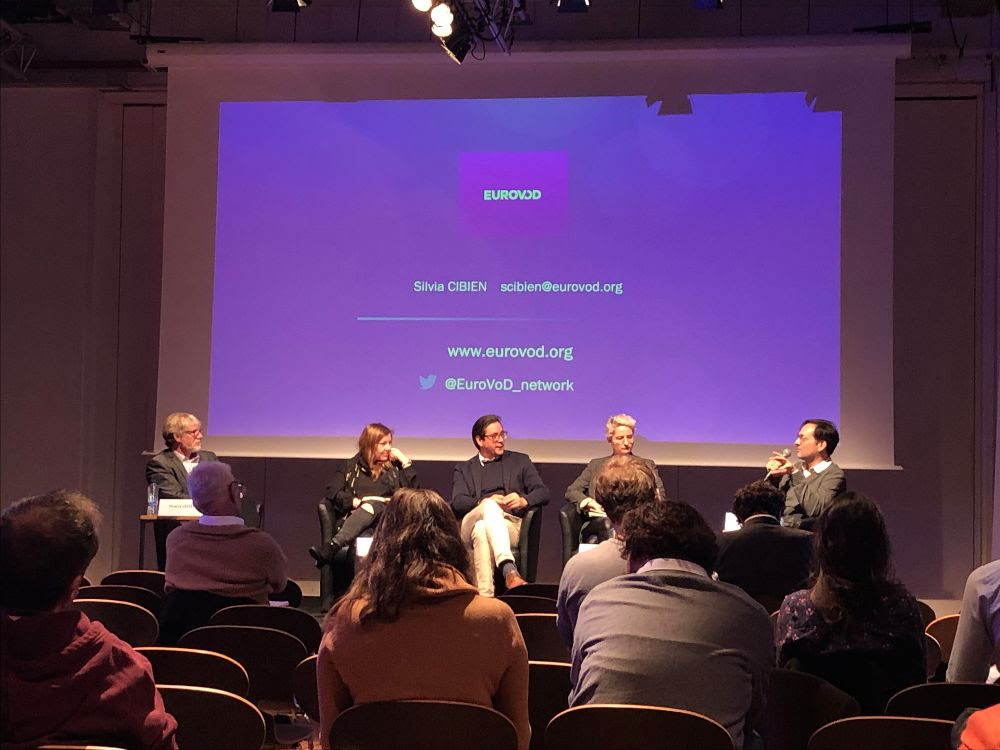
On Feb 7-8th the ECPF took place in Brussels, gathering key players from TV and cinema at an international level to tackle and debate the future of the industry. The panel 'PLATFORMS: THE EUROPEAN RESPONSE (FINANCING & TAXATION), moderated by Thierry Leclercq (Ecran Total), was hosting Silvia Cibien (EuroVoD General Delegate), Maxime Lacour (Director of UniversCiné Belgium & UniversCiné Luxembourg, EUROVOD Treasurer), Julien Vin-Ramarony (President of VOD Factory, EuroVoD member) and Ava Striker (Development Ex at Mubi).
SPOTLIGHT ON
European Audiovisual Observatory 
New report: Territoriality and financing of audiovisual works: latest developments.The European Audiovisual Observatory, has reviewed developments in media legislation over the past five years with regards to the country of origin principle and territoriality of copyright, and the way these principles operate in practice in financing audiovisual production. It walks us through them in this very useful new report that you can download here.New report on Media Law in Europe: Self- and Co-regulation in the new AVMSD. Following the new version of the Audiovisual Media Services Directive, the European Audiovisual Observatory released a report reflecting on the place it has kept for self- and co-regulation in each country to implement parts of the Directive. You can download the full report here.
Parenting at Film Festivals 
The collective launched in January 2017 for parents in the film industry facing the difficulty of traveling for film festivals and the necessity of childcare. many festivals were receptive to their concerns and proposed solutions to then set up their own new measures. The collective created the RED BALLOON ALLIANCE, which is an initiative that offers different benefits to new parents, such as a an onsite daycare, kids screenings and special access badges (depending on the festival). They are working actively with Berlinale, Cannes Film Festival and San Sebastián Film Festival. Parenting at Film Festivals is currently looking for partners to further establish and expand the community of family-friendly festivals and film professionals. If you are interested, please contact them on their private Facebook page.
Free Webinar: Benefiting from fragmentation & frustration in the video industry 
Dataxis is co-hosting a free webinar with Mirada on March 17th on the role for operators to resolve the fragmented environment and revive fatigued subscribers, and how can they benefit from it? The 1-hour webinar will explore the origins of the upcoming AVoD influx, the causes and cures for subscriber fatigue, how to fill the leanback experience gap, and creating a universal experience. You can sign up now online.
Free Webinar: European OTT landscape 2020: from parcelling to bundling?
And you can sign up here for another Dataxis webinar on February 20th on Analysis of the multiplication of D2C OTT platforms and its consequences for the traditional content distribution markets.

PRAGUE: Thirteen films will screen in the international competition of One World FF, which runs 5 – 14 March 2020 in Prague and travels to another 35 cities.

ZLIN: The 60th anniversary edition of the Zlin Film Festival, the world’s oldest festival for children and youth, has announced this year’s theme of Back to the Future, with a focus on the area of science and technology. The festival, which will run 29 May – 6 June 2020, will feature films in three groupings: documentary films on science and technology, live-action films for young audiences and a section devoted to visual film effects.
SARAJEVO: Munich based Documentary Campus and the Sarajevo Film Festival are partnering to coproduce the CineLink Industry Days, the festival’s industry section, taking place 15-20 August 2020.

AVE is proud to announce once more a very strong presence of EAVE projects & producers at this year's Berlin Film Festival: 5 films in COMPETITION, 5 in the new section ENCOUNTERS, 13 projects in PANORAMA & PANORAMA DOKUMENTE, 7 at the FORUM, 11 at the GENERATION sections, 3 at BERLINALE SPECIAL, 13 at the BERLINALE CO-PRODUCTION MARKET, 6 at CO-PRO SERIES and numerous films by EAVE PRODUCERS at the EUROPEAN FILM MARKET!
 Competition
- ALL THE DEAD ONES by Caetano Gotardo, Marco Dutra, producer: EAVE graduate Clément Duboin, sales: Indie Sales
- BERLIN ALEXANDERPLATZ by Burhan Qurbani, producers: EAVE graduates Léontine Petit, Derk-Jan Warrink, Marleen Slot, sales: Beta Cinema
- SIBERIA by Abel Ferrara, producer: Interchange graduate Marta Donzelli, sales: The Match Factory
- THE INTRUDER by Natalia Meta, producer: PUENTES and EAVE+ graduates Benjamin Domenech and Santiago Gallelli, sales: Film Factory Entertainment
- THE SALT OF TEARS by Philippe Garrel, producer: EAVE graduate Laurine Pelassy, sales: Wild Bunch
Berlinale Encounters
- LOS CONDUCTOS by Camilo Restrepo, co-producer: EAVE graduate Arek Gielnik, sales: Best Friend Forever
- MALMKROG by Cristi Puiu, co-producers: EAVE graduates Milan Stojanovic, Anamaria Antoci, Labina Mitevska, Dan Wechsler, sales: Shellac
- ORPHEA by Alexander Kluge, Khavn de la Cruz, producer: TTB graduate Stephan Holl, sales: Rapid Eye Movies
- SERVANTS by Ivan Ostrochovsky, producer: EAVE graduate Katarina Tomkova, co-producer: EAVE graduate Oana Giurgiu, Tudor Giurgiu, sales: Loco Films
- THE TROUBLE WITH BEING BORN by Sandra Wollner, producer: EAVE graduate David Bohun
Panorama
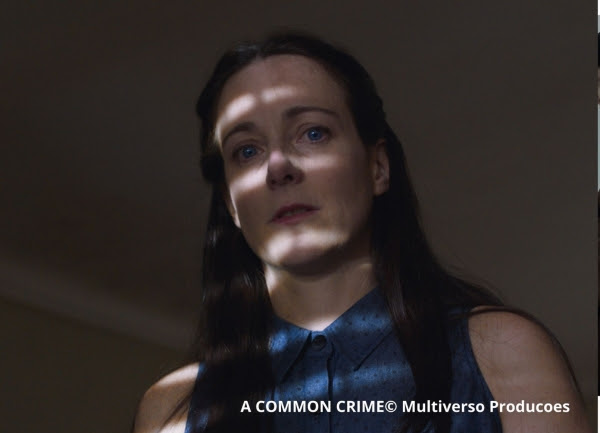
- A COMMON CRIME by Francisco Marquez, co-producer: PUENTES graduate Daniel Pech, EAVE graduate Dan Wechsler, sales: Cercamon
- DAYS OF CANNIBALISM by Teboho Edkins, producer: EAVE graduate Janja Kralj, co-producer: EAVE graduate Derk-Jan Warrink, Koji Nelissen, sales: Indie Sales
- DIGGER by Georgis Grigorakis, co-producer: EAVE+ graduate Fenia Cossovitsa, sales: The Match Factory
- EXILE by Visar Morina, producer: EAVE graduate Jonas Dornbach, co-producer: EAVE+ graduate Jean-Yves Roubin, sales: The Match Factory
- FATHER by Srdan Golubovic, co-producers: EAVE graduate and group leader Danijel Hocevar, EAVE graduate Adis Djapo, EAVE graduate and National Coordinator Bosnia-Herzegovina Amra Baksic Camo
- HOPE by Maria Sødahl, co-producers: EAVE graduates Lizette Jonjic, Peter Possne, sales: TrustNordisk
- LITTLE GIRL by Sébastien Lifshitz, co-producer: EAVE graduate Monica Hellström, sales: mk2 Films
- ONE OF THESE DAYS by Bastian Günther, producer: EAVE graduate Martin Heisler, sales: The Match Factory
- PARI by Siamak Etemadi, producers: EAVE graduate Konstantinos Kontovrakis, EAVE+ graduate Giorgos Karnavas, co-producers: EAVE graduates Borislav Chouchkov, Frans van Gestel, Laurette Schillings, Arnold Heslenfeld, Dan Wechsler, PUENTES graduate Kostas Tagalakis, sales: Heretic Outreach
- SOW THE WIND by Danilo Caputo, producers: EAVE graduates Jacques Bidou, Marianne Dumoulin, co-producer: Konstantina Stavrianou, sales: Pyramide International
- WILDLAND by Jeanette Nordahl, producers: EAVE graduate Katrin Pors, TTB graduate Mikkel Jersin, sales: Bac Films Distribution
Panorama Dokumente
- IF IT WERE LOVE by Patric Chiha, producer: Interchange graduate Charlotte Vincent, sales: Best Friend Forever
- NARDJES A. by Karim Aïnouz, producer: EAVE participant Christopher Zitterbart, sales: MPM Premium
Forum
- ENTRE PERRO Y LOBO by Irene Gutiérrez, producer: EAVE graduate Katrin Pors, sales: Bendita Film Sales
- RED MOON TIDE by Lois Patiño, producer: EAVE graduate Felipe Lage Coro, sales: Lights On
- THE EXIT OF THE TRAINS by Radu Jude, Adrian Cioflanca, producer: EAVE graduate and Romanian National Coordinator Ada Solomon
- UPPERCASE PRINT by Radu Jude, producer: EAVE graduate and Romanian National Coordinator Ada Solomon, sales: Best Friend Forever
- QUANTUM CREOLE by Filipa Cesar, producer: EAVE graduate Michel Balague
- WHAT REMAINS / RE-VISITED by Clarissa Thieme, co-producer: EAVE graduate Amira Lekic
- WINDOW BOY WOULD ALSO LIKE TO HAVE A SUBMARINE by Alex Piperno, co-producers: EAVE graduates Frank Hoeve, Rachel Ellis, sales: Square Eyes
Berlinale Special
- GOLDA MARIA by EAVE graduate Patrick Sobelman, sales: mk2 Films
- NUMBERS by Oleg Sentsov, producers: EAVE graduates Violetta Kaminska, Isabela Wojcik, sales: Latido Films
- PERSIAN LESSONS by Vadim Perelman, co-producer: EAVE graduate Jamila Wenske
Generation Kplus
- DEATH OF NINTENDO by Raya Martin, co-producer: TTB graduate Jeremy Chua
- MONTY AND THE STREET PARTY by Anders Morgenthaler, Mikael Wulff, producer: EAVE graduate Lizette Jonjic, sales: TrustNordisk
- SCHOOLGIRLS by Pilar Palomero, producer: EAVE + graduate Valérie Delpierre, sales: Film Factory Entertainment
- SUNE - BEST MAN by Jon Holmberg, producer: EAVE graduate Malin Söderlund, sales: Global Screen
- VEINS OF THE WORLD by Byambasuren Davaa, producer: PUENTES graduate Tobias Seibert
- A FOOL GOD by Hiwot Adamasu, producer: EAVE graduate Marie Dubas
Generation 14plus
- JUMBO by Zoé Wittock, producers: EAVE graduates Anaïs Bertrand, Pascaline Saillant, Annabella Nezri, Gilles Chanial, sales WTFilms
- PARADISE DRIFTERS by Mees Peijnenburg, executive producer: EAVE graduate Antonin Dedet, sales: Orange Studio
- POMPEI by Anna Falguères, John Shank, producers: TTB graduate Valérie Bournonville, EAVE graduate Clément Duboin, sales: The Party Film Sales
- ORDINARY JUSTICE by Chiara Bellosi, producer: EAVE graduate Carlo Cresto-Dina, sales: Vision Distribution
- YALDA, A NIGHT FOR FORGIVENESS by Massoud Bakhshi, producer: EAVE graduate Marianne Dumoulin, co-producers: EAVE graduate Nicole Gerhards, EAVE+ graduate Alexander Dumreicher-Ivanceanu, sales: Pyramide International
Perspektive Deutsches Kino
- KIDS RUN by Barbara Ott, producer: EAVE graduates Gabriele Simon, Martin Heisler, sales: The Yellow Affair
- GARAGE PEOPLE by Natalija Yefimkina, producer: EAVE graduate Dirk Decker, Andrea Schütte, sales: Rise and Shine
- SISTERS APART by Daphne Charizani, producer: EAVE graduate Martin Hampel, sales: Match Factory Productions
- SLEEP by Michael Venus, producer: EAVE graduate Verena Gräfe-Höft, sales: Global Screen
- WALCHENSEE FOREVER by Janna Ji Wonders, producer: EAVE graduate Martin Heisler, sales: Deckert Distribution
Hommage
- THE LAST STATION by Michael Hoggman, producer: EAVE graduate Jens Meurer
On Transmission
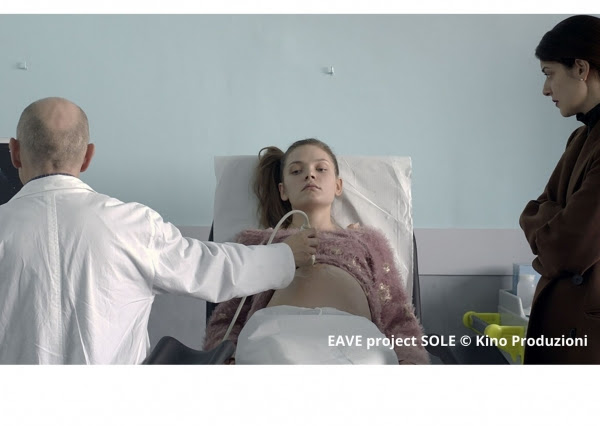
- EAVE project SOLE by Carlo Sironi, producers: EAVE graduates Giovanni Pompili, Aga Wasiak, sales: Luxbox
Berlinale Co-Production Market
- A HOUSE IN THE COUNTRY by Davi Pretto, co-produced by PUENTES graduate Paola Wink
- ANTONIA’S GARDEN by Christine Repond, producer: EAVE graduate Ivan Madeo
- BEDSITTERLAND by Nick Kelly, producer: EAVE graduate Martina Niland
- BOLDSTAR by Antoinette Jadaone, producer: TTB graduate and group leader Bianca Balbuena
- ELECTRIC CHILD by Simon Jaquemet, producer: EAVE graduate Tolga Dilsiz
- LET THE RIVER FLOW! by Ole Giæver, producer: PUENTES graduate Elisa Pirir
- REFLECTION by Valentyn Vasyanovych, producer: EAVE graduate Vladimir Yatsenko
- PIGGY by Carlota Pereda, Morena Films, producer: EAVE graduate Merry Colomer
- SALT LAKE by Mañana, producer: EAVE graduate Piotr Kobus
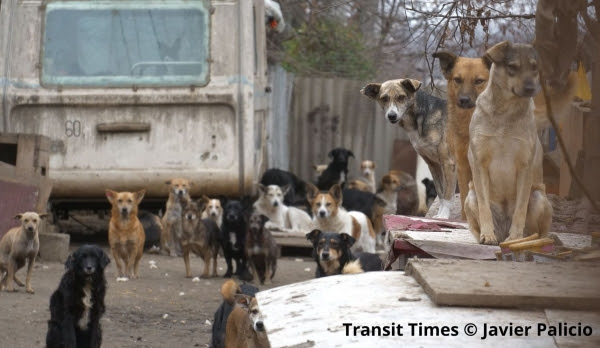
- TRANSIT TIMES by Ana-Felicia Scutelnicu, producer: EAVE graduate and German National Coordinator Jonas Weydemann
Talent Project Market
- THE LAST PARADISE ON EARTH by Sakaris Stora, producer: EAVE graduate Jon Hammer
Berlinale Directors
- THE HERD by Milko Lazarov, producer: EAVE participant Veselka Kiryakova
- MARET by Laura Schroeder, producers: EAVE graduates Palmyre Badinier, Dorothe Beinemeier
Rotterdam – Berlinale Express
- A SHADOW CREEPS IN SILVER TREES by John Trengove, producer: EAVE graduate Cait Pansegrouw, Elias Ribeiro
- SLEEPWALKERS by Radu Jude, producer: EAVE graduate and Romanian National Coordinator Ada Solomon
Company Matching
- Cinéma Defacto, France, EAVE graduate Sophie Erbs
- Kinorama, Croatia, EAVE graduate and group leader Ankica Juric Tilic
- Rei Cine, Argentina, EAVE+ and PUENTES graduates Santiago Galleli and Benjamin Domenech
- Snowglobe, Denmark, EAVE graduate Katrin Pors
Co-Pro Series 2020
- THE KING’S WIVES by Hany Abu-Assad and Amira Diab, producer: EAVE graduate Myriam Sassine
- BABYLAND produced by EAVE graduate Ana Alexieva
- PRECIOUS produced by EAVE graduate Leontine Petit
- PAWNS produced by EAVE+ graduate Artem Vasilyev
- TRANSITNIKI produced by EAVE graduate Karsten Stöter
- SNOW produced by EAVE graduate Ursula Wolschlager
Berlinale Talents
- EAVE MW graduate Malgorzata Wabinska
- TTB graduate Nathalie Dennes
- EAVE participant Samantha Biffot
- PUENTES graduate Alessandro Amato
- PUENTES graduate Lina Badenes
- EAVE and PUENTES graduate Irina Malcea
- TTB graduate Fei Ling Foo
- EAVE graduate Jon Hammer
- EAVE graduate Carla Sospedra
- EAVE, B'EST and EAVE MW graduate Marek Novak
EFM
- 7500 by Patrick Vollrath, producer: EAVE+ graduate Jonas Katzenstein
- ADVENTURES OF A MATHEMATICIAN by Thorsten Klein, producer: EAVE graduates Lena Vurma, Joanna Szymanska, sales: Indie Sales
- AQUARELA by Victor Kossakovsky, producer: EAVE graduate Heino Deckert, sales: Lionsgate
- BAGHDAD IN MY SHADOW by Interchange graduate Samir, sales: Global Screen
- LE MILIEU DE L’HORIZON by Delphine Lehericey, producer: EAVE graduate Sébastien Delloye, sales: Be For Films
- EAVE project BREAKING SURFACE by Joachim Heden, producer: EAVE graduate Julia Gebauer, sales: Trust
- EAVE Marketing Workshop project WHITE ON WHITE by Théo Court, producer: PUENTES graduates Giancarlo Nasi, Eva Chillón (Marketing Workshop graduate developing the project: Luis Renart)
- L'ANGLE MORT (BLIND SPOT) by Pierre Trividic & Patrick-Mario Bernard, produced by EAVE group leader Patrick Sobelman, sales: Doc & Film
- LOS CONDUCTOS by Camilo Restrepo, co-producer: EAVE graduate Arek Gielnik, sales: Best Friend Forever
- DIGGER by Georgis Grigorakis, co-producer: EAVE+ graduate Fenia Cossovitsa, sales: The Match Factory
- ECHO (BERGMAL) by Runar Runarsson, co-producer: EAVE graduate Dan Wechsler, sales: The Party Film Sales
- EXILE Visar Morina, producer: EAVE graduate Jonas Dornbach, co-producer: EAVE + graduate Jean-Yves Roubin, sales: The Match Factory
- FATHER by Srdan Golubovic, producers: EAVE graduates Danijel Hocevar, Adis Djapo, EAVE graduate and National Coordinator Bosnia-Herzegovina Amra Baksic Camo
- THE FLYING CIRCUS, written and directed by Fatos Berisha, producer: EAVE graduate Vjosa Berisha
- GARAGE PEOPLE by Natalija Yefimkina, producer: EAVE graduate Dirk Decker, Andrea Schutte, sales: Rise and Shine
- GIPSY QUEEN by Hüseyin Tabak, producer: EAVE graduate Danny Krausz, sales: ARRI Media
- THE GIRL WITH A BRACELET by Stéphane Demoustier, producer: EAVE graduate Jean des Forêts, co-producer: EAVE graduate Jean-Yves Roubinsales: Charades
- HEIMAT IST EIN RAUM AUS ZEIT by Thomas Heise, producer: EAVE graduate Heino Deckert, sales: Deckert Distribution GmbH
- HOPE by Maria Sødahl, co-producers: EAVE graduates Lizette Jonjic, Peter Possne, sales: TrustNordisk
- IF IT WERE LOVE by Patric Chiha, producer: Interchange graduate Charlotte Vincent, sales: Best Friend Forever
- ISLAND OF THE HUNGRY GHOSTS by Gabrielle Brady, producers: EAVE graduates Alexander Wadouh, Samm Haillay, sales: Autlook Filmsales
- I WAS AT HOME, BUT by Angela Schanelec, line producer: EAVE graduate Jana Cisar, co-producer: EAVE graduate Natasa Damnjanovic, sales: Nachmittagfilm
- JUMBO by Zoé Wittock, producers: EAVE graduates Anaïs Bertrand, Pascaline Saillant, Annabella Nezri, Gilles Chanial, sales WTFilms
- KALA AZAR by Janis Rafa, producer: EAVE graduate Konstantinos Kontovrakis, sales: Heretic Outreach
- KIDS RUN by Barbara Ott, producer: EAVE graduates Gabriele Simon, Martin Heisler, sales: The Yellow Affair
- KUESSIPAN by Myriam Verreault, producer: EAVE graduate Félize Frappier, sales: Be For Films
- LOLA VERS LA MER by Laurent Micheli, producers: EAVE graduates Benoit Roland, Sebastien Haguenauer, sales: Les Films du Losange
- PUENTES project MATERNAL by Maura Delpero, producers: PUENTES graduate Alessandro Amato, Interchange graduate Marta Donzelli, sales: Charades
- NUMBERS by Oleg Sentsov, producers: EAVE graduates Violetta Kaminska, Isabela Wojcik, sales: Latido Films
- ORDINARY JUSTICE by Chiara Bellosi, producer: EAVE graduate Carlo Cresto-Dina, sales: Vision Distribution
- OSKAR & LILLY - WHERE NO ONE KNOWS US by EAVE graduate Arash T. Riahi, produced by Wegafilm Vienna
- PARI by Siamak Etemadi, producers: EAVE graduate Konstantinos Kontovrakis, EAVE+ graduate Giorgos Karnavas, co-producers: EAVE graduates Borislav Chouchkov, Frans van Gestel, Laurette Schillings, Arnold Heslenfeld, Dan Wechsler, sales: Heretic Outreach
- PELICAN BLOOD by Katrin Gebbe, producer: EAVE graduate Vera Gräfe-Höft, sales: Films Boutique
- PERSIAN LESSONS by Vadim Perelman, co-producer: EAVE graduate Jamila Wenske, sales: Memento Films International
- POMPEI by Anna Falguères, John Shank, producers: TTB graduate Valérie Bournonville, EAVE graduate Clément Duboin, sales: The Party Film Sales
- ROUNDS by EAVE graduate Stephan Komandarev, producer: EAVE graduate Katya Trichkova, sales: Beta Cinema
- SCHOOLGIRLS by Pilar Palomero, producer: EAVE+ graduate Valérie Delpierre, sales: Film Factory Entertainment
- SIBERIA by Abel Ferrara, producer: Interchange graduate Marta Donzelli, sales: The Match Factory
- SISTERS APART by Daphne Charizani, producer: EAVE graduate Martin Hampel, sales: Match Factory Productions
- SLEEP by Michael Venus, producer: EAVE graduate Verena Gräfe-Höft, sales: Global Screen
- SOW THE WIND by Danilo Caputo, producers: EAVE graduates Marianne Dumoulin, Konstantina Stavrianou, sales: Pyramide International
- SYSTEM CRASHER by Nora Fingscheidt, producer: EAVE graduate and German National Coordinator Jonas Weydemann, sales: Beta Cinema
- THIS IS NOT A BURIAL, IT’S A RESURRECTION by Jeremiah Lemonhang Mosese, producers: EAVE graduates Cait Pansegrouw, Elias Ribeiro
- THE BAREFOOT EMPEROR, directed and produced by EAVE graduate Peter Brosens and Jessica Woodworth, co-producers: EAVE graduates Frans van Gestel, Arnold Heslenfeld and Laurette Schillings, sales: Be For Films
- THE CAVE (NANG NON), directed and produced by EAVE graduate Tom Waller, sales: Wild Bunch
- THE MOLE AGENT by Maite Alberdi, producers: EAVE graduates Ingmar Trost, Denis Vaslin, Fleur Knopperts, sales: Dogwoof
- TTB project MOTEL ACACIA by TTB graduate Bradley Liew, producers: TTB graduate and group leader Bianca Balbuena and TTB graduate Jeremy Chua, co-producers: by EAVE graduates Bostjan Virc and Sinisa Juricic, sales: Picture Tree International
- WALCHENSEE FOREVER by Janna Ji Wonders, producer: EAVE graduate Martin Heisler, sales: Deckert Distribution
- WILDLAND by Jeanette Nordahl, producers: EAVE graduate Katrin Pors, TTB graduate Mikkel Jersin, Eva Jakobsen, sales: Bac Films Distribution
MEET EAVE IN BERLIN
EAVE at the Creative Europe MEDIA stand (Central Hall, Stand number: 24) of the EFM: February 21-26
This email address is being protected from spambots. You need JavaScript enabled to view it., CEO: February 22-26
This email address is being protected from spambots. You need JavaScript enabled to view it., Head of Studies: February 23-25
This email address is being protected from spambots. You need JavaScript enabled to view it., Programme Manager Europe: February 21-26
+352 661 44 52 10